

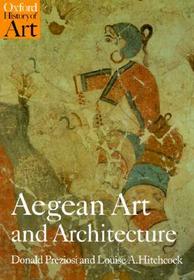
Aegean Art and Architecture
Sorozatcím: Oxford History of Art;
-
10% KEDVEZMÉNY?
- A kedvezmény csak az 'Értesítés a kedvenc témákról' hírlevelünk címzettjeinek rendeléseire érvényes.
- Kiadói listaár GBP 24.99
-
11 282 Ft (10 745 Ft + 5% áfa)
Az ár azért becsült, mert a rendelés pillanatában nem lehet pontosan tudni, hogy a beérkezéskor milyen lesz a forint árfolyama az adott termék eredeti devizájához képest. Ha a forint romlana, kissé többet, ha javulna, kissé kevesebbet kell majd fizetnie.
- Kedvezmény(ek) 10% (kb. 1 128 Ft)
- Kedvezményes ár 10 154 Ft (9 671 Ft + 5% áfa)
Iratkozzon fel most és részesüljön kedvezőbb árainkból!
Feliratkozom
11 282 Ft

Beszerezhetőség
Megrendelésre a kiadó utánnyomja a könyvet. Rendelhető, de a szokásosnál kicsit lassabban érkezik meg.
Why don't you give exact delivery time?
A beszerzés időigényét az eddigi tapasztalatokra alapozva adjuk meg. Azért becsült, mert a terméket külföldről hozzuk be, így a kiadó kiszolgálásának pillanatnyi gyorsaságától is függ. A megadottnál gyorsabb és lassabb szállítás is elképzelhető, de mindent megteszünk, hogy Ön a lehető leghamarabb jusson hozzá a termékhez.
A termék adatai:
- Kiadó OUP Oxford
- Megjelenés dátuma 1999. október 21.
- ISBN 9780192842084
- Kötéstípus Puhakötés
- Terjedelem264 oldal
- Méret 238x168x17 mm
- Súly 661 g
- Nyelv angol
- Illusztrációk numerous colour plates, halftones, and line illustrations 0
Kategóriák
Rövid leírás:
The first comprehensive contextual introduction to the visual arts and architecture of Crete, Greece, and the Aegean islands during the Bronze Age (c.3000-1000 BCE). This book introduces the reader to the historical and social contexts within which the arts - pottery, gold, silver, and ivory objects, gravestone reliefs, frescoes, and architecture - of the Aegean area developed. It examines the functions they served, and the ways in which they can be read as evidence for the interactions of many different peoples and societies in the eastern Mediterranean.
TöbbHosszú leírás:
The amazing discovery of the 'first European civilization' in Crete, Greece and the Aegean islands during the late nineteenth and early twentieth centuries was beyond what anyone had imagined. Beginning with the Neolithic period, before 3000 BCE, and ending at the close of the Bronze Age and the transition to the Iron Age of Hellenic Greece (c.1000 BCE), this is the first comprehensive introduction to the visual arts and architecture of this extraordinary era.
This book introduces the reader to the historical and social contexts within which the arts - pottery, gold, silver, and ivory objects, gravestone reliefs, frescoes, and architecture - of the Aegean area developed. It examines the functions they served, and the ways in which they can be read as evidence for the interactions of many different peoples and societies in the eastern Mediterranean. It also provides an up-to-date critical historiography of the field in its relationship to the growth of ancient art history, archaeology, and museology in the nineteenth and twentieth centuries, giving a contemporary audience a clear appreciation of what has been at stake in the uncovering and reconstruction of this ancient society.
a compact and attractive introduction to the subject
Tartalomjegyzék:
Introduction: Aegean Art and Architecture
The environment; Discovering the Aegean World; Art and art history; Objectives; Organization.
The Neolithic Period and the Prepalatial Early Bronze Age
Settlements; Burial practices.
The First Palace Period
Middle Bronze Age palaces and villas; The vernacular tradition in Greece and Crete; Ritual practices; Summary.
The Second Palace Period
Public art, private art, and the palatial architectural style; The Second Palaces: Knossos, Phaistos, Gournia, and Kato Zakro; Minoan villas: function and design; The terminology and typology of Minoan palatial buildings; The Minoan and Mycenaean spheres of influence; Religious practices; Burial practices.
Mycenaean Domination and the Minoan Tradition
The Mycenaean palace at Pylos; The Mycenaean palace at Knossos; Haghia Triadha and Kommos; The continuation of Minoan building techniques in the Third Palace Period; Burial practices; The Mycenaean shrine at Phylakopi; The circuit walls at Mycenae and Tiryns.
Conclusion: Disruptions, (Dis)Continuities, and the Bronze Age
The eastward migration of Aegean traditions; The international style; Cyprus, Palestine, and the Peoples of the Sea; Tradition and transformation; What goes around comes around: Daedalus returns to Crete.
Notes; List of Illustrations; Bibliographic Essay; Timeline; Index

