

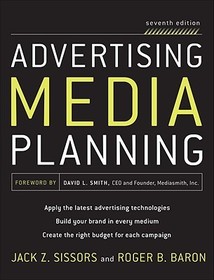
Advertising Media Planning, Seventh Edition
Sorozatcím: MARKETING/SALES/ADV & PROMO;
-
10% KEDVEZMÉNY?
- A kedvezmény csak az 'Értesítés a kedvenc témákról' hírlevelünk címzettjeinek rendeléseire érvényes.
- Kiadói listaár GBP 97.99
-
46 814 Ft (44 585 Ft + 5% áfa)
Az ár azért becsült, mert a rendelés pillanatában nem lehet pontosan tudni, hogy a beérkezéskor milyen lesz a forint árfolyama az adott termék eredeti devizájához képest. Ha a forint romlana, kissé többet, ha javulna, kissé kevesebbet kell majd fizetnie.
- Kedvezmény(ek) 10% (cc. 4 681 Ft off)
- Kedvezményes ár 42 133 Ft (40 127 Ft + 5% áfa)
Iratkozzon fel most és részesüljön kedvezőbb árainkból!
Feliratkozom
46 814 Ft

Beszerezhetőség
Megrendelésre a kiadó utánnyomja a könyvet. Rendelhető, de a szokásosnál kicsit lassabban érkezik meg.
Why don't you give exact delivery time?
A beszerzés időigényét az eddigi tapasztalatokra alapozva adjuk meg. Azért becsült, mert a terméket külföldről hozzuk be, így a kiadó kiszolgálásának pillanatnyi gyorsaságától is függ. A megadottnál gyorsabb és lassabb szállítás is elképzelhető, de mindent megteszünk, hogy Ön a lehető leghamarabb jusson hozzá a termékhez.
A termék adatai:
- Kiadás sorszáma 7
- Kiadó McGraw Hill
- Megjelenés dátuma 2010. szeptember 16.
- ISBN 9780071703123
- Kötéstípus Keménykötés
- Terjedelem496 oldal
- Méret 238x193x34 mm
- Súly 973 g
- Nyelv angol 0
Kategóriák
Hosszú leírás:
The industry standard for 30 years—updated to include the newest developments in digitization and the three screens of video
Apply the latest advertising technologies
Build your brand in every medium
Create the right budget for each campaign
Through six previous editions, Advertising Media Planning has proven essential to the success of both practicing and aspiring media planners. Now in its seventh edition, it continues to provide valuable insight into the construction of media plans that most effectively achieve marketing objectives.
Advertising Media Planning, seventh edition, retains all the critical information you need to know abouttraditional media—including TV, radio, and print--while exploring the latest media forms, illustrated with majoradvertiser case histories. You’ll find comprehensive coverage of the latest media planning and digitaltechnologies, including:
• Organic and sponsored Google search • Digital out-of-home video • Internet banners • Computerized media channel planning • Cell phone mobile-media • DVR’s impact on TV commercial viewing • New online and traditional media measurement technologies • Interactive television• Cross-media planning • Data fusion • International competitive spending analysis
This is an exciting time for media planners. Those with the most creativity, strategic insight, and knowledge of the market are sure to find the greatest rewards. Providing firm grounding on the fundamentals and bringing you up to speed on the latest developments in digitization,this updated classic is the best and most complete companion available for navigating the new frontierof media planning.
The industry standard for 30 years—updated to include the newest developments in digitization and the three screens of video
Apply the latest advertising technologies
Build your brand in every medium
Create the right budget for each campaign
Through six previous editions, Advertising Media Planning has proven essential to the success of both practicing and aspiring media planners. Now in its seventh edition, it continues to provide valuable insight into the construction of media plans that most effectively achieve marketing objectives.
Advertising Media Planning, seventh edition, retains all the critical information you need to know abouttraditional media—including TV, radio, and print--while exploring the latest media forms, illustrated with majoradvertiser case histories. You’ll find comprehensive coverage of the latest media planning and digitaltechnologies, including:
• Organic and sponsored Google search • Digital out-of-home video • Internet banners • Computerized media channel planning • Cell phone mobile-media • DVR’s impact on TV commercial viewing • New online and traditional media measurement technologies • Interactive television• Cross-media planning • Data fusion • International competitive spending analysis
This is an exciting time for media planners. Those with the most creativity, strategic insight, and knowledge of the market are sure to find the greatest rewards. Providing firm grounding on the fundamentals and bringing you up to speed on the latest developments in digitization,this updated classic is the best and most complete companion available for navigating the new frontierof media planning.
TöbbTartalomjegyzék:
Contents
Foreword by David L. Smith, CEO and Founder, Mediasmith Inc., San Francisco
Preface
CHAPTER ONE
Introduction
Media: A Message Delivery System
Media Planning
Changing Face of Media Planning
Changing Role of Media Planners
Classes of Media
Traditional Mass Media
Nontraditional Media
Online Media
Specialized Media
General Procedures in Media Planning
Principles for Selecting Media Vehicles
Problems in Media Planning
Insufficient Media Data
Time Pressures
Institutional Influences on Media Decisions
Lack of Objectivity
Measuring Advertising Effectiveness
CHAPTER TWO
Sample Media Plan Presentation
Background to Hypothetical Plan
Media Objectives
Competitive Analysis
Budgets
Media Selection
Timing of Media Delivery
Target Audience Analysis
Media Habits
Media Selection Rationale
Creative Media Options
Media Strategy
Flowchart and Budget
Post-Buy Evaluation
CHAPTER THREE
The Relationship Among Media, Advertising, and Consumers
How Consumers Choose Media: Entertainment and Information
Strong Feelings Loyalty
Media Usage and Subsequent Behavior
Interactive Television
Varied Relationships Between Audiences and Media
Video Consumer Mapping Study
How Consumers Perceive Digital Advertising
How Audiences Process Information from Media
The Media’s Importance in the Buying Process
Media Planning and the Marketing Mix
Exposure: The Basic Measurement of Media Audiences
Need for Better Media Vehicle Measurements
Response Function
Measurements of Audiences to Advertising Vehicles
Cost per Thousand
Cost per Rating Point
Is There a Better Way of Measurement?
The Top Five Perennial Questions That Media Research Cannot Answer
How Much is Enough?
Which Medium is Most Effective?
What is the Best Environment?
Which is Better: Flighting or Continuity?
When is My Commercial Worn Out?
CHAPTER FOUR
Basic Measurements and Calculations
How Media Vehicles Are Measured
Nielsen Television Ratings
Proposed Set-Top Box (STB) Alternatives for Measuring Television
Arbitron Radio Ratings
Magazines and Newspapers
Recent Reading
Frequency of Reading
Yesterday Reading
Internet
Out-of-Home
How the Data is Interpreted
General Uses of Vehicle Audience Measurements
Various Concepts of Audience Measurements
Actual or Potential Audience Size Measurements
Print Circulation Measurements
Audience Accumulation
Audience Accumulation in Magazines
Audience Accumulation in Broadcast
Coverage
Newspaper Coverage
Magazine Coverage
Local Television and Radio Coverage
Spot Radio and Television Coverage in Multiple Markets
Network Television Coverage
Cable Television Coverage
Internet Coverage
Out-of-Home Media Coverage
Households Using Television (HUT)
Broadcast Impressions and Ratings
Average Audience Rating
The Three-Day Commercial Audience (C3) Rating
Share of Audience
CHAPTER FIVE
Advanced Measurements and Calculations
Gross Rating Points
GRPs in Broadcast Media
GRPs in Other Media
Gross Impressions
Reach
Why Audience is Only Counted Once
Types of Reach
Relationship Between Reach and Coverage
How Reach Builds over Time
Reach in Print Media
Multi-Media Reach
Random Duplication
Duplication Between Media Vehicles
Frequency
Frequency Distribution
Weighted Frequency Distribution
Relationship of Reach to Frequency
Effective Frequency
Response Curves and Effective Frequency
Effective-Frequency Numbers
Effective Reach: The Other Side of the Coin
Brief History of Effective Frequency
Naples Study
Questions Regarding Effective-Frequency Research
Is There a Need for Product Category Differentiation?
Is There a Threshold?
What is the Relationship Between Good Advertising and Effective Frequency?
Does Advertising Wear out When There Is Too Much Frequency?
Recency and the Shelf-Space Model of Media Planning
Recent Studies of Effective Frequency
Summary
CHAPTER SIX
Marketing Strategy and Media Planning
What a Media Planner Needs to Know
Situation Analysis
Marketing Strategy Plan
Marketing Objectives
Marketing Mix and Strategy
Budget
Creative Strategy
Dealers and Distribution
Overall Sales Strategy
Test Marketing
Competitive Media Expenditure Analysis
Principal Sources of Expenditure Data
Nielsen Monitor-Plus Syndicated Reports
Custom Competitive Reports
Online Buzz
Gathering and Assembling the Data
Analyzing the Data
Using Competitive Media Expenditure Analyses
International Competitive Analysis
Managing Media Planning and Buying
Sources of Marketing Data
Major Data Services
Other Sources of Data
CHAPTER SEVEN
Strategy Planning I: Who, Where, and When
Target Selection
Index Number Analysis
Lifestyle Analysis
Storyfinder
Psychographics, Attitudes and Buying Styles
Leisure Styles and Consumer Innovators
Focus Groups
Where to Advertise
Classification of Geographic Areas
Designated Market Area (DMA)
Core Based Statistical Areas (CBSA)
Metropolitan and Micropolitan Statistical Areas (MSA and µSA)
City Zone and Retail Trading Zone
Newspaper Designated Market
Sales Analysis
Product Usage by DMA
Addressability
Heavy-User Data
Buying Power Indices
Brand Development Index (BDI)
Category Development Index (CDI)
Weighted BDIs and CDIs
Using Buying Power Indices
Cutoff Points
When to Advertise
Monthly Sales Patterns
Budget Constraints
Competitive Activities
Specific Goals for the Brand
Product Availability
Promotional Requirements
CHAPTER EIGHT
Strategy Planning II: Weighting, Reach, Frequency, and Scheduling
Geographic Weighting
Forms of Weighting
Share of Voice (Message Weight Distribution)
Guidelines for Geographic Weighting
Case Study 8-2 Weighting Markets on the Basis of Minimum BDIs and CDIs
Reach and Frequency
When to Emphasize Reach
When to Emphasize Frequency
Effective Frequency and Reach
Final Thoughts about Reach and Frequency
Scheduling
Continuity
Flighting
Pulsing
CHAPTER NINE
Selecting Media Classes: Intermedia Comparisons
Comparing Media
Consumer Media Classes
Newspapers—Reasons for Using
Newspapers—Limitations
Magazines—Reasons for Using
Magazines—Limitations
Newspaper Supplements—Reasons for Using
Newspaper Supplements—Limitations
Television—Reasons for Using
Television—Limitations
Cable TV—Reasons for Using
Cable TV—Limitations
Product placement TV – Reasons for Using
Product placement TV - Limitations
Radio—Reasons for Using
Radio—Limitations
Internet display—Reasons for Using
Internet display—Limitations
Sponsored search (SEM) – Reasons for Using
Sponsored search (SEM) - Limitations
Mobile digital – Reasons for Using
Mobile digital - Limitations
Direct Mail—Reasons for Using
Direct Mail—Limitations
Outdoor Advertising—Reasons for Using
Outdoor Advertising—Limitations
Transit Media—Reasons for Using
Transit Media—Limitations
Out-of-home Video – Reasons for Using
Out-of-home Video - Limitations
New Media Concepts
Place-Based Media
Database Media Planning
Cross-Media (or Multimedia Integration)
Intermedia Comparisons for Nonmeasured Media
Media Mix
When to Use a Media Mix
Criteria for Media Selection Beyond the Numbers
CHAPTER TEN
Principles of Planning Media Strategy
Media Strategy Concepts
Dominant Brand Presence in Media
Advertise When People Are Buying
Creative Strategy’s Impact on Media Strategy
Alternative Media Strategies
What Media Planners Should Know Before Starting to Plan
Marketing Problems
Recommended Actions
Complexities of a Strategy
How the Product Will Be Sold
How Advertising Sells a Product to One Customer
How to Neutralize the Competition’s Strategy
Cost of Strategies
Other Elements of Media Strategy
Media Targets
Creative Strategy
Reach and Frequency
Continuity
Budget Constraints
Creative Media Strategy
Guidelines for a Creative Media Strategy
Examples of
Creative Media Strategies
Media Strategy Is Not Science
Relationships Among Reach, Frequency, Continuity, Number of Markets, and Ad Size
Weighing Alternatives
Setting Priorities
Choosing Media Strategies
Prevailing Wisdom
Typical Media Strategies and Alternatives
Channel Planning Software
CHAPTER ELEVEN
Evaluating and Selecting Media Vehicles
Determining Media Values for Magazines
Target Reach, Composition, and Cost-Efficiency
Magazine Planning Process
Other Media Values
Secondary Audiences
Editorial Environment
Special Opportunities in Magazines
Media Comparatives
Position Alternatives
Advertising Clutter and Product Protection
Circulation Trends
Advertising Copy Checking and Product Restrictions
Response to Coupons, Information, or Recipes
Available Discounts
Geographic Flexibility
Issue-to-issue Volatility
Qualitative Values of Media
Types of Qualitative Values
Subjective Qualitative Values
Using Qualitative Values
Ad Positions Within Media
Problems of Positioning Research
Some Position Effects
Internet Media Vehicles
Evaluating and Selecting Internet Media
Buying Internet Display Advertising
Buying Internet Search Advertising
A Continuously Evolving Online World
CHAPTER TWELVE
Media Costs and Buying Problems
Some Considerations in Planning and Buying Media
Media Costs
Television
Cable TV
Magazines
Newspapers
Radio
Internet
Out-of-Home Media
Media-Buying Problems
Network TV
Buying Network TV
Spot TV
Syndicated TV
Cable TV
Magazines
Newspapers
Radio
Internet
CHAPTER THIRTEEN
Setting and Allocating the Budget
Setting the Budget
Traditional Methods of Budget Setting
Experimental Methods of Budget Setting
Factors in Determining the Size of an Advertising Budget
Allocating the Advertising Budget
Geographic Allocations
Payout Planning
CHAPTER FOURTEEN
Testing, Experimenting, and Media Planning
Tests and Experiments
Why Test or Experiment?
How They Differ
Which Is Better?
Market Mix Modeling
Test Marketing
Purposes of Test Marketing
Advertiser-Run Market Tests
Research Designs Used in Test Marketing
Media Testing
Types of Media Testing
Requirements for Selecting Media Test Markets
Media Translations
Little U.S.A. versus “As It Falls” Philosophy
Translations in Radio and Television
Translations in Print
What Successful Media Tests Have In Common
APPENDIX 1:
Media-Planning Resources on the Internet
General Media-Planning Sites
Single Source Media/Marketing Research Sites
Broadcast-Planning Sites
Print-Planning Sites
Outdoor-Planning Sites
Internet-Planning Sites
Advertising Publication Sites
Advertising Industry Sites
GLOSSARY
INDEX

