

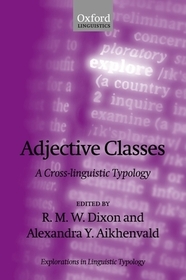
-
10% KEDVEZMÉNY?
- A kedvezmény csak az 'Értesítés a kedvenc témákról' hírlevelünk címzettjeinek rendeléseire érvényes.
- Kiadói listaár GBP 210.00
-
94 815 Ft (90 300 Ft + 5% áfa)
Az ár azért becsült, mert a rendelés pillanatában nem lehet pontosan tudni, hogy a beérkezéskor milyen lesz a forint árfolyama az adott termék eredeti devizájához képest. Ha a forint romlana, kissé többet, ha javulna, kissé kevesebbet kell majd fizetnie.
- Kedvezmény(ek) 10% (cc. 9 482 Ft off)
- Kedvezményes ár 85 334 Ft (81 270 Ft + 5% áfa)
Iratkozzon fel most és részesüljön kedvezőbb árainkból!
Feliratkozom
94 815 Ft

Beszerezhetőség
Megrendelésre a kiadó utánnyomja a könyvet. Rendelhető, de a szokásosnál kicsit lassabban érkezik meg.
Why don't you give exact delivery time?
A beszerzés időigényét az eddigi tapasztalatokra alapozva adjuk meg. Azért becsült, mert a terméket külföldről hozzuk be, így a kiadó kiszolgálásának pillanatnyi gyorsaságától is függ. A megadottnál gyorsabb és lassabb szállítás is elképzelhető, de mindent megteszünk, hogy Ön a lehető leghamarabb jusson hozzá a termékhez.
A termék adatai:
- Kiadó OUP Oxford
- Megjelenés dátuma 2004. szeptember 16.
- ISBN 9780199270934
- Kötéstípus Keménykötés
- Terjedelem392 oldal
- Méret 242x164x27 mm
- Súly 722 g
- Nyelv angol
- Illusztrációk numerous tables 0
Kategóriák
Rövid leírás:
This book shows that every language has an adjective class and how such classes vary. Thirteen scholars report original research on languages from North, Central and South America, Europe, Africa, Asia and the Pacific. The book throws new light on the nature and classification of adjectives and redefines the cross-linguistic parameters of their variation.
TöbbHosszú leírás:
This book shows that every language has an adjective class and examines how these vary in size and character. The opening chapter considers current generalizations about the nature and classification of adjectives and sets out the cross-linguistic parameters of their variation. Thirteen chapters then explore adjective classes in languages from North, Central and South America, Europe, Africa, Asia, and the Pacific. Studies of well-known languages such as Russian, Japanese, Korean and Lao are juxtaposed with the languages of small hunter-gatherer and slash-and-burn agriculturalist groups. All are based on fine-grained field research. The nature and typology of adjective classes are then reconsidered in the conclusion.
This pioneering work shows, among other things, that the grammatical properties of the adjective class may be similar to nouns or verbs or both or neither; that some languages have two kinds of adjectives, one hard to distinguish from nouns and the other from verbs; that the adjective class can sometimes be large and open, and in other cases small and closed.
The book will interest scholars and advanced students of language typology and of the syntax and semantics of adjectives.
Each book in this series focuses on an aspect of language that is of current theoretical interest and for which there has not previously or recently been any full-scale cross-linguistic study. The series is for typologists, fieldworkers, and theory developers at graduate level and above. The books will be suited for use as the basis for advanced seminars and courses. The subjects of next three volumes will be serial verb constructions, complementation, and grammars in contact.
A very useful and usable resource
Tartalomjegyzék:
Adjective Classes in Typological Perspective
Inflected and Uninflected Adjective in Japanese
The Two Adjective Classes in Manange
The Adjective Class in Tariana
Adjectives in Mam
Adjectives in Papantla Totonac
The Small Adjective Class in Jarawara
The Russian Adjective: A pervasive yet elusive category
The Adjective Class in Korean
Is there an Adjective Class in Wolof?
Adjectives in North-east Ambae
Adjectives in Semelai
Adjectives in Qiang
Adjectives in Lao
Adjectives: What can we conclude?

