

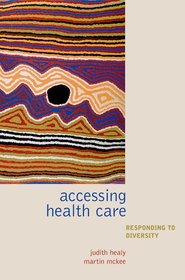
Accessing Healthcare
Responding to diversity
-
10% KEDVEZMÉNY?
- A kedvezmény csak az 'Értesítés a kedvenc témákról' hírlevelünk címzettjeinek rendeléseire érvényes.
- Kiadói listaár GBP 185.00
-
83 527 Ft (79 550 Ft + 5% áfa)
Az ár azért becsült, mert a rendelés pillanatában nem lehet pontosan tudni, hogy a beérkezéskor milyen lesz a forint árfolyama az adott termék eredeti devizájához képest. Ha a forint romlana, kissé többet, ha javulna, kissé kevesebbet kell majd fizetnie.
- Kedvezmény(ek) 10% (kb. 8 352 Ft)
- Kedvezményes ár 75 175 Ft (71 595 Ft + 5% áfa)
Iratkozzon fel most és részesüljön kedvezőbb árainkból!
Feliratkozom
83 527 Ft

Beszerezhetőség
Megrendelésre a kiadó utánnyomja a könyvet. Rendelhető, de a szokásosnál kicsit lassabban érkezik meg.
Why don't you give exact delivery time?
A beszerzés időigényét az eddigi tapasztalatokra alapozva adjuk meg. Azért becsült, mert a terméket külföldről hozzuk be, így a kiadó kiszolgálásának pillanatnyi gyorsaságától is függ. A megadottnál gyorsabb és lassabb szállítás is elképzelhető, de mindent megteszünk, hogy Ön a lehető leghamarabb jusson hozzá a termékhez.
A termék adatai:
- Kiadó OUP Oxford
- Megjelenés dátuma 2004. január 8.
- ISBN 9780198516187
- Kötéstípus Keménykötés
- Terjedelem400 oldal
- Méret 240x161x25 mm
- Súly 695 g
- Nyelv angol 0
Kategóriák
Rövid leírás:
Countries differ in how they organise health care. In some countries diverse groups, such as migrants or ethnic groups, are expected to use the same services as everyone else. In other countries, separate or parallel services are organised that may be more responsive to different health needs, cultures and languages. This book takes an international approach in considering countries and population groups that illustrate the advantages and disadvantages of different ways of delivering health care services.
TöbbHosszú leírás:
Health care systems in developed countries must respond to increasingly diverse populations given greater population movements as a result of globalization. We all share a common humanity yet we each have different health care needs, depending on whether we are young or old, men or women, rich or poor, disabled or able-bodied, from different ethnic and indigenous groups, or citizens or asylum-seekers. Our membership of these societal groups shapes to some extent our health needs and our use of health services. But policy-makers and professionals often seem blind to this diversity. Some groups make special claims upon the state and have different expectations regarding health care. What are the barriers to people receiving equitable health care? Should mainstream services be made more responsive to the needs of different people, or is it necessary to set up alternative health care services? The chapters in this book discuss countries and population groups that illustrate different responses to claimant groups and different ways of delivering health services.
For the first time this book brings draws together examples of how to deal with diversity from health systems across the industrialized world. It considers population groups within countries and takes a broad approach, studying inherent population diversity (age, sex), citizen issues (migrants, asylum seekers) and ethnic and indigenous groups (multiculturalism in the UK, Roma in Europe, New Zealand Maori, Australian Aborigines). It identifies barriers to accessing health care services by diverse populations and cultural groups within different countries and considers the advantages and disadvantages of different delivery models for different population groups.
This book provides an unparalleled breadth of perspectives from which to draw conclusions about how to meet the needs of societies characterised by diversity.
Because of the important messages in this book everyone in the health service, including clinicians, should read it.
Tartalomjegyzék:
Foreword
Preface
Different people, different services?
Sex and gender in health care and health policy
Services for older people
Meeting the needs of people with disabilities
Health care for rich and poor alike
Access and equity in Australian rural health services
Captive populations: prison health care
New citizens: East Germans in a united Germany
Overseas citizens: citoyens de France
Migrants: universal health services in Sweden
Asylum seekers and refugees in the United Kingdom
Multicultural health care in Britain
Roma health: problems and perception
'On our terms': the politics of Aboriginal health in Australia
Maori in Aotearoa/New Zealand
The history and politics of health care for Native Americans
The value and challenges of separate services: First Nation in Canada
Delivering Health services in diverse societies

