

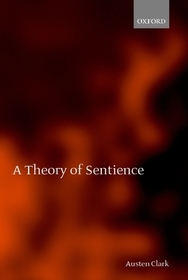
A Theory of Sentience
-
10% KEDVEZMÉNY?
- A kedvezmény csak az 'Értesítés a kedvenc témákról' hírlevelünk címzettjeinek rendeléseire érvényes.
- Kiadói listaár GBP 150.00
-
67 725 Ft (64 500 Ft + 5% áfa)
Az ár azért becsült, mert a rendelés pillanatában nem lehet pontosan tudni, hogy a beérkezéskor milyen lesz a forint árfolyama az adott termék eredeti devizájához képest. Ha a forint romlana, kissé többet, ha javulna, kissé kevesebbet kell majd fizetnie.
- Kedvezmény(ek) 10% (kb. 6 773 Ft)
- Kedvezményes ár 60 953 Ft (58 050 Ft + 5% áfa)
Iratkozzon fel most és részesüljön kedvezőbb árainkból!
Feliratkozom
67 725 Ft

Beszerezhetőség
Megrendelésre a kiadó utánnyomja a könyvet. Rendelhető, de a szokásosnál kicsit lassabban érkezik meg.
Why don't you give exact delivery time?
A beszerzés időigényét az eddigi tapasztalatokra alapozva adjuk meg. Azért becsült, mert a terméket külföldről hozzuk be, így a kiadó kiszolgálásának pillanatnyi gyorsaságától is függ. A megadottnál gyorsabb és lassabb szállítás is elképzelhető, de mindent megteszünk, hogy Ön a lehető leghamarabb jusson hozzá a termékhez.
A termék adatai:
- Kiadó OUP Oxford
- Megjelenés dátuma 2000. március 9.
- ISBN 9780198238515
- Kötéstípus Keménykötés
- Terjedelem304 oldal
- Méret 242x161x21 mm
- Súly 585 g
- Nyelv angol 0
Kategóriák
Rövid leírás:
Austen Clark presents a ground-breaking philosophical theory of sentience, drawing on and illuminating an abundance of scientific work on this subject. Sensation is one of the fundamental elements of consciousness, but has generally been assigned a lowly place in the mental hierarchy; Clark's rich, lucid, and original study restores it to its due prominence. A Theory of Sentience will be compelling reading for all who work on the interaction of mind and world.
TöbbHosszú leírás:
Austen Clark offers a general account of the forms of mental representation that we call `sensory'. To sense something, one must have some capacity to discriminate among sensory qualities; but there are other requirements. What are they, and how can they be put together to yield full-blown sensing?
Drawing on the findings of current neuroscience, Clark proposes and defends the hypothesis that the various modalities of sensation share a generic form that he calls 'feature-placing'. Sensing proceeds by picking out place-times in or around the body of the sentient organism, and characterizing qualities (features) that appear at those place-times. Such feature-placing is a primitive kind--probably the most primitive kind--of mental representation. Once its peculiarities have been described, many of the puzzles about the intentionality of sensation, and the phenomena that lead some to label it 'pseudo-intentional', can be resolved. The hypothesis casts light on many other troublesome phenomena, including the varieties of illusion, the problem of projection, the notion of a visual field, the location of after-images, the existence of sense-data, and the role of perceptual demonstratives. A Theory of Sentience will interest anyone interested in the topics of sensation, representation, or phenomenal consciousness.
A Theory of Sentience is as valuable for the questions it opens up as for the positive theory it puts forward. Austen Clark has brought to our attention a way of thinking about the details of sensory experience which opens up possibilities for fruitful interaction between philosophy, pscychophysics and the neurosciences. It is refreshing to read an exploration of sensory experience which fixes the terrain of investigation firmly within the actual world and which works hard to define tractable problems based around the basic, but often neglected, truth that sensory experience is sensory experience of a three-dimensional environment.
Tartalomjegyzék:
1. Quality Space; 2. Qualities and their Places; 3. Places Phenomenal and Real; 4. Sensing and Reference; 5. The Feature-Placing Hypothesis; 6. True Theories, False Colours; References; Index
Több
