

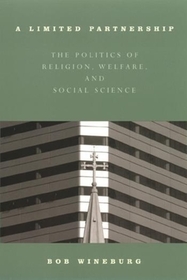
A Limited Partnership
The Politics of Religion, Welfare, and Social Service
-
10% KEDVEZMÉNY?
- A kedvezmény csak az 'Értesítés a kedvenc témákról' hírlevelünk címzettjeinek rendeléseire érvényes.
- Kiadói listaár GBP 30.00
-
13 545 Ft (12 900 Ft + 5% áfa)
Az ár azért becsült, mert a rendelés pillanatában nem lehet pontosan tudni, hogy a beérkezéskor milyen lesz a forint árfolyama az adott termék eredeti devizájához képest. Ha a forint romlana, kissé többet, ha javulna, kissé kevesebbet kell majd fizetnie.
- Kedvezmény(ek) 10% (cc. 1 355 Ft off)
- Kedvezményes ár 12 191 Ft (11 610 Ft + 5% áfa)
Iratkozzon fel most és részesüljön kedvezőbb árainkból!
Feliratkozom
13 545 Ft

Beszerezhetőség
A kiadónál átmenetileg nincs raktáron, ezért a szokásosnál (2-4 hét) többet kell várni a beszerzésre. Ez általában néhány hét plusz időt jelent.
Why don't you give exact delivery time?
A beszerzés időigényét az eddigi tapasztalatokra alapozva adjuk meg. Azért becsült, mert a terméket külföldről hozzuk be, így a kiadó kiszolgálásának pillanatnyi gyorsaságától is függ. A megadottnál gyorsabb és lassabb szállítás is elképzelhető, de mindent megteszünk, hogy Ön a lehető leghamarabb jusson hozzá a termékhez.
A termék adatai:
- Kiadó Columbia University Press
- Megjelenés dátuma 2001. május 8.
- ISBN 9780231120852
- Kötéstípus Puhakötés
- Terjedelem320 oldal
- Méret 226 x 148 mm
- Nyelv angol 0
Kategóriák
Rövid leírás:
Ranging from the Reagan years to the present -- a crucial period in both social welfare policy development and the history of religious involvement in social services -- A Limited Partnership explores an important undercurrent in the new welfare policy. Robert Wineburg argues that the present policy, with its emphasis on services increasingly being delivered by the faith community, simply cannot work the way its architects envisioned. He calls for rationality in finding solutions to the complex problems of poverty and the division of responsibilities for helping those in need at the local level.
Using almost twenty years of data from Greensboro, North Carolina, as a long-term case study, the author examines how the budget cuts of the Reagan era, the Bush era, and the Clinton era altered the relationships among religious congregations and other agencies. The book presents a vivid picture of the chaos caused by these policy changes at the level of service delivery and clearly demonstrates that the religious community cannot be the sole provider of social services but instead must remain an important but limited partner with a special role in delivering social services.
Wineburg's study provides a fresh perspective on a policy debate that genuinely lacks understanding of how politics, religion, and a complicated web of social services operate at the community level.
TöbbHosszú leírás:
Ranging from the Reagan years to the present -- a crucial period in both social welfare policy development and the history of religious involvement in social services -- A Limited Partnership explores an important undercurrent in the new welfare policy. Robert Wineburg argues that the present policy, with its emphasis on services increasingly being delivered by the faith community, simply cannot work the way its architects envisioned. He calls for rationality in finding solutions to the complex problems of poverty and the division of responsibilities for helping those in need at the local level.
Using almost twenty years of data from Greensboro, North Carolina, as a long-term case study, the author examines how the budget cuts of the Reagan era, the Bush era, and the Clinton era altered the relationships among religious congregations and other agencies. The book presents a vivid picture of the chaos caused by these policy changes at the level of service delivery and clearly demonstrates that the religious community cannot be the sole provider of social services but instead must remain an important but limited partner with a special role in delivering social services.
Wineburg's study provides a fresh perspective on a policy debate that genuinely lacks understanding of how politics, religion, and a complicated web of social services operate at the community level.
Több
