

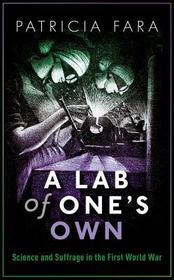
A Lab of One's Own
Science and Suffrage in the First World War
-
10% KEDVEZMÉNY?
- A kedvezmény csak az 'Értesítés a kedvenc témákról' hírlevelünk címzettjeinek rendeléseire érvényes.
- Kiadói listaár GBP 27.49
-
12 411 Ft (11 820 Ft + 5% áfa)
Az ár azért becsült, mert a rendelés pillanatában nem lehet pontosan tudni, hogy a beérkezéskor milyen lesz a forint árfolyama az adott termék eredeti devizájához képest. Ha a forint romlana, kissé többet, ha javulna, kissé kevesebbet kell majd fizetnie.
- Kedvezmény(ek) 10% (cc. 1 241 Ft off)
- Kedvezményes ár 11 170 Ft (10 638 Ft + 5% áfa)
Iratkozzon fel most és részesüljön kedvezőbb árainkból!
Feliratkozom
12 411 Ft

Beszerezhetőség
Becsült beszerzési idő: A Prosperónál jelenleg nincsen raktáron, de a kiadónál igen. Beszerzés kb. 3-5 hét..
A Prosperónál jelenleg nincsen raktáron.
Why don't you give exact delivery time?
A beszerzés időigényét az eddigi tapasztalatokra alapozva adjuk meg. Azért becsült, mert a terméket külföldről hozzuk be, így a kiadó kiszolgálásának pillanatnyi gyorsaságától is függ. A megadottnál gyorsabb és lassabb szállítás is elképzelhető, de mindent megteszünk, hogy Ön a lehető leghamarabb jusson hozzá a termékhez.
A termék adatai:
- Kiadó OUP Oxford
- Megjelenés dátuma 2018. január 11.
- ISBN 9780198794981
- Kötéstípus Keménykötés
- Terjedelem352 oldal
- Méret 221x143x32 mm
- Súly 490 g
- Nyelv angol
- Illusztrációk 23 black & white illustrations 0
Kategóriák
Rövid leírás:
2018 marks the centenary not only of the Armistice but also of women gaining the vote. A Lab of One's Own commemorates both anniversaries by exploring how the War gave female scientists, doctors, and engineers unprecedented opportunities to undertake endeavours normally reserved for men.
TöbbHosszú leírás:
Many extraordinary female scientists, doctors, and engineers tasted independence and responsibility for the first time during the First World War. How did this happen? Patricia Fara reveals how suffragists, such as Virginia Woolf's sister, Ray Strachey, had already aligned themselves with scientific and technological progress, and that during the dark years of war they mobilized women to enter conventionally male domains such as science and medicine. Fara tells the stories of women such as: mental health pioneer Isabel Emslie, chemist Martha Whiteley, a co-inventor of tear gas, and botanist Helen Gwynne Vaughan. Women were now carrying out vital research in many aspects of science, but could it last?
Though suffragist Millicent Fawcett declared triumphantly that 'the war revolutionised the industrial position of women. It found them serfs, and left them free', the outcome was very different. Although women had helped the country to victory and won the vote for those over thirty, they had lost the battle for equality. Men returning from the Front reclaimed their jobs, and conventional hierarchies were re-established even though the nation now knew that women were fully capable of performing work traditionally reserved for men.
Fara examines how the bravery of these pioneer women scientists, temporarily allowed into a closed world before the door clanged shut again, paved the way for today's women scientists. Yet, inherited prejudices continue to limit women's scientific opportunities.
[An] interesting study.
Tartalomjegyzék:
Preserving the Past, Facing the Future
Snapshots: Suffrage and Science at Cambridge
A Divided Nation: Class, Gender, and Science in Early Twentieth-Century Britain
Subjects of Science: Biological Justifications of Women's Status
Abandoning Domesticity, Working for the Vote
A New Century: Voting for Science
Factories of Science: Women Work for War
Ray Costelloe / Strachey: The Life of a Mathematical Suffragist
Corridors of Science, Crucibles of Power
Scientists in Petticoats: Women and Science Before the War
A Scientific State: Technological Warfare in the Early Twentieth Century
Taking Over: Women, Science and Power During the War
Chemical Campaigners: Ida Smedley and Martha Whiteley
Scientific Warfare, Wartime Welfare
Soldiers of Science: Scientific Women Fighting on the Home Front
Scientists in Khaki: Mona Geddes and Helen Gwynne-Vaughan
Medical Recruits: Scientists Care for the Nation
From Scotland to Sebastopol: The Wartime Work of Dr Isabel Emslie Hutton
Citizens of Science in a Post-War World
Inter-War Normalities: Scientific Women and Struggles for Equality
Lessons of Science: Learning from the Past to Improve the Future
Bibliography

