

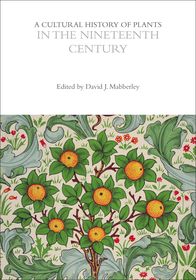
A Cultural History of Plants in the Nineteenth Century
Sorozatcím: The Cultural Histories Series;
-
10% KEDVEZMÉNY?
- A kedvezmény csak az 'Értesítés a kedvenc témákról' hírlevelünk címzettjeinek rendeléseire érvényes.
- Kiadói listaár GBP 25.99
-
11 734 Ft (11 175 Ft + 5% áfa)
Az ár azért becsült, mert a rendelés pillanatában nem lehet pontosan tudni, hogy a beérkezéskor milyen lesz a forint árfolyama az adott termék eredeti devizájához képest. Ha a forint romlana, kissé többet, ha javulna, kissé kevesebbet kell majd fizetnie.
- Kedvezmény(ek) 10% (kb. 1 174 Ft)
- Kedvezményes ár 10 560 Ft (10 058 Ft + 5% áfa)
Iratkozzon fel most és részesüljön kedvezőbb árainkból!
Feliratkozom
11 734 Ft

Beszerezhetőség
Becsült beszerzési idő: A Prosperónál jelenleg nincsen raktáron, de a kiadónál igen. Beszerzés kb. 3-5 hét..
A Prosperónál jelenleg nincsen raktáron.
Why don't you give exact delivery time?
A beszerzés időigényét az eddigi tapasztalatokra alapozva adjuk meg. Azért becsült, mert a terméket külföldről hozzuk be, így a kiadó kiszolgálásának pillanatnyi gyorsaságától is függ. A megadottnál gyorsabb és lassabb szállítás is elképzelhető, de mindent megteszünk, hogy Ön a lehető leghamarabb jusson hozzá a termékhez.
A termék adatai:
- Kiadó Bloomsbury Publishing (UK)
- Megjelenés dátuma 2025. május 29.
- Kötetek száma Paperback
- ISBN 9781350550629
- Kötéstípus Puhakötés
- Terjedelem256 oldal
- Méret 242x168x16 mm
- Súly 477 g
- Nyelv angol 701
Kategóriák
Rövid leírás:
Looks at the revolution of botanical study and the evolution of the new science of biology in the period from 1800 to 1920, a time of astonishing growth in industrialization, urbanization, migration, population growth, colonial possessions, and developments in scientific knowledge.
TöbbHosszú leírás:
A Cultural History of Plants in the Nineteenth Century covers the period from 1800 to 1920, a time of astonishing growth in industrialization, urbanization, migration, population growth, colonial possessions, and developments in scientific knowledge. As European modes of civilization and cultivation were exported worldwide, botanical study was revolutionized - through the work of Charles Darwin and many others - and the new science of biology was born, based on cells, nuclei and molecules. As Darwinism took hold, plants came to be seen as a way of thinking about the connectivity of nature and life itself.
The six-volume set of the Cultural History of Plants presents the first comprehensive history of the uses and meanings of plants from prehistory to today. The themes covered in each volume are plants as staple foods; plants as luxury foods; trade and exploration; plant technology and science; plants and medicine; plants in culture; plants as natural ornaments; the representation of plants.
David Mabberley is Emeritus Fellow at Wadham College, University of Oxford, UK; Emeritus Professor at the University of Leiden, The Netherlands; and Adjunct Professor at Macquarie University, Australia.
A Cultural History of Plants in the Nineteenth Century is the fifth volume in the six-volume set, A Cultural History of Plants, also available online as part of Bloomsbury Cultural History, a fully-searchable digital library (see www.bloomsburyculturalhistory.com).
General Editors: Annette Giesecke, Victoria University of Wellington, New Zealand, and David Mabberley, University of Oxford, UK.
Tartalomjegyzék:
Series Preface
List of Figures
Introduction, David Mabberley
1. Plants as Staple Foods, Claudia Ciotir
2. Plants as Luxury Foods, Patrick Hunt
3. Trade and Exploration, Mark Nesbitt
4. Plant Technology and Science, Anne Osbourn
5. Plants and Medicine, Monique Simmonds
6. Plants in Culture, Roy Vickery
7. Plants as Natural Ornaments, Clemens Alexander Wimmer
8. The Representation of Plants, H. Walter Lack
Notes
Bibliography
Notes on Contributors
Index

