

-
5% KEDVEZMÉNY?
- A kedvezmény csak az 'Értesítés a kedvenc témákról' hírlevelünk címzettjeinek rendeléseire érvényes.
- Kiadói listaár EUR 22.00
-
8 593 Ft (8 184 Ft + 5% áfa)
Az ár azért becsült, mert a rendelés pillanatában nem lehet pontosan tudni, hogy a beérkezéskor milyen lesz a forint árfolyama az adott termék eredeti devizájához képest. Ha a forint romlana, kissé többet, ha javulna, kissé kevesebbet kell majd fizetnie.
- Kedvezmény(ek) % (cc. 0 Ft off)
- Kedvezményes ár 0 Ft (0 Ft + 5% áfa)
Iratkozzon fel most és részesüljön kedvezőbb árainkból!
Feliratkozom
8 593 Ft

Beszerezhetőség
Becsült beszerzési idő: A Prosperónál jelenleg nincsen raktáron, de a kiadónál igen. Beszerzés kb. 3-5 hét..
A Prosperónál jelenleg nincsen raktáron.
Why don't you give exact delivery time?
A beszerzés időigényét az eddigi tapasztalatokra alapozva adjuk meg. Azért becsült, mert a terméket külföldről hozzuk be, így a kiadó kiszolgálásának pillanatnyi gyorsaságától is függ. A megadottnál gyorsabb és lassabb szállítás is elképzelhető, de mindent megteszünk, hogy Ön a lehető leghamarabb jusson hozzá a termékhez.
A termék adatai:
- Kiadó Island Press
- Megjelenés dátuma 2023. április 27.
- Kötetek száma Print PDF
- ISBN 9781642832952
- Kötéstípus Puhakötés
- Terjedelem168 oldal
- Méret 203x127 mm
- Súly 206 g
- Nyelv angol
- Illusztrációk 20 photos/illustrations 299
Kategóriák
Hosszú leírás:
“Congestion is the life of the city . . . it is what we came for, what we stay for, what we hunger for”, wrote Charles Downing Lay, prominent American landscape architect and planner of the early 1920s. These words are relevant today as density and congestion are once again under siege, especially in our most productive and thriving cities.
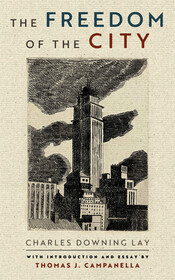
Published in 1926, The Freedom of the City by Charles Downing Lay is an eloquent and timely defense of urbanism and city life. Award-winning author and urban historian Thomas J. Campanella has given Lay’s text new life and relevance, with the addition of explanatory notes, imagery, an introduction, and biographical essay, to bring this important work to a new generation of urbanists.
Lay was decades ahead of his time, writing The Freedom of the City as Americans were just beginning to fall in love with the automobile and leave town for a romanticized life on the suburban fringe. Planners and theorists were arguing that heavily congested cities were a form of cancer, that great metropolitan centers like London and New York City must be decanted into a leafy “garden cities” in the countryside. Lay saved his sharpest pen for these anti-urbanists in his own profession of city and regional planning.
Lay writes of the delights of city life and—especially—that importance of the singular, essential ingredient that makes it all possible: “congestion” (closest in definition to “density” today). Congestion, to Lay, is the secret sauce of cities, the singular element that gives London, Paris, or New York its dynamism and magic. He believed that the amenities and affordances of a city are “the direct result of its great congestion”; indeed, congestion is “the life of the city. Reduce it below a certain point and much of our ease and convenience disappears.
Campanella writes “for all his blind spots, Lay's core argument still obtains. The Freedom of the City was prescient in 1926 and timely now. Certainly, the essentials of good urbanism extolled in the book—human scale, diversity, walkability, the serendipities of the street; above all, density—are articles of faith among architects and urbanists today.”
"Campanella’s revival of The Freedom of the City spotlights our perennial amnesia regarding the value of urban density. Every generation of Americans, it seems, needs reminding that the city—crowded, congested, and often chaotic—is also a place of joyous social friction. As many again question the relevance of urbanism in this new age of hybrid work, Lay and Campanella remind us that true freedom emanates from city streets, not glowing screens."---Vishaan Chakrabarti, Founder and Creative Director, Practice for Architecture and Urbanism (PAU) Több

