

-
10% KEDVEZMÉNY?
- Kiadói listaár GBP 155.00
-
69 982 Ft (66 650 Ft + 5% áfa)
Az ár azért becsült, mert a rendelés pillanatában nem lehet pontosan tudni, hogy a beérkezéskor milyen lesz a forint árfolyama az adott termék eredeti devizájához képest. Ha a forint romlana, kissé többet, ha javulna, kissé kevesebbet kell majd fizetnie.
- Kedvezmény(ek) 10% (cc. 6 998 Ft off)
- Kedvezményes ár 62 984 Ft (59 985 Ft + 5% áfa)
62 984 Ft

Beszerezhetőség
Még nem jelent meg, de rendelhető. A megjelenéstől számított néhány héten belül megérkezik.
Why don't you give exact delivery time?
A beszerzés időigényét az eddigi tapasztalatokra alapozva adjuk meg. Azért becsült, mert a terméket külföldről hozzuk be, így a kiadó kiszolgálásának pillanatnyi gyorsaságától is függ. A megadottnál gyorsabb és lassabb szállítás is elképzelhető, de mindent megteszünk, hogy Ön a lehető leghamarabb jusson hozzá a termékhez.
A termék adatai:
- Kiadás sorszáma 1
- Kiadó Routledge
- Megjelenés dátuma 2026. szeptember 22.
- ISBN 9781041249344
- Kötéstípus Keménykötés
- Terjedelem298 oldal
- Méret 234x156 mm
- Nyelv angol 0
Kategóriák
Rövid leírás:
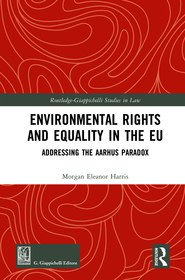
This book seeks to understand what tools may be available within the European legal order to ensure that all persons enjoy equal opportunities for environmental participation.
TöbbHosszú leírás:
The emergence of environmental public participation rights in Europe has provided people with greater opportunities to access environmental information, participate in environmental decision-making, and seek judicial protection of their right to a healthy environment. However, significant barriers to exercising environmental participation rights persist for many, particularly those who face other forms of marginalization connected to race, gender, and economic status. Such obstacles can result in outcomes that reinforce, rather than reduce, environmental inequality and injustice, a phenomenon known as the ‘Aarhus paradox.’ In the light of this chal-lenge, this book seeks to understand what tools may be available within the European legal order to ensure that all persons enjoy equal opportunities for environmental participation. Drawing upon social sciences and legal scholarship and looking towards the practice of EU institutions, courts and human rights bodies, this volume explores how law can respond to the Aarhus paradox and how it might better secure the right for all to contribute to the pursuit of environmental sustainability in Europe. The analysis centres on the 1998 Aarhus Convention and its implementation in the EU legal order, examining which of its provisions may already require states to ensure that all persons may participate on equal terms. It also analyses how the broader EU legal order and its fundamental rights framework might support, or even require, a more balanced and equality-oriented implementation of participation rights, including by fostering collective participation through environmental associations. By combining legal analysis with insights from the social sciences, the book proposes potential strategies to address inequalities in this area, while recognizing both the transformative potential of the law and its intrinsic limitations. Intended for academics, legal practitioners, and policymakers, the book offers a contribution to debates on EU law, environmental law, participation rights and environmental justice.
TöbbTartalomjegyzék:
1. Environmental Justice and Participation Rights in Europe: Setting the Ground; 2. The Aarhus Paradox: Understanding Barriers to Public Participation in Europe; 3.The 1998 Aarhus Convention and Barriers to Public Participation in Environmental Matters; 4 Equality and Participation rights in the 2018 Escazú Agreement; 5. Fundamental Rights and Environmental Participation Rights in the EU; 6. Fundamental Rights and Environmental Participation Rights in the EU; 7. Equality and Participation Rights in the European Union; 8. Conclusions
Több
