

-
10% KEDVEZMÉNY?
- Kiadói listaár GBP 155.00
-
69 982 Ft (66 650 Ft + 5% áfa)
Az ár azért becsült, mert a rendelés pillanatában nem lehet pontosan tudni, hogy a beérkezéskor milyen lesz a forint árfolyama az adott termék eredeti devizájához képest. Ha a forint romlana, kissé többet, ha javulna, kissé kevesebbet kell majd fizetnie.
- Kedvezmény(ek) 10% (cc. 6 998 Ft off)
- Kedvezményes ár 62 984 Ft (59 985 Ft + 5% áfa)
62 984 Ft

Beszerezhetőség
Még nem jelent meg, de rendelhető. A megjelenéstől számított néhány héten belül megérkezik.
Why don't you give exact delivery time?
A beszerzés időigényét az eddigi tapasztalatokra alapozva adjuk meg. Azért becsült, mert a terméket külföldről hozzuk be, így a kiadó kiszolgálásának pillanatnyi gyorsaságától is függ. A megadottnál gyorsabb és lassabb szállítás is elképzelhető, de mindent megteszünk, hogy Ön a lehető leghamarabb jusson hozzá a termékhez.
A termék adatai:
- Kiadás sorszáma 1
- Kiadó Routledge
- Megjelenés dátuma 2026. szeptember 28.
- ISBN 9781041074359
- Kötéstípus Keménykötés
- Terjedelem256 oldal
- Méret 234x156 mm
- Nyelv angol
- Illusztrációk 1 Tables, black & white 0
Kategóriák
Rövid leírás:
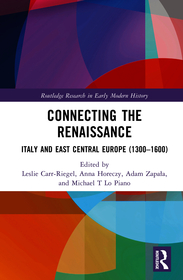
Why did Italian culture come to occupy such privileged status and interest among the societies of East-Central Europe during the period 1300–1600? Two centuries after 1300, East-Central Europe was saturated with Italianate forms that rivalled the most sophisticated centers of the High Renaissance.
Több
Hosszú leírás:
Why did Italian culture come to occupy such privileged status and interest among the societies of East-Central Europe during the period 1300–1600? In 1300 East-Central Europe regarded Italy not necessarily as an undisputed center of cultural emulation but drew from a much wider range of models centered in France, Germany, and even Kievan Rus’. Two centuries later the same region was saturated with Italianate forms – architecture, humanism, diplomacy, commerce, and print – that rivalled the most sophisticated centers of the High Renaissance.
This volume argues that the transformation was neither passive reception nor mere “Italianism.” Rather, East-Central-European societies deliberately appropriated, hybridized, and reinterpreted Italian practices and values specifically to achieve their own political, economic, and intellectual aims and meet an array of regional challenges.
Ranging in focus from fourteenth-century Italian mining practices to digital Latin corpus analysis, diplomatic history, and early print studies, together the chapters in this volume present nine case studies which draw on a number of methodologies, new sources, and fresh archival research that all advance an understanding of this important and complex phenomenon. This book is a vital reading for scholars of cultural transfer, early modern studies, and East–Central European history more broadly.
TöbbTartalomjegyzék:
List of Contributors
Introduction
Michael LoPiano
Chapter 1
Little Genoa – The First Italian Community in Poland
Leslie Carr-Riegel
Chapter 2
From Padua to Kraków: Niccolò Bonavia’s De laudibus sancti Hieronymi and Its Manuscript Afterlife
Anja Božič
Chapter 3
A Polish Bishop on the Italian Chessboard: Renaissance Diplomatic Patterns in Zbigniew Oleśnicki’s Struggle for Cardinalate Confirmation
Adam Zapała
Chapter 4
John of Capestrano and his Spiritual Networks: the Case of Bohemia
Antonín Kalous and Petra Mutlová
Chapter 5
The Humanist Library of Jan Długosz (1415-1480). An Attempt at Reconstruction
Zdzisław Koczarski
Chapter 6
Connecting the Italian Humanist Literary Circle to Poland: The Case of Callimachus, Conrad Celtis, and the Origins of the Sodalitas Litteraria Vistulana
Michael LoPiano
Chapter 7
Aldine Prints in Kraków at the Turn of the Sixteenth Century as Vehicles of Cultural Transfer
Anna Horeczy
Chapter 8
From Queen to Deceived Bride – Beatrice of Aragon's Struggle to Become the Wife of Vladislaus II Jagiellon
Hajnalka Kuffart
Chapter 9
Ippolito I d’Este’s Episcopal Court in Eger (1498–1520)
Ilona Kristóf
Index
Több
