

-
10% KEDVEZMÉNY?
- Kiadói listaár GBP 32.99
-
14 894 Ft (14 185 Ft + 5% áfa)
Az ár azért becsült, mert a rendelés pillanatában nem lehet pontosan tudni, hogy a beérkezéskor milyen lesz a forint árfolyama az adott termék eredeti devizájához képest. Ha a forint romlana, kissé többet, ha javulna, kissé kevesebbet kell majd fizetnie.
- Kedvezmény(ek) 10% (cc. 1 489 Ft off)
- Kedvezményes ár 13 405 Ft (12 767 Ft + 5% áfa)
13 405 Ft

Beszerezhetőség
Még nem jelent meg, de rendelhető. A megjelenéstől számított néhány héten belül megérkezik.
Why don't you give exact delivery time?
A beszerzés időigényét az eddigi tapasztalatokra alapozva adjuk meg. Azért becsült, mert a terméket külföldről hozzuk be, így a kiadó kiszolgálásának pillanatnyi gyorsaságától is függ. A megadottnál gyorsabb és lassabb szállítás is elképzelhető, de mindent megteszünk, hogy Ön a lehető leghamarabb jusson hozzá a termékhez.
A termék adatai:
- Kiadás sorszáma 1
- Kiadó Routledge
- Megjelenés dátuma 2026. július 8.
- ISBN 9781041003076
- Kötéstípus Puhakötés
- Terjedelem348 oldal
- Méret 216x138 mm
- Nyelv angol 700
Kategóriák
Rövid leírás:
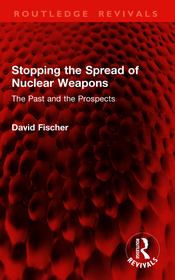
Although in the early 1990s, nearly fifty countries had a nuclear capacity, and many more were close to it, only a handful were actually in possession of nuclear weapons. David Fischer’s book, originally published in 1992, addresses the problem of how to prevent the wider acquisition of such weapons.
Több
Hosszú leírás:
Although in the early 1990s, nearly fifty countries had a nuclear capacity, and many more were close to it, only a handful were actually in possession of nuclear weapons. David Fischer’s book, originally published in 1992, was of particular interest in the light of the collapse of the post-war power structure, and the intensive militarization in the Middle East at the time, addresses the problem of how to prevent the wider acquisition of such weapons.
Fischer surveys the success of the international regime set up to stop the spread of nuclear weapons since the mid-1960s, in particular the fact that since 1968, 138 nations had renounced the bomb (now up to 190). The strengths and weaknesses of the non-proliferation treaty, and the reasons the author believes its membership should extend to France and China are discussed as is the 1995 conference that would decide the future of this treaty. Evidence is provided of the relationship between the development of nuclear power and the acquisition of nuclear weapons and of the dangers involved in the growing use of plutonium and the building of nuclear submarines.
The book attempts to provide a detailed and comprehensive view of the ongoing conflict between nuclear deterrence and non-proliferation and to look at both the short- and long-term prospects for non-proliferation.
Today it can be read in its historical context.
TöbbTartalomjegyzék:
List of Tables. Preface. Introduction. 1. The Regime and the Issues: An Overview Part I: The Past 2. How We Got There: ‘Atoms for Peace’ 3. The Re-assessment of ‘Atoms for Peace’ Part II: The Present 4. The Mainstays of the Regime 1: The Treaties 5. The Mainstays of the Regime 2: Safeguards and Controls Part III: The Future 6. Emerging Issues for the Regime 7. Changing Technical Parameters 8. The Future of Non-Proliferation Institutions 9. The Main Players 1: The Nuclear Weapon States 10. The Main Players 2: The Threshold States 11. The Main Players 3: The NPT Non-Nuclear Weapon States 12. The 1995 Conference: Some Tactical Considerations 13. The Future of the Regime: The Short Term 14. The Future of the Regime: Beyond 1995. Postscript. Notes. Annexes. Index.
Több
