

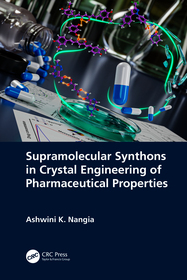
Supramolecular Synthons in Crystal Engineering of Pharmaceutical Properties
Sorozatcím: xx xx;
-
10% KEDVEZMÉNY?
- Kiadói listaár GBP 67.99
-
30 697 Ft (29 235 Ft + 5% áfa)
Az ár azért becsült, mert a rendelés pillanatában nem lehet pontosan tudni, hogy a beérkezéskor milyen lesz a forint árfolyama az adott termék eredeti devizájához képest. Ha a forint romlana, kissé többet, ha javulna, kissé kevesebbet kell majd fizetnie.
- Kedvezmény(ek) 10% (cc. 3 070 Ft off)
- Kedvezményes ár 27 627 Ft (26 312 Ft + 5% áfa)
27 627 Ft

Beszerezhetőség
Megrendelésre a kiadó utánnyomja a könyvet. Rendelhető, de a szokásosnál kicsit lassabban érkezik meg.
Why don't you give exact delivery time?
A beszerzés időigényét az eddigi tapasztalatokra alapozva adjuk meg. Azért becsült, mert a terméket külföldről hozzuk be, így a kiadó kiszolgálásának pillanatnyi gyorsaságától is függ. A megadottnál gyorsabb és lassabb szállítás is elképzelhető, de mindent megteszünk, hogy Ön a lehető leghamarabb jusson hozzá a termékhez.
A termék adatai:
- Kiadás sorszáma 1
- Kiadó CRC Press
- Megjelenés dátuma 2026. június 21.
- ISBN 9781032196183
- Kötéstípus Puhakötés
- Terjedelem182 oldal
- Méret 234x156 mm
- Súly 370 g
- Nyelv angol
- Illusztrációk 191 Illustrations, black & white 697
Kategóriák
Rövid leírás:
This comprehensive resource skillfully consolidates Crystal Engineering, the design of organic solids, and Supramolecular Synthons (i.e. structural hydrogen bond units) to achieve desired Pharmaceutical Properties, including solubility, dissolution, bioavailability, permeability, particle size, tableting, hydration, and mechanical strength.
TöbbHosszú leírás:
This comprehensive resource skillfully consolidates crystal engineering, the design of organic solids, and supramolecular synthons (i.e., structural hydrogen bond units) to achieve desired pharmaceutical properties, including solubility, dissolution, bioavailability, permeability, particle size, tableting, hydration, and mechanical strength. Covering 30 years of crystal engineering developments and pharmaceutical applications, this book will be a single and complete resource for supramolecular and structural chemists, the crystal engineering community, pharmaceutical scientists, and industrial researchers.
Key Features
- Covers the fundamentals of crystal engineering and supramolecular synthons.
- Details the challenges of low solubility and low permeability facing oral drug formulations.
- Explains how heterosynthons provide a rational approach to address and implement solutions.
- Provides case studies from academic and industrial labs to walk the reader through the actual steps.
- Explores developments in the scale up and manufacture of crystal forms in pharmaceutical industry.
Tartalomjegyzék:
Chapter 1 Introduction to Supramolecular Chemistry and Crystal Engineering
1.1 Introduction
1.2 Organic synthesis
1.3 Supramolecular chemistry
1.4 Crystal engineering
1.5 Hydrogen bonding
1.6 Space groups
1.7 Summary conclusions
1.8 References
1.9 Questions and thoughts
1.10 Additional reading
Chapter 2 Crystal Engineering, Supramolecular Synthons, and Cocrystal Design
2.1 Introduction
2.2 Supramolecular synthons
2.3 Crystal engineering of pharmaceutical cocrystals
2.3.1 Cocrystals
2.3.2 Pharmaceutical cocrystals
2.4 Cocrystal design approaches
2.4.1 Hydrogen bond synthons
2.4.2 ΔpKa rule
2.4.3 Computational methods
2.4.4 Molecular electrostatic potential surface energy
2.4.5 Hansen solubility parameter
2.5 Summary conclusions
2.6 References
2.7 Questions and thoughts
Chapter 3 Pharmaceutical Solid-State Forms
3.1 Introduction
3.2 Pharmaceutical multi-component crystals
3.2.1 Drug salts and pharmaceutical cocrystals
3.2.2 Pharmaceutical cocrystals via crystal engineering
3.2.3 Coamorphous solids
3.2.4 Solid solutions and eutectics
3.2.5 Ionic liquids
3.2.6 Ionic cocrystals
3.2.7 Nanocrystalline drugs
3.2.8 Supramolecular gels of drugs
3.2.9 Salt−cocrystal continuum or hybrid quasi-state of proton
3.2.10 Cocrystal polymorphs
3.2.11 Ternary and higher organic cocrystals
3.3 Summary conclusions
3.4 References
3.5 Questions and thoughts
Chapter 4 Design and Methodology of Pharmaceutical Cocrystals
4.1 Introduction
4.2 Complementarity between API and coformer
4.3 Preparation methods of cocrystals
4.3.1 Spray drying
4.3.2 Freeze drying
4.3.3 Hot melt extrusion
4.3.4 Rotary evaporator method
4.3.5 Vapor-assisted tumbling
4.4 Drug−drug cocrystals
4.5 Drug−nutraceutical cocrystals
4.6 Ternary and higher order cocrystals
4.7 Cocrystals of different stoichiometry
4.8 Zwitterionic cocrystals
4.9 Halogen-bonded pharmaceutical cocrystals
4.10 Characterization methods of cocrystals
4.11 Summary conclusions
4.12 References
4.13 Questions and thoughts
Chapter 5 Applications of Pharmaceutical Cocrystals
5.1 Introduction
5.2 Bioavailability improvement
5.3 Hydration stability
5.4 Chemical degradation stability
5.5 Tableting
5.6 Mechanical properties
5.7 Phase diagram and solubility measurements
5.8 Permeability and plasma concentration
5.9 Spring and Parachute model
5.10 Summary conclusions
5.11 References
5.12 Questions and thoughts
Chapter 6 Continuous Manufacturing of Cocrystals and Salts
6.1 Introduction
6.2 Batch and flow chemistry
6.3 Flow chemistry and pharmaceutical cocrystals manufacturing
6.4 Case studies of pharmaceutical cocrystals and salts
6.5 Continuous process technologies
6.6 Flow guide for the synthetic chemist
6.7 Summary conclusions
6.8 References
6.9 Questions and thoughts
Chapter 7 Commercial Outlook of Pharmaceutical Cocrystals
7.1 Introduction
7.2 Present status
7.3 Patenting and regulatory aspects
7.4 Entresto® drug-drug cocrystal salt
7.5 Seglentis® US-FDA approval
7.6 Summary conclusions
7.7 References
7.8 Questions and thoughts
Chapter 8 Controlling Polymorphism
8.1 Introduction
8.2 Definition and importance
8.3 Polymorphism and cocrystallization
8.4 Tailored additives to control crystal size and morphology
8.5 Summary conclusions
8.6 References
8.7 Questions and thoughts
Chapter 9 Supramolecular Heterosynthon in High Bioavailability Drugs
9.1 Introduction
9.2 Common heterosynthons in drugs
9.3 Heterosynthon model for high bioavailability drugs
9.4 Models for permeability enhancement
9.5 Cocrystal drugs beyond the Rule of 5
9.6 Improving cell penetration by atom replacement
9.7 Summary conclusions
9.9 Questions and thoughts
Chapter 10 Other Applications of Cocrystals
10.1 Introduction
10.2 Property engineering
10.3 Mechanochemistry
10.4 Energetic cocrystals
10.5 Summary conclusions
10.6 References
10.7 Questions and thoughts
Chapter 11 AI ML ChatGPT in Chemistry
11.1 Introduction
11.2 Retrosynthetic reaction prediction
11.3 Medicinal molecules
11.4 MOFs and inorganic materials
11.5 Cocrystals
11.6 Summary conclusions
11.7 References
11.8 Questions and thoughts
Chapter 12 3D Electron Diffraction
12.1 Introduction
12.2 Advantages of ED
12.3 Resurgence of ED
12.4 New pharmaceutical challenges solved by ED
12.5 Summary conclusions
12.6 References
12.7 Questions and thoughts
Chapter 13 Challenges, Conclusions, and Future Directions
13.1 Introduction
13.2 Carboxamide−pyridine-N-oxide heterosynthon
13.3 Browsing the literature
13.4 Challenges in pharmaceutical cocrystal technology
13.5 Conclusions
13.6 References
13.7 Suggested reading
Index
Több
