

-
GET 18% OFF
- Publisher's listprice GBP 28.99
-
13 088 Ft (12 465 Ft + 5% VAT)
The price is estimated because at the time of ordering we do not know what conversion rates will apply to HUF / product currency when the book arrives. In case HUF is weaker, the price increases slightly, in case HUF is stronger, the price goes lower slightly.
- Discount 18% (cc. 2 356 Ft off)
- Discounted price 10 732 Ft (10 221 Ft + 5% VAT)
- Discount is valid until: 31 October 2026
10 732 Ft

Availability
Not yet published.
Why don't you give exact delivery time?
Delivery time is estimated on our previous experiences. We give estimations only, because we order from outside Hungary, and the delivery time mainly depends on how quickly the publisher supplies the book. Faster or slower deliveries both happen, but we do our best to supply as quickly as possible.
Product details:
- Publisher Bloomsbury Publishing (UK)
- Date of Publication 20 August 2026
- ISBN 9781538183441
- Binding Paperback
- No. of pages136 pages
- Size 228.6x152.4 mm
- Language English 700
Categories
Long description:
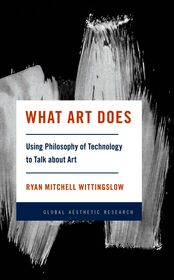
We derive a great deal of cognitive pleasure from asking what artworks mean. And yet, despite the seriousness with which we approach these questions, they all too often rely on theories of art that fail to adequately explain how art conveys meaning.
This book proposes a new theory. In contrast to more conventional definitions of art, What Art Does defends the claim that artworks constitute a class of tool. Like other tools, artworks are objects that have functions and that furnish affordances. However, thanks to the particular social and material facts that underpin the creation of artworks, the functions that artworks have and the affordances they furnish are special.
It is thanks to these special functions and affordances that artworks obtain their privileged character and status. Because artworks do things that other tools cannot, we take artworks to be meaning-making objects with something to say.
Table of Contents:
Introduction
Chapter 1. Conditions
Chapter 2. Functions
Chapter 3. Affordances
Chapter 4. Artworlds
Chapter 5. Artworks
References
About the Author

