

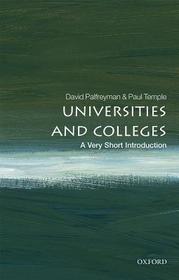
- Publisher's listprice GBP 9.99
-
4 772 Ft (4 545 Ft + 5% VAT)
The price is estimated because at the time of ordering we do not know what conversion rates will apply to HUF / product currency when the book arrives. In case HUF is weaker, the price increases slightly, in case HUF is stronger, the price goes lower slightly.
- Discount 10% (cc. 477 Ft off)
- Discounted price 4 295 Ft (4 091 Ft + 5% VAT)
Subcribe now and take benefit of a favourable price.
Subscribe
4 772 Ft

Availability
Estimated delivery time: Expected time of arrival: end of January 2026.
Not in stock at Prospero.
Why don't you give exact delivery time?
Delivery time is estimated on our previous experiences. We give estimations only, because we order from outside Hungary, and the delivery time mainly depends on how quickly the publisher supplies the book. Faster or slower deliveries both happen, but we do our best to supply as quickly as possible.
Product details:
- Publisher OUP Oxford
- Date of Publication 28 December 2017
- ISBN 9780198766131
- Binding Paperback
- No. of pages176 pages
- Size 174x112x9 mm
- Weight 136 g
- Language English
- Illustrations 10 black and white image 0
Categories
Short description:
This book looks at the role of the university in a social and economic context, as a repository of knowledge and a site for instruction. It considers how universities are founded,, funded, governed, lead, and managed, how the advent of increased fees has affected their relationship with students, and what is in the future for higher education.
MoreLong description:
What is a university? What is the University? How have universities evolved over the centuries? How might they change over the coming decades as the physical and organisational entity most identified with 'higher education' being delivered to over 250 million students? What will be the impact of digital- and distance-learning, of commercial for-profit new entrants to the higher education market, of government austerity, of globalization, of student consumerism?
Exploring the origins and the concept, the idea and the ideal, of the university, this Very Short Introduction discusses one of the world's oldest, most resilient, and most adaptable institutions. David Palfreyman and Paul Temple consider the links between universities and the economy, and the role of universities within society. Highlighting some of the key questions surrounding the position of universities, they ask how the university can be politically accountable for its taxpayer funding, if it needs to be autonomous to function effectively as a public good. Are professors professional enough in their teaching practices at a time that increasing tuition fees transform students more and more into consumers? And just what does 'academic freedom' for university faculties really entail?
ABOUT THE SERIES: The Very Short Introductions series from Oxford University Press contains hundreds of titles in almost every subject area. These pocket-sized books are the perfect way to get ahead in a new subject quickly. Our expert authors combine facts, analysis, perspective, new ideas, and enthusiasm to make interesting and challenging topics highly readable.
The book provides a rich and nuanced picture of a very varied scene.
Table of Contents:
Preface
List of Illustrations
The enduring idea and changing ideal of the university
What do universities do?
Global patterns of higher education
How universities work
Students: getting in, getting on, getting out
Working in the universities: more than just a job?
Futures for the university
References
Further Reading
Index

