

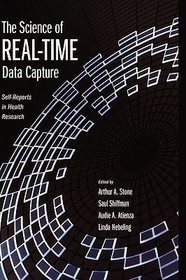
The Science of Real-Time Data Capture
Self-reports in health research
- Publisher's listprice GBP 77.00
-
34 765 Ft (33 110 Ft + 5% VAT)
The price is estimated because at the time of ordering we do not know what conversion rates will apply to HUF / product currency when the book arrives. In case HUF is weaker, the price increases slightly, in case HUF is stronger, the price goes lower slightly.
- Discount 10% (cc. 3 476 Ft off)
- Discounted price 31 289 Ft (29 799 Ft + 5% VAT)
Subcribe now and take benefit of a favourable price.
Subscribe
34 765 Ft

Availability
printed on demand
Why don't you give exact delivery time?
Delivery time is estimated on our previous experiences. We give estimations only, because we order from outside Hungary, and the delivery time mainly depends on how quickly the publisher supplies the book. Faster or slower deliveries both happen, but we do our best to supply as quickly as possible.
Product details:
- Publisher OUP USA
- Date of Publication 3 May 2007
- ISBN 9780195178715
- Binding Hardback
- No. of pages416 pages
- Size 234x157x27 mm
- Weight 680 g
- Language English
- Illustrations 42 line illustrations 0
Categories
Short description:
The set of techniques known collectively as real-time data capture (RTDC) is becoming increasingly important in medical research. This volume gives the most complete view yet of the state of RTDC science and its potential for use across the health and behavioural sciences.
MoreLong description:
The set of techniques known collectively as real-time data capture (RTDC) is becoming increasingly important in medical research. Based on the collection of data in people's typical environments, RTDC is primarily used with self-reported data, such as medical symptoms and psychological states. Now, its guiding principles and supporting technologies also provide a framework for scientists to monitor physiological information such as heart rate, blood pressure, and skin conductance. This volume gives the most complete view yet of the state of RTDC science and its potential for use across the health and behavioural sciences.
MoreTable of Contents:
Part I: The Science and Theory of Real-Time Data Capture: A Focus on Ecological Momentary Assessment (EMA)
Historical Roots and Rationale of Ecological Momentary Assessment (EMA)
Retrospective and Concurrent Self-Reports: The Rationale for Real-Time Data Capture
Designing Protocols for Ecological Momentary Assessment
Special Methodological Challenges and Opportunities in Ecological Momentary Assessment
The Analysis of Real-Time Momentary Data: A Practical Guide
Part II: Application of Real-Time Data Capture: Exemplars of Real-Time Data Research
Real-Time Data Capture and Adolescent Cigarette Smoking: Moods and Smoking
Ecological Momentary Assessment of Physical Activity in Hispanics/Latinos Using Pedometers and Diaries
Dietary Assessment and Monitoring in Real-Time
Real-Time Data Capture: Ecological Momentary Assessment of Behavioral Symptoms Associated with Eating Disorders
Ecological Momentary Assessment for Alcohol Consumption
Assessing the Impact of Fibromyalgia Syndrome in Real-Time
Evaluating Fatigue of Ovarian Cancer Patients Using Ecological Momentary Assessment
Personality, Mood States, and Daily Health
Ecological Momentary Assessment as a Resource for Social Epidemiology
Part III: Future Developments in Real-Time Data Capture
Momentary Health Interventions: Where are we and where are we going?
Technological Innovations Enabling Automatic, Context-Sensitive Ecological Momentary Assessment
Statistical Issues in Intensive Longitudinal Data Analysis
Thoughts on the Present State of Real-Tmie Data Capture

