

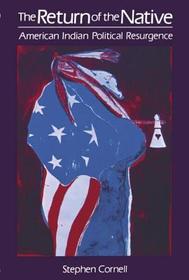
The Return of the Native
American Indian Political Resurgence
- Publisher's listprice GBP 46.99
-
21 215 Ft (20 205 Ft + 5% VAT)
The price is estimated because at the time of ordering we do not know what conversion rates will apply to HUF / product currency when the book arrives. In case HUF is weaker, the price increases slightly, in case HUF is stronger, the price goes lower slightly.
- Discount 10% (cc. 2 121 Ft off)
- Discounted price 19 094 Ft (18 185 Ft + 5% VAT)
Subcribe now and take benefit of a favourable price.
Subscribe
21 215 Ft

Availability
printed on demand
Why don't you give exact delivery time?
Delivery time is estimated on our previous experiences. We give estimations only, because we order from outside Hungary, and the delivery time mainly depends on how quickly the publisher supplies the book. Faster or slower deliveries both happen, but we do our best to supply as quickly as possible.
Product details:
- Publisher OUP USA
- Date of Publication 22 December 1994
- ISBN 9780195065756
- Binding Paperback
- No. of pages288 pages
- Size 151x233x19 mm
- Weight 476 g
- Language English 0
Categories
Short description:
A sympathetic and incisive look at American Indian and Euro-American relations since the 16th century, this book focuses on how such relations have shaped Native American political identity and tactics. By paying particular attention to the evolution of Indian groups as collective actors and to changes over time in Indian political opportunities and their capacities to act upon them, Cornell traces the Indian path from power to powerlessness and back to power again.
MoreLong description:
An incisive look at American Indian and Euro-American relations from the seventeenth century to the present, this book focuses on how such relations--and Indian responses to them--have shaped contemporary Indian political fortunes. Cornell shows how, in the early days of colonization, Indians were able to maintain their nationhood by playing off the competing European powers; and how the American Revolution and westward expansion eventually caused Native Americans to lose their land, social cohesion, and economic independence. The final part of the book recounts the slow, steady reemergence of American Indian political power and identity, evidenced by militant political activism in the 1960s and early 1970s. By paying particular attention to the evolution of Indian groups as collective actors and to changes over time in Indian political opportunities and their capacities to act on those opportunities, Cornell traces the Indian path from power to powerlessness and back to power again.
It should be required reading for all students of Indian and white relations.

