

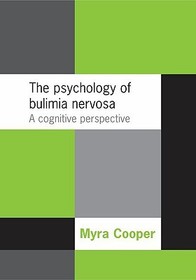
The Psychology of Bulimia Nervosa
A Cognitive Perspective
- Publisher's listprice GBP 110.00
-
49 665 Ft (47 300 Ft + 5% VAT)
The price is estimated because at the time of ordering we do not know what conversion rates will apply to HUF / product currency when the book arrives. In case HUF is weaker, the price increases slightly, in case HUF is stronger, the price goes lower slightly.
- Discount 10% (cc. 4 967 Ft off)
- Discounted price 44 699 Ft (42 570 Ft + 5% VAT)
Subcribe now and take benefit of a favourable price.
Subscribe
49 665 Ft

Availability
printed on demand
Why don't you give exact delivery time?
Delivery time is estimated on our previous experiences. We give estimations only, because we order from outside Hungary, and the delivery time mainly depends on how quickly the publisher supplies the book. Faster or slower deliveries both happen, but we do our best to supply as quickly as possible.
Product details:
- Publisher OUP Oxford
- Date of Publication 1 May 2003
- ISBN 9780192632654
- Binding Paperback
- No. of pages348 pages
- Size 240x168x20 mm
- Weight 559 g
- Language English
- Illustrations numerous tables and figures 0
Categories
Short description:
Bulimia Nervosa is an eating disorder characterised by recurrent episodes of binge-eating, followed by inappropriate compensatory behaviour. This book reviews the major psychological aspects of the disorder. It covers the key features, associated problems, relevant psychological theories and different treatment approaches. There is special focus on cognitive factors reflecting the growing interest in this aspect of the condition.
MoreLong description:
Bulimia Nervosa is an eating disorder characterised by recurrent episodes of binge-eating followed by inappropriate compensatory behaviour. It affects 1-2% of the population, the majority of cases occurring in women between the ages of 16 and 35. This book provides a comprehensive and detailed review of the key psychological aspects of the disorder and places particular emphasis on cognitive considerations.
The coverage includes the key features of Bulimia Nervosa, associated problems, psychological theories and different treatment approaches. There is special focus on cognitive factors with case examples used to illustrate the two most articulated cognitive treatments for the disorder. Emerging topics, such as imagery and metacognition are covered, as are service issues, such as stepped care and practice guidelines.
Drawing on research and theory from cognitive and non-clinical areas of psychology, The Psychology of Bulimia Nervosa provides an original and challenging perspective on this debilitating condition. It questions assumptions about cognitive theory of Bulimia Nervosa and the role of standard cognitive therapy in treating the problem, suggests novel ideas, and a revised treatment and outlines areas for further research activity.
This book never ceased to delight me as I turned page after page. It was hard to identify any limitations with this book, as not only is it comprehensive, it is so well organized and presented that the reader can keep much of its contents in mind . . . This truly is an invaluable resource text as well as a clinical guide backed up by current knowledge and research in Bulimia Nervosa . . . Overall, this book is a 'gem' and 'must read' for anyone working with BN or related disorders. It is an open-minded book written by an expert in the field who seems to truly care about advancing our knowledge rather than promoting one theory at the expense of valuable information from others. As a consequence this further adds weight to a coherent and well thought out cognitive model for BN.
Table of Contents:
Definition and diagnosis
Key features
The consequences and dangers of bulimia nervosa
Associated features: internal factors
Associated features: external and developmental factors
Epidemiology
Non-cognitive theories of bulimia nervosa
Cognitive theory
Evidence for cognitive theories
Non-cognitive treatment of bulimia nervosa
Cognitive therapy
Cognitive therapy outcomes
The future

