

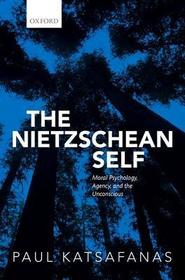
The Nietzschean Self
Moral Psychology, Agency, and the Unconscious
- Publisher's listprice GBP 92.00
-
41 538 Ft (39 560 Ft + 5% VAT)
The price is estimated because at the time of ordering we do not know what conversion rates will apply to HUF / product currency when the book arrives. In case HUF is weaker, the price increases slightly, in case HUF is stronger, the price goes lower slightly.
- Discount 10% (cc. 4 154 Ft off)
- Discounted price 37 384 Ft (35 604 Ft + 5% VAT)
Subcribe now and take benefit of a favourable price.
Subscribe
41 538 Ft

Availability
printed on demand
Why don't you give exact delivery time?
Delivery time is estimated on our previous experiences. We give estimations only, because we order from outside Hungary, and the delivery time mainly depends on how quickly the publisher supplies the book. Faster or slower deliveries both happen, but we do our best to supply as quickly as possible.
Product details:
- Publisher OUP Oxford
- Date of Publication 25 February 2016
- ISBN 9780198737100
- Binding Hardback
- No. of pages306 pages
- Size 240x162x22 mm
- Weight 578 g
- Language English 0
Categories
Short description:
Paul Katsafanas presents a clear, systematic study of Nietzsche's moral psychology, showing its advantages over its rivals. He examines Nietzsche's accounts of conscious and unconscious; of the connection between drives, desires, affects, and values; of freedom; of the unity of the self, and its relation to its social and historical context.
MoreLong description:
Nietzsche's works are replete with discussions of moral psychology, but to date there has been no systematic analysis of his account. How does Nietzsche understand human motivation, deliberation, agency, and selfhood? How does his account of the unconscious inform these topics? What is Nietzsche's conception of freedom, and how do we become free? Should freedom be a goal for all of us? How does--and how should--the individual relate to his social context? The Nietzschean Self offers a clear, comprehensive analysis of these central topics in Nietzsche's moral psychology. It analyzes his distinction between conscious and unconscious mental events, explains the nature of a type of motivational state that Nietzsche calls the 'drive', and examines the connection between drives, desires, affects, and values. It explores Nietzsche's account of willing unity of the self, freedom, and the relation of the self to its social and historical context. The Nietzschean Self argues that Nietzsche's account enjoys a number of advantages over the currently dominant models of moral psychology--especially those indebted to the work of Aristotle, Hume, and Kant--and considers the ways in which Nietzsche's arguments can reconfigure and improve upon debates in the contemporary literature on moral psychology and philosophy of action.
... elegantly-written, with complex exegetical work, philosophical discussion, and historical scholarship woven neatly into an admirably clear and readable whole.
Table of Contents:
Introduction
The Unconscious
Consciousness as Superficial and Falsifying
Drives
Values
Willing without a Will
The Unified Self
Self, Culture, and Society
The Free Individual
Nietzschean Moral Psychology and its Competitors
References
Index

