

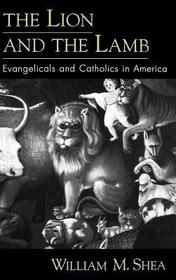
The Lion and the Lamb
Evangelicals and Catholics in America
- Publisher's listprice GBP 75.00
-
33 862 Ft (32 250 Ft + 5% VAT)
The price is estimated because at the time of ordering we do not know what conversion rates will apply to HUF / product currency when the book arrives. In case HUF is weaker, the price increases slightly, in case HUF is stronger, the price goes lower slightly.
- Discount 10% (cc. 3 386 Ft off)
- Discounted price 30 476 Ft (29 025 Ft + 5% VAT)
Subcribe now and take benefit of a favourable price.
Subscribe
33 862 Ft

Availability
printed on demand
Why don't you give exact delivery time?
Delivery time is estimated on our previous experiences. We give estimations only, because we order from outside Hungary, and the delivery time mainly depends on how quickly the publisher supplies the book. Faster or slower deliveries both happen, but we do our best to supply as quickly as possible.
Product details:
- Publisher OUP USA
- Date of Publication 18 March 2004
- ISBN 9780195139860
- Binding Hardback
- No. of pages416 pages
- Size 238x163x28 mm
- Weight 680 g
- Language English 0
Categories
Short description:
One of the most intriguing questions in contemporary American Christianity is whether the recent warming of relations between Catholics and conservative evangelicals promises a thaw in the ice age that has lasted since the sixteenth century. American evangelical Protestants and Roman Catholics have hated and suspected one another since colonial times. In the twentieth century, however, each community has experienced radical change, and this has led to a change in the relationship between the two. In this book William Shea examines the history of this troubled relationship and the signs of potential reconciliation. His springboard is the recent publicity given to the 1993 document "Evangelicals and Catholics Together," in which several well-known figures from each camp, acting as individuals, signed a statement affirming much more common theological and social ground than any other American Catholic-evangelical group had ever done. Looking back, Shea surveys the long and very bitter history of published recriminations that have flown back and forth between Catholics and many kinds of Protestants since the 16th century. He makes the case that Catholics and conservative Protestants reacted along parallel lines to western "modernity" - especially naturalistic evolution and higher criticism of the Bible). That deeper history leads him to the more recent history that has partially overcome the severe Catholic-evangelical antagonisms. Here he focuses on the rise of "neo-evangelicals" associated with Billy Graham and the National Association of Evangelicals and on the changes with the Catholic church since Vatican II. He goes on to offer systematic interpretations of recent evangelical literature on Catholics and Catholic literature on evangelicals. The book ends with some historical, but also theological, social and personal conclusions. This accessible, groundbreaking, and timely study will be indispensable reading for all interested in the religious landscape of America today.
MoreLong description:
One of the most intriguing questions in contemporary American Christianity is whether the recent warming of relations between Catholics and conservative evangelicals promises a thaw in the ice age that has lasted since the sixteenth century. American evangelical Protestants and Roman Catholics have hated and suspected one another since colonial times. In the twentieth century, however, each community has experienced radical change, and this has led to a change in the relationship between the two. In this book William Shea examines the history of this troubled relationship and the signs of potential reconciliation. His springboard is the recent publicity given to the 1993 document "Evangelicals and Catholics Together," in which several well-known figures from each camp, acting as individuals, signed a statement affirming much more common theological and social ground than any other American Catholic-evangelical group had ever done. Looking back, Shea surveys the long and very bitter history of published recriminations that have flown back and forth between Catholics and many kinds of Protestants since the 16th century. He makes the case that Catholics and conservative Protestants reacted along parallel lines to western "modernity" - especially naturalistic evolution and higher criticism of the Bible). That deeper history leads him to the more recent history that has partially overcome the severe Catholic-evangelical antagonisms. Here he focuses on the rise of "neo-evangelicals" associated with Billy Graham and the National Association of Evangelicals and on the changes with the Catholic church since Vatican II. He goes on to offer systematic interpretations of recent evangelical literature on Catholics and Catholic literature on evangelicals. The book ends with some historical, but also theological, social and personal conclusions. This accessible, groundbreaking, and timely study will be indispensable reading for all interested in the religious landscape of America today.
Shea ably illuminates the emotional component generating passionate theological controversies.

