

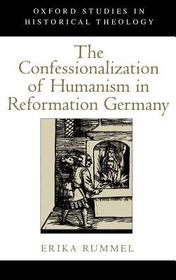
The Confessionalization of Humanism in Reformation Germany
Series: Oxford Studies in Historical Theology;
- Publisher's listprice GBP 160.00
-
72 240 Ft (68 800 Ft + 5% VAT)
The price is estimated because at the time of ordering we do not know what conversion rates will apply to HUF / product currency when the book arrives. In case HUF is weaker, the price increases slightly, in case HUF is stronger, the price goes lower slightly.
- Discount 10% (cc. 7 224 Ft off)
- Discounted price 65 016 Ft (61 920 Ft + 5% VAT)
Subcribe now and take benefit of a favourable price.
Subscribe
72 240 Ft

Availability
printed on demand
Why don't you give exact delivery time?
Delivery time is estimated on our previous experiences. We give estimations only, because we order from outside Hungary, and the delivery time mainly depends on how quickly the publisher supplies the book. Faster or slower deliveries both happen, but we do our best to supply as quickly as possible.
Product details:
- Publisher OUP USA
- Date of Publication 7 September 2000
- ISBN 9780195137125
- Binding Hardback
- No. of pages224 pages
- Size 236x161x20 mm
- Weight 540 g
- Language English 0
Categories
Short description:
A great deal has been written about the influence of humanism on the Reformation. The present study reverses the question, asking: how did the Reformation affect humanism? Although it is true that humanism influenced the course of the Reformation, says Erika Rummel, the dynamics of the relationship are better described by saying that humanism was co-opted, perhaps even exploited, in the religious debate. Both Reformers and Catholic reactionaries took from humanism what was useful for the advancement of their cause and suppressed what was unsuited to their purpose.
MoreLong description:
A great deal has been written about the influence of humanism on the Reformation. The present study reverses the question, asking: how did the Reformation affect humanism? Although it is true that humanism influenced the course of the Reformation, says Erika Rummel, the dynamics of the relationship are better described by saying that humanism was co-opted, perhaps even exploited, in the religious debate. Both Reformers and Catholic reactionaries took from humanism what was useful for the advancement of their cause and suppressed what was unsuited to their purpose.
... elegantly written ... this is a well-wrought book that illuminates and delights the reader.

