
• Contact

  • Newsletter

  • About us

  • Delivery options

  • Prospero Book Market Podcast

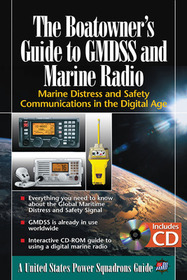
  • The Boatowner's Guide to GMDSS and Marine Radio: Marine Distress and Safety Communications in the Digital Age

    The Boatowner's Guide to GMDSS and Marine Radio by The United States Power Squadrons, N/A;

    Marine Distress and Safety Communications in the Digital Age

      • GET 10% OFF

      • The discount is only available for 'Alert of Favourite Topics' newsletter recipients.
      • Publisher's listprice GBP 9.39
      • The price is estimated because at the time of ordering we do not know what conversion rates will apply to HUF / product currency when the book arrives. In case HUF is weaker, the price increases slightly, in case HUF is stronger, the price goes lower slightly.

        4 486 Ft (4 272 Ft + 5% VAT)
      • Discount 10% (cc. 449 Ft off)
      • Discounted price 4 037 Ft (3 845 Ft + 5% VAT)

    4 486 Ft

    Availability

    Permanently out of stock

    Why don't you give exact delivery time?

    Delivery time is estimated on our previous experiences. We give estimations only, because we order from outside Hungary, and the delivery time mainly depends on how quickly the publisher supplies the book. Faster or slower deliveries both happen, but we do our best to supply as quickly as possible.

    Product details:

    • Edition number SPI PAP/CD
    • Publisher International Marine
    • Date of Publication 16 January 2006

    • ISBN 9780071463188
    • Binding Paperback
    • No. of pages136 pages
    • Size 228x154x12 mm
    • Weight 230 g
    • Language English
    • 0

    Categories

    Short description:

    What every boater should know about using marine radios for emergency assistance and enhanced safety at sea

    The new Global Maritime Distress and Safety System (GMDSS) is revolutionizing emergency communications and international search-and-rescue at sea. In recognition of this leap forward, all new marine radios are now equipped with digital selective calling (DSC). The Boatowner’s Guide to GMDSS and Marine Radio explains clearly and concisely how this revolutionary maritime 911 equivalent works and describes the enormous advantages of digital VHF radio for ordinary communications with fellow boaters.

    This authoritative guide shows you how to use Digital Selective Calling (DSC) to send an emergency message that will automatically communicate your identity and position and repeat itself every four minutes. This not only frees you to pump water, make repairs, fight a fire, or prepare a life raft, but it also takes the “search” out of search and rescue.

    This book—along with the included DSC marine radio simulator on CD-ROM—shows you how to:

  • Send emergency messages via VHF, single-sideband, or satellite relay
  • Communicate with ships you want to avoid or whose assistance you need
  • Call specific boats using digital selective calling
  • Set your digital receiver to “ring” so you’ll be alerted to incoming calls

    More
  • Long description:

    The new digital Global Maritime Distress and Safety System(GMDSS) is revolutionizing emergency communications and international search-and-rescue at sea. Clearly and concisely, this one-of-a-kind guide presents what you should know about using digital marine radios for emergency assistance and enhanced safety.


    The new digital Global Maritime Distress and Safety System(GMDSS) is revolutionizing emergency communications and international search-and-rescue at sea. Clearly and concisely, this one-of-a-kind guide presents what you should know about using digital marine radios for emergency assistance and enhanced safety.

    More

    Table of Contents:

    Foreword

    Preface

    Chapter 1: What is GMDSS?

    Communications at Sea: A Brief History

    Evolution of GMDSS

    What Makes GMDSS a Superior System?

    Sea Areas

    Choosing the Correct Band

    When Will GMDSS be Activated?

    Chapter 2: VHF-DSC Outfitting

    Features of VHF-DSC

    Choosing a VHF-DSC Radio

    Registering Your Radio

    The Ship Station License

    Installing a VHF-DSC Radio

    Testing DSC Capabilities

    Chapter 3: VHF-DSC Use – Routine Communications

    Maritime Radiotelephone Frequencies

    Watch Requirements

    Calling Frequencies

    Selecting the Working Channel

    Procedures for Calling—Voice

    Procedures for Calling—DSC

    Procedures for Fleet Calling—DSC

    Chapter 4: VHF-DSC Use—Emergency Procedures

    A Digital Distress Broadcast is the Most Efficient Way to Call for Assistance

    The Undesignated Distress Alert

    The Designated Distress Alert

    Acknowledging a Distress Alert

    Relaying a Distress Call

    Canceling a Valid Distress Alert

    Canceling a False Distress Alert

    Maintaining Radio Silence

    Direction Finding

    Prudence

    Closure of a Distress Situation

    Urgency and Safety Alerts

    Chapter 5: Port Operations – Voice, Digital and AIS Systems

    Coping with Crowded Harbor Traffic

    Channel 13

    Channels 06 and 22A

    The Automatic Identification System

    Chapter 6: MF/HF Services for Sea Areas A2 and A3

    Boating Further Offshore

    Calling and Distress Frequencies

    Distress and Calling Procedures

    Chapter 7: Inmarsat, NAVTEX, SafetyNET and Amver for Sea

    Area A3

    Inmarsat Network

    NAVTEX

    SafetyNET

    Amver

    Chapter 8: EPIRBs, SARTs and Other Useful Tools

    The Emergency Position-indicating Radio Beacon (EPIRB)

    Personal Locator and Man Overboard Beacons

    Search and Rescue Transponders

    Appendix 1. VHF Radiotelephone Frequencies – United States

    Appendix 2. VHF Radiotelephone Frequencies—Canada

    Appendix 3. VHF Radiotelephone Frequencies—International

    Appendix 4. MF Single-sideband Marine Radiotelephone Frequencies

    Appendix 5. HF Single-sideband Marine Radiotelephone Channels

    Appendix 6. Emergency Radio Procedures

    Appendix 7. Mayday Template

    Glossary

    References

    Index

    About the US Power Squadrons

    CD-ROM Instructions

    More
    0