

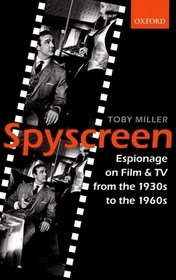
Spyscreen
Espionage on Film and TV from the 1930s to the 1960s
- Publisher's listprice GBP 152.50
-
72 856 Ft (69 387 Ft + 5% VAT)
The price is estimated because at the time of ordering we do not know what conversion rates will apply to HUF / product currency when the book arrives. In case HUF is weaker, the price increases slightly, in case HUF is stronger, the price goes lower slightly.
- Discount 10% (cc. 7 286 Ft off)
- Discounted price 65 571 Ft (62 448 Ft + 5% VAT)
Subcribe now and take benefit of a favourable price.
Subscribe
72 856 Ft

Availability
printed on demand
Why don't you give exact delivery time?
Delivery time is estimated on our previous experiences. We give estimations only, because we order from outside Hungary, and the delivery time mainly depends on how quickly the publisher supplies the book. Faster or slower deliveries both happen, but we do our best to supply as quickly as possible.
Product details:
- Publisher OUP Oxford
- Date of Publication 2 October 2003
- ISBN 9780198159520
- Binding Hardback
- No. of pages240 pages
- Size 223x145x17 mm
- Weight 406 g
- Language English
- Illustrations 8pp halftone plates 0
Categories
Short description:
Spyscreen is a genre study of English-language spy fiction film and television between the 1930s and 1960s. Taking as his focus many well-known films and television series, such as James Bond, Gilda, The Man From U.N.C.L.E., and The Avengers, Toby Miller uses a wide range of critical approaches, including textual interpretation, audience studies, and cultural history, to offer new insights into this popular genre.
MoreLong description:
Spyscreen is a genre study of English-language spy fiction film and television between the 1930s and 1960s. Taking as his focus many well-known films and television series, Toby Miller uses a wide range of critical approaches - from textual interpretation, audience studies, and cultural history, through auteurism, imperial history, class, and governmentality, to genre, cultural imperialism, and gender.
Beginning with an overview of the social and political background to the history, production, and analysis of spy fiction, topics discussed include the first canonical espionage movie, The 39 Steps, key film noir texts such as Gilda and The Third Man, the figure of popular spies, including James Bond, and the importance of women to the genre. The result is not just an insightful new study of key texts in this popular genre; it is an important intervention in the methodology and practice of Screen Studies.
Table of Contents:
Preface
Introduction
Spy Histories
Thirty-Nine Steps to 'the borders of the possible', taken by Alfred Hitchcock, amateur observer
Life in the Forties - The good neighbour programme, Gilda, The Third Man, and global commodities (with George Yúdice)
Class and Governance: Danger Man/The Prisoner, The Man from U.N.C.L.E., The Spy who Came in from the Cold, and The Ipcress File
Cultural Imperialism and James Bond
The Avengers, Honey West, and Modesty Blaise - Women Making Trouble
Conclusion: A Day That Will Live In...?
References

