

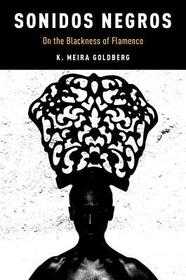
- Publisher's listprice GBP 102.50
-
46 278 Ft (44 075 Ft + 5% VAT)
The price is estimated because at the time of ordering we do not know what conversion rates will apply to HUF / product currency when the book arrives. In case HUF is weaker, the price increases slightly, in case HUF is stronger, the price goes lower slightly.
- Discount 10% (cc. 4 628 Ft off)
- Discounted price 41 651 Ft (39 668 Ft + 5% VAT)
Subcribe now and take benefit of a favourable price.
Subscribe
46 278 Ft

Availability
printed on demand
Why don't you give exact delivery time?
Delivery time is estimated on our previous experiences. We give estimations only, because we order from outside Hungary, and the delivery time mainly depends on how quickly the publisher supplies the book. Faster or slower deliveries both happen, but we do our best to supply as quickly as possible.
Product details:
- Publisher OUP USA
- Date of Publication 31 January 2019
- ISBN 9780190466916
- Binding Hardback
- No. of pages318 pages
- Size 160x236x22 mm
- Weight 567 g
- Language English
- Illustrations 39 images 0
Categories
Short description:
In Sonidos Negros, readers learn how Flamenco's sensuality, quixotic idealism, and fierce soulfulness echo with contests that trace the rise and fall of the Spanish empire. From Inquisitional certifications of blood purity to Christmas pageants staged throughout the Americas, flamenco's Janus-faced stage Gypsy walks a knife's edge between Blackness and Whiteness.
MoreLong description:
How is the politics of Blackness figured in the flamenco dancing body? What does flamenco dance tell us about the construction of race in the Atlantic world? Sonidos Negros traces how, in the span between 1492 and 1933, the vanquished Moor became Black, and how this figure, enacted in terms of a minstrelized Gitano, paradoxically came to represent Spain itself.
The imagined Gypsy about which flamenco imagery turns dances on a knife's edge delineating Christian and non-Christian, White and Black worlds. This figure's subversive teetering undermines Spain's symbolic linkage of religion with race, a prime weapon of conquest. Flamenco's Sonidos Negros live in this precarious balance, amid the purposeful confusion and ruckus cloaking embodied resistance, the lament for what has been lost, and the values and aspirations of those rendered imperceptible by enslavement and colonization.
Sonidos Negros is a groundbreaking work which addresses an essential period of the history of flamenco dance and one which has been under-researched and largely unknown ... Readable and revelatory, Goldberg's work is an important and impressive contribution to the literature on flamenco which will be of great interest to scholars in many disciplines
Table of Contents:
List of Illustrations
Acknowledgments
Foreword: Brenda Dixon Gottschild
Introduction: The Moor Inside
Part I. Changing Places: Figuring Race and Empire in the Eighteenth-Century Fandango
Chapter 1. Good Shepherd, Bumpkin Shepherd: Distinction in Villano Gambetas (Gambols) and Zapatetas (Stamps)
Chapter 2. Concentric Circles of Theatricality: Pantomimic Dances from the Sacred to the Secular
Part II. A Modernist Becoming: The Power of Blackness
Chapter 3. Parody and Sorrow
Chapter 4. Nonsense of the Body
Chapter 5. Jacinto Padilla, "El Negro Meri" and the Flamenco Clown
Tightropes and Wild Horses: The Dance of the Blackface Clown
Chapter 6. Jaleo de Jerez and Tumulte Noir: Juana Vargas ?La Macarrona? at the Exposition Universelle, Paris, 1889
Conclusions: "Lily-White Maidens" and "Black Gitanos"
Bibliography:
Index:

