

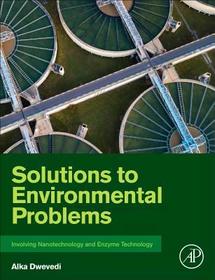
Solutions to Environmental Problems Involving Nanotechnology and Enzyme Technology
- Publisher's listprice EUR 118.00
-
46 090 Ft (43 896 Ft + 5% VAT)
The price is estimated because at the time of ordering we do not know what conversion rates will apply to HUF / product currency when the book arrives. In case HUF is weaker, the price increases slightly, in case HUF is stronger, the price goes lower slightly.
- Discount 10% (cc. 4 609 Ft off)
- Discounted price 41 482 Ft (39 506 Ft + 5% VAT)
Subcribe now and take benefit of a favourable price.
Subscribe
46 090 Ft

Availability
printed on demand
Why don't you give exact delivery time?
Delivery time is estimated on our previous experiences. We give estimations only, because we order from outside Hungary, and the delivery time mainly depends on how quickly the publisher supplies the book. Faster or slower deliveries both happen, but we do our best to supply as quickly as possible.
Product details:
- Publisher Elsevier Science
- Date of Publication 11 December 2018
- ISBN 9780128131237
- Binding Paperback
- No. of pages199 pages
- Size 234x190 mm
- Weight 430 g
- Language English 0
Categories
Long description:
Nanotechnology and Enzyme Technology Combined to Address Environmental Problems discusses how nanotechnology and enzyme technology work independently and together to help researchers and environmental professionals learn about this revolutionary and cross-disciplinary field. Nanotechnology has provided a range of nanomaterials, some of which are helpful in the protection of the environment and climate. They can be used to improve durability against mechanical stress, help in cleaning, enhance energy efficiency as insulation, save energy consumption during transportation due to catalytic properties, and more. This book highlights this technology as it continues to provide solutions for various environmental problems.
MoreTable of Contents:
1. Overview on the combo-technology (nanotechnology and enzyme technology) and its updates2. Production of clean energy by green ways3. Waste water remediation via combo-technology4. Production of clean air via combo-technology5. Assessment of combo-technology based on its sustainability and life cycle implications6. Conclusion
More
