

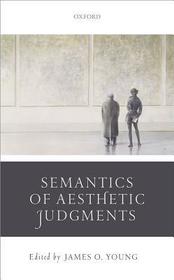
Semantics of Aesthetic Judgements
- Publisher's listprice GBP 75.00
-
35 831 Ft (34 125 Ft + 5% VAT)
The price is estimated because at the time of ordering we do not know what conversion rates will apply to HUF / product currency when the book arrives. In case HUF is weaker, the price increases slightly, in case HUF is stronger, the price goes lower slightly.
- Discount 10% (cc. 3 583 Ft off)
- Discounted price 32 248 Ft (30 713 Ft + 5% VAT)
Subcribe now and take benefit of a favourable price.
Subscribe
35 831 Ft

Availability
printed on demand
Why don't you give exact delivery time?
Delivery time is estimated on our previous experiences. We give estimations only, because we order from outside Hungary, and the delivery time mainly depends on how quickly the publisher supplies the book. Faster or slower deliveries both happen, but we do our best to supply as quickly as possible.
Product details:
- Publisher OUP Oxford
- Date of Publication 2 February 2017
- ISBN 9780198714590
- Binding Hardback
- No. of pages228 pages
- Size 224x146x19 mm
- Weight 404 g
- Language English 0
Categories
Short description:
Are aesthetic judgements simply expressions of personal preference? If two people disagree about the beauty of a painting are both judgements valid or can someone be mistaken about the aesthetic value of an artwork? This volume brings together some of the leading philosophers of art and language to debate the status of aesthetic judgements.
MoreLong description:
The question of whether aesthetic judgements are simply statements about subjective preferences or whether they have some non-subjective basis is one of the most important questions of aesthetics, and, indeed, of philosophy. In recent years, philosophers of language have discussed aesthetic judgements, but have assumed that aesthetic judgements are similar to judgements that employ predicates of personal taste such as 'tasty' and 'delicious.' A speaker's judgement that an item of food is tasty is a report about the speaker's subjective response to that item of food. If aesthetic judgements are like judgements that employ predicates of personal taste, to judge that the St. Matthew Passion is glorious is also a report about what some listener likes. If two people disagree about whether the St. Matthew Passion is glorious, neither has made a mistake. Philosophers of art have tended to disagree with this view. They have distinguished aesthetic predicates such as 'serene,' 'balanced,' and 'glorious' from predicates such as 'tasty.' On this view, the judgement that some artwork is serene or even that it is beautiful is a report about the work, not a report about how a person responds to the work. Aesthetic judgements are not just statements about personal preferences.
This volume brings together some of the leading contemporary philosophers of art and philosophers of language to debate the status of aesthetic judgements. Are they simply expressions of personal preference? Is there more basis for saying that a painting is beautiful or serene than there is for saying that a cake is tasty? Is disagreement about aesthetic judgements faultless or can someone be mistaken about the aesthetic value of an artwork?
Table of Contents:
Introduction
Aesthetic Adjectives
Making Beautiful Truths
Disputing Taste
Aesthetic Negotiation
The Semantics of Sibleyan Aesthetic Judgements
A Framework for Aesthetic Expressions
Value Judgements and Standards of Normative Assessment
Against the Semantic Orientation towards Aesthetic Judgements
We Really Shouldn't Be Having this Conversation: Rational Disengagement in Science and in Art

