

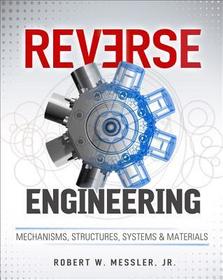
Reverse Engineering: Mechanisms, Structures, Systems & Materials
Mechanisms, Structures, Systems & Materials
Series: MECHANICAL ENGINEERING;
- Publisher's listprice GBP 106.99
-
48 305 Ft (46 005 Ft + 5% VAT)
The price is estimated because at the time of ordering we do not know what conversion rates will apply to HUF / product currency when the book arrives. In case HUF is weaker, the price increases slightly, in case HUF is stronger, the price goes lower slightly.
- Discount 10% (cc. 4 830 Ft off)
- Discounted price 43 475 Ft (41 405 Ft + 5% VAT)
Subcribe now and take benefit of a favourable price.
Subscribe
48 305 Ft

Availability
printed on demand
Why don't you give exact delivery time?
Delivery time is estimated on our previous experiences. We give estimations only, because we order from outside Hungary, and the delivery time mainly depends on how quickly the publisher supplies the book. Faster or slower deliveries both happen, but we do our best to supply as quickly as possible.
Product details:
- Publisher McGraw Hill
- Date of Publication 16 January 2014
- ISBN 9780071825160
- Binding Hardback
- No. of pages448 pages
- Size 241x223x27 mm
- Weight 955 g
- Language English 0
Categories
Long description:
Publisher's Note: Products purchased from Third Party sellers are not guaranteed by the publisher for quality, authenticity, or access to any online entitlements included with the product.
A comprehensive look at reverse engineering as a legitimate learning, design, and troubleshooting tool
This unique book examines the often underappreciated and occasionally maligned technique of reverse engineering. More than a shortcut for the lazy or unimaginative to reproduce an artless copy of an existing creation, reverse engineering is an essential brick – if not a keystone – in the pathway to a society’s technological advancement.
Written by an engineer who began teaching after years in industry, Reverse Engineering reviews this meticulous analytical process with a breadth and depth as never before. Find out how to:
- Learn by “mechanical dissection”
- Deduce the role, purpose, and functionality of a designed entity
- Identify materials-of-construction and methods-of-manufacture by observation alone
- Assess the suitability of a design to purpose from form and fit
The rich heritage of engineering breakthroughs enabled by reverse engineering is also discussed. This is not a dry textbook. It is the engaging and enlightening account of the journey of engineering from the astounding creations of ancient cultures to what, with the aid of reverse engineering, promises to be an even more astounding future!
Coverage includes:
- Methods of product teardown
- Failure analysis and forensic engineering
- Deducing or inferring role, purpose, and functionality during reverse engineering
- The Antikythera mechanism
- Identifying materials-of-construction
- Inferring methods-of-manufacture or -construction
- Construction of Khufu’s pyramid
- Assessing design suitability
- Value and production engineering
- Reverse engineering of materials and substances
- Reverse engineering of broken, worn, or obsolete parts for remanufacture
- The law and the ethics of reverse engineering
Publisher's Note: Products purchased from Third Party sellers are not guaranteed by the publisher for quality, authenticity, or access to any online entitlements included with the product.
A comprehensive look at reverse engineering as a legitimate learning, design, and troubleshooting tool
This unique book examines the often underappreciated and occasionally maligned technique of reverse engineering. More than a shortcut for the lazy or unimaginative to reproduce an artless copy of an existing creation, reverse engineering is an essential brick – if not a keystone – in the pathway to a society’s technological advancement.
Written by an engineer who began teaching after years in industry, Reverse Engineering reviews this meticulous analytical process with a breadth and depth as never before. Find out how to:
- Learn by “mechanical dissection”
- Deduce the role, purpose, and functionality of a designed entity
- Identify materials-of-construction and methods-of-manufacture by observation alone
- Assess the suitability of a design to purpose from form and fit
The rich heritage of engineering breakthroughs enabled by reverse engineering is also discussed. This is not a dry textbook. It is the engaging and enlightening account of the journey of engineering from the astounding creations of ancient cultures to what, with the aid of reverse engineering, promises to be an even more astounding future!
Coverage includes:
- Methods of product teardown
- Failure analysis and forensic engineering
- Deducing or inferring role, purpose, and functionality during reverse engineering
- The Antikythera mechanism
- Identifying materials-of-construction
- Inferring methods-of-manufacture or -construction
- Construction of Khufu’s pyramid
- Assessing design suitability
- Value and production engineering
- Reverse engineering of materials and substances
- Reverse engineering of broken, worn, or obsolete parts for remanufacture
- The law and the ethics of reverse engineering
Table of Contents:
Ch 1. Introduction
Ch 2. Basic Concepts for the Technique
Ch 3. History of Reverse Engineering
Ch 4. The Teardown Process (or Mechanical Dissection)
Ch 5. Methods of Product Teardown
Ch 6. Failure Analysis and Forensic Engineering
Ch 7. Deducing or Inferring Role, Purpose, and Functionality during Reverse Engineering
Ch 8. The Antikythera Mechanism
Ch 9. Identifying ConstructionMaterials
Ch 10. Inferring Methods of Manufacture or Construction
Ch 11. Construction of Khufu's Pyramids: Mankind's Greatest Engineering Creation
Ch 12. Assessing Design Suitability
Ch 13. Bringing It All Together with Illustrative Examples
Ch 14. Value and Production Engineering
Ch 15. Reverse Engineering of Materials and Substances
Ch 16. Reverse Engineering Obsolete, Broken, or Worn Parts
Ch 17. The Law and Ethics of Reverse Engineering
Ch 18. The End of a Book, the Beginning of a New Story: Closing Thoughts

