

- Publisher's listprice GBP 23.99
-
10 831 Ft (10 315 Ft + 5% VAT)
The price is estimated because at the time of ordering we do not know what conversion rates will apply to HUF / product currency when the book arrives. In case HUF is weaker, the price increases slightly, in case HUF is stronger, the price goes lower slightly.
- Discount 10% (cc. 1 083 Ft off)
- Discounted price 9 748 Ft (9 284 Ft + 5% VAT)
Subcribe now and take benefit of a favourable price.
Subscribe
10 831 Ft

Availability
printed on demand
Why don't you give exact delivery time?
Delivery time is estimated on our previous experiences. We give estimations only, because we order from outside Hungary, and the delivery time mainly depends on how quickly the publisher supplies the book. Faster or slower deliveries both happen, but we do our best to supply as quickly as possible.
Product details:
- Publisher OUP Oxford
- Date of Publication 3 October 2013
- ISBN 9780199683611
- Binding Paperback
- No. of pages234 pages
- Size 195x139x18 mm
- Weight 260 g
- Language English 0
Categories
Short description:
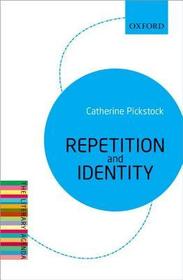
A fresh and unusual perspective on the literary, Catherine Pickstock argues that the mystery of things can only be unravelled through the repetitions of fiction, history, inhabited subjectivity, and revealed event.
MoreLong description:
The Literary Agenda is a series of short polemical monographs about the importance of literature and of reading in the wider world and about the state of literary education inside schools and universities. The category of 'the literary' has always been contentious. What is clear, however, is how increasingly it is dismissed or is unrecognised as a way of thinking or an arena for thought. It is sceptically challenged from within, for example, by the sometimes rival claims of cultural history, contextualized explanation, or media studies. It is shaken from without by even greater pressures: by economic exigency and the severe social attitudes that can follow from it; by technological change that may leave the traditional forms of serious human communication looking merely antiquated. For just these reasons this is the right time for renewal, to start reinvigorated work into the meaning and value of literary reading.
Repetition and Identity offers a theory of the existing thing as such. A thing only has identity and consistency when it has already been repeated, but repetition summons difference and the shadow invocation of a connecting sign. In contrast to the perspectives of Post-structuralism, Catherine Pickstock proposes that signs are part of reality, and that they truthfully express the real. She also proposes that non-identical repetition involves analogy, rather than the Post-structuralist combination of univocity and equivocity, or of rationalism with scepticism. This proposal, which is happy for reality to make sense, involves, however, a subjective decision which is to be poetically performed. A wager is laid upon the possibility of a consistency which sustains the subject, in continuity with the elusive consistency of nature. This wager is played out in terms of a performative argument concerning the existential stances open to human beings. It is concluded that the individual sustains this quest within the context of an inter-subjective search for an historical consistency of culture. But can ethical consistency, and the harmonisation of this with an aesthetic surplus of an 'elsewhere', invoked by the sign, be achieved without a religious gesture? And can this gesture avoid a tragic tension between ethical commitment and religious renunciation? Pickstock suggests a Kierkegaardian re-reading of the Patristic categories of 'recapitulation' and 'reconstitution' can reconcile this tension. The quest for the identity and consistency of the thing leads us from the subject through fiction and history and to sacred history, to shape an ontology which is also a literary theory and a literary artefaction.
Repetition and Identity is a formidable addition to the growing collection of work associated with the largely British Radical Orthodoxy movement...Pickstock has mastered the canons of Western literature, philosophy, and theology, and is fluent in the terms of metaphysics, linguistics, semiotics, and poststructuralism.
Table of Contents:
Preface
Identifying Things
The Scale of Things
The Repeated Thing
The Repeated Sign
The Repeated Self
The Compelled Repetition
Eternal Repetition
Repetition and Rhetoric
Rupture and Return
The Repeated God
Bibliographical Note

