

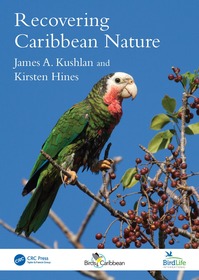
Recovering Caribbean Nature
-
GET 10% OFF
- Publisher's listprice GBP 171.99
-
77 653 Ft (73 955 Ft + 5% VAT)
The price is estimated because at the time of ordering we do not know what conversion rates will apply to HUF / product currency when the book arrives. In case HUF is weaker, the price increases slightly, in case HUF is stronger, the price goes lower slightly.
- Discount 10% (cc. 1 Ft off)
- Discounted price 69 887 Ft (66 560 Ft + 5% VAT)
69 887 Ft

Availability
printed on demand
Why don't you give exact delivery time?
Delivery time is estimated on our previous experiences. We give estimations only, because we order from outside Hungary, and the delivery time mainly depends on how quickly the publisher supplies the book. Faster or slower deliveries both happen, but we do our best to supply as quickly as possible.
Product details:
- Edition number 1
- Publisher CRC Press
- Date of Publication 29 October 2024
- ISBN 9781032489834
- Binding Hardback
- No. of pages250 pages
- Size 246x188 mm
- Weight 453 g
- Language English
- Illustrations 298 Illustrations, color 533
Categories
Short description:
This book uniquely provides both a theoretical background and practical applications to modify and expand to the tropical Caribbean temperate-zone concepts of restoring nature. Packed with beautiful color photographs, it offers unifying principles that can be applied across the tropics.
MoreLong description:
The Caribbean is a global biodiversity hotspot; half its resident bird species are found nowhere else, yet, a quarter are threatened with extinction. Nearly all its native amphibians and reptiles and thousands of plants also are endemic. Yet, less than 1% of the landscape can be considered natural; and apart from reserves, most land is privately owned. Despite the challenges of such habitat fragmentation, the Caribbeanâ€TMs distinctive fauna and flora can be preserved through planning and managing a connected network of sustainable naturalistic landscapes, reserves, parks, and private gardens. This book uniquely provides both a theoretical background and practical applications to restoring nature within the tropical Caribbean. Packed with beautiful color photographs, it offers unifying principles that can be applied across the tropics and synthesizes information on the Caribbean's environmental uniqueness and globally significant biodiversity. It also provides explicit guidance on establishing sustainable and more naturalistic landscapes from large public lands to private yards and gardens.
The book is essential reading for academics and researchers studying the Caribbean environment, resource management professionals, and scientists and.educatos from nongovernmental organizations who provide programs and advocacy for conservation and regional sustainability. Moreover, it highlights the importance of private lands and gardens, where the greatest gains can be made, and so offers a handbook for knowledgeable private landowners and their professional advisors.
MoreTable of Contents:
Introduction 1. Caribbean nature 2. Recovering nature 3. Place-based conservation 4. Practical matters 5. Nature-friendly plants 6. Birds, butterflies, and other animals 7. Reflections on conserving Caribbean nature 8. Resources
More
