

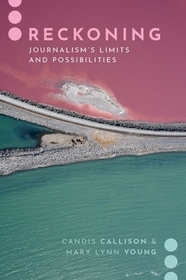
- Publisher's listprice GBP 31.49
-
14 217 Ft (13 540 Ft + 5% VAT)
The price is estimated because at the time of ordering we do not know what conversion rates will apply to HUF / product currency when the book arrives. In case HUF is weaker, the price increases slightly, in case HUF is stronger, the price goes lower slightly.
- Discount 10% (cc. 1 422 Ft off)
- Discounted price 12 795 Ft (12 186 Ft + 5% VAT)
Subcribe now and take benefit of a favourable price.
Subscribe
14 217 Ft

Availability
printed on demand
Why don't you give exact delivery time?
Delivery time is estimated on our previous experiences. We give estimations only, because we order from outside Hungary, and the delivery time mainly depends on how quickly the publisher supplies the book. Faster or slower deliveries both happen, but we do our best to supply as quickly as possible.
Product details:
- Publisher OUP USA
- Date of Publication 31 January 2020
- ISBN 9780190067083
- Binding Paperback
- No. of pages304 pages
- Size 155x231x20 mm
- Weight 408 g
- Language English 0
Categories
Short description:
How do journalists know what they know? Who gets to decide what good journalism is and when it's done right? This book contends that, despite thoughtful explorations of the role of publics in journalism, the profession's methodologies and practices still don't adequately address matters of race, gender, intersectionality and settler colonialism. Drawing on their five years of research with journalists in the U.S. and Canada, in a variety of news organizations from startups and freelancers to mainstream media, the authors investigate modern journalism's founding ideals and methods and their relationship to power to examine emerging multiple journalisms.
MoreLong description:
How do journalists know what they know? Who gets to decide what good journalism is and when it's done right? What sort of expertise do journalists have, and what role should and do they play in society? Until a couple of decades ago, journalists rarely asked these questions, largely because the answers were generally undisputed. Now, the stakes are rising for journalists as they face real-time critique and audience pushback for their ethics, news reporting, and relevance. Yet the crises facing journalism have been narrowly defined as the result of disruption by new technologies and economic decline. This book argues that the concerns are in fact much more profound.
Drawing on their five years of research with journalists in the U.S. and Canada, in a variety of news organizations from startups and freelancers to mainstream media, the authors find a digital reckoning taking place regarding journalism's founding ideals and methods. The book explores journalism's long-standing representational harms, arguing that despite thoughtful explorations of the role of publics in journalism, the profession hasn't adequately addressed matters of gender, race, intersectionality, and settler colonialism. In doing so, the authors rethink the basis for what journalism says it could and should do, suggesting that a turn to strong objectivity and systems journalism provides a path forward. They offer insights from journalists' own experiences and efforts at repair, reform, and transformation to consider how journalism can address its limits and possibilities along with widening media publics.
Callison and Young mount a fullfrontal assault on the 'view from nowhere' and challenge us to understand that whose stories get told and who is able to tell them are critical factors in ensuring that journalism remains an essential pillar of democratic societies
Table of Contents:
Introduction
Chapter 1: Reckoning with the "View from Nowhere"
Chapter 2: Battling for the Story
Chapter 3: "Speculative" Memoir Fragments and Existential Dilemmas
Chapter 4: Structure, Innovation, and Legacy Media
Chapter 5: Startup Life
Chapter 6: Indigenous Journalisms
Conclusion
Notes
References
Index

