
• Contact

  • Newsletter

  • About us

  • Delivery options

  • Prospero Book Market Podcast

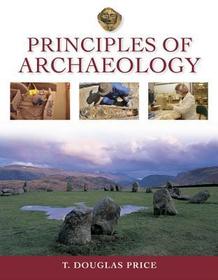
  • Principles of Archaeology

    Principles of Archaeology by Price, T. Douglas;

      • GET 10% OFF

      • The discount is only available for 'Alert of Favourite Topics' newsletter recipients.
      • Publisher's listprice GBP 100.99
      • The price is estimated because at the time of ordering we do not know what conversion rates will apply to HUF / product currency when the book arrives. In case HUF is weaker, the price increases slightly, in case HUF is stronger, the price goes lower slightly.

        48 247 Ft (45 950 Ft + 5% VAT)
      • Discount 10% (cc. 4 825 Ft off)
      • Discounted price 43 423 Ft (41 355 Ft + 5% VAT)

    48 247 Ft

    Availability

    Uncertain availability. Please turn to our customer service.

    Why don't you give exact delivery time?

    Delivery time is estimated on our previous experiences. We give estimations only, because we order from outside Hungary, and the delivery time mainly depends on how quickly the publisher supplies the book. Faster or slower deliveries both happen, but we do our best to supply as quickly as possible.

    Product details:

    • Publisher McGraw-Hill Higher Education
    • Date of Publication 1 June 2006

    • ISBN 9780073271323
    • Binding Hardback
    • No. of pages pages
    • Size 274x218x20 mm
    • Weight 1225 g
    • Language English
    • 0

    Categories

    Long description:

    This new text offers an engaging, straightforward, and profusely illustrated introduction to archaeological method and theory. It captures the excitement and complexity of the field by focusing on three important themes, including how archaeologists think and learn about the past, ethics and the preservation of the past, and the role of science in archaeology. Each chapter offers an enticing mix of clear and thorough discussion of essential topics, provocative case studies, and practical applications that allow students to think like archaeologists.

    This new text offers an engaging, straightforward, and profusely illustrated introduction to archaeological method and theory. It captures the excitement and complexity of the field by focusing on three important themes, including how archaeologists think and learn about the past, ethics and the preservation of the past, and the role of science in archaeology. Each chapter offers an enticing mix of clear and thorough discussion of essential topics, provocative case studies, and practical applications that allow students to think like archaeologists.

    More

    Table of Contents:

    Part I. Introduction

    Chapter 1. An Introduction to Archaeology

    Introduction: What Is Archaeology?

    Archaeology Is. . .

    Archaeology Is Not . . .

    Example: The Piltdown Man
    Example: Erich von Däniken

    Evaluating Science and and Pseudoscience

    The Scientific Method

    Evolution

    Evolution and Creationism

    Why Study Archaeology?

    Careers in Archaeology

    Survey Says ?
    A Day in the Life ?
    University Professor: Tina Thurston
    State Archaeologist: Maureen Kavanagh
    Museum Curator: Anne Underhill

    Conclusions

    Chapter 2. Doing Archaeology

    Introduction: The Lords of the Moche

    Peru and the Moche

    Discovery

    Excavation

    Analysis

    Science in Archaeology: The Center for Materials Research in Archaeology & Ethnology

    Interpretation

    Protecting the Past: Tourism and a New Museum in Lambayeque

    Conclusions

    Chapter 3. A Brief History of Archaeology

    Introduction: The History of Prehistory

    Pre-1900

    Example: Jefferson at Rivanna River

    1900-1950

    Example: Woolley at Ur
    Protecting the Past: The Ancient City of Ur

    1950 ? 2000

    Example: FAI 270
    Archaeological Thinking: House Size and Population

    Today: The Future of the Past

    Conclusions

    Part II. Discovery

    Chapter 4. Archaeological Questions

    Introduction: The Subject Matter of Archaeology

    What Do Archaeologists Want to Know?

    Environment
    Demography
    Example: The Black Earth Site
    Technology
    Economy
    Example: Jomon Japan
    Organization
    Ideology
    Archaeological Thinking: Ritual in Ancient Oaxaca

    Ethonography

    Example: Settlement Population and Floor Area

    Ethnoarchaeology

    Example: Harrapan Beads

    Experimental Archaeology

    Conclusions

    Chapter 5. The Archaeologoical Record

    Introduction: Information from the Past

    Scale

    Context

    Archaeological Thinking: The First Americans

    The Nature of Evidence

    Attributes
    Artifacts
    Ecofacts
    Features and Activity Areas
    Example: The Tomb of Qin Shihuang
    Assemblages and Components
    Sites
    Example: South African Rock Art
    Science in Archaeology: Dating the Paintings
    Regions and Landscapes
    Example: A Landscape of Mounds

    Spatial Archaeology

    Within Site Spatial Analysis: Activity Areas and Features
    Example: Activity Areas at Teotihuacán, Mexico
    Protecting the Past: The City of the Gods
    Within Site Spatial Analysis: Houses and Households
    Example: Household Archaeology at Agayadan Village, Alaska
    Site Analysis
    Regional Spatial Analysis

    Site Formation

    Preservation

    Example: Windover Pond, Florida
    Example: The Iceman
    Protecting the Past: Ötzi?s New Home

    Conclusions

    Chapter 6. Fieldwork

    Introduction: Finding the Past

    The Discovery of Archaeological Sites

    Archaeological Survey
    Archaeological Thinking: Reese River Valley
    Archaeological Excavation
    Selecting Sites for Excavation
    Test Pits
    Vertical Excavation
    Horizontal or Area Excavations
    Screening and Flotation
    Example: Great Hall at Lejre
    Underwater Archaeology

    The Tools of Fieldwork

    Maps and Grids
    Contour Maps
    The Total Station
    Science in Archaeology: Global Positioning Systems (GPS)
    Geographic Information Systems (GIS)
    Soil Sampling
    Remote Sensing
    Remote Sensing from Above
    Example: Chaco Roads
    Remote Sensing On the Ground
    Science in Archaeology: Georadar at Petra

    In the Field

    The Project Director
    The Field Crew
    The Field Experience
    Example: Life in the Field
    Fieldwork Opportunities
    Equipment

    Conclusions

    Project: Discovering SitesPart III. Analysis

    Chapter 7. Classification and Data

    Introduction: Sorting, Types, and Numbers

    Cleaning and Cataloging

    Conservation

    Example: Lindow Man

    Classification

    Archaeological Thinking: Iroquois Pottery
    Classifying Artifacts
    Raw Material
    Technology
    Function and Style
    Temporal and Geographic Variation
    Archaeological Thinking: Styles of Gravestones
    Archaeological Thinking: Seriation

    Data

    Numbers
    Basic Statistics
    Mean, Median, and Mode
    Range, Variance, Standard Deviation
    Normal Curve
    Chi-Square and Contingency Tables
    Visual Display of Information
    Stem and Leaf Plots
    Bar Graphs and Histograms
    Box and Whisker Plots
    Pie Charts
    Scatterplots

    Conclusions

    Project: A Room in the Pueblo

    Chapter 8. Dating

    Introduction: Frameworks for Measuring Time

    Relative Dating Methods

    Example: Pipestems

    Reckoning Time

    Absolute Dating Methods

    Dendrochronology
    Example: Pueblo Bonito
    Example: French Neolithic Lake Dwellings
    Radiocarbon Dating
    Accelerator Mass Spectrometer (AMS) Dating
    Example: Shroud of Turin
    Science in Archaeology: Early Agriculture
    Calibration
    Radiopotassium Dating
    Example: Laetoli: Our First Steps
    Protecting the Past: The Laetoli Footprints
    Thermoluminescence Dating

    Conclusions

    Project: Dating a Scythian Tomb

    Chapter 9. Geoarchaeology

    Introduction: Geology and Archaeology

    Geomorphology

    Example: Geomorphology and Homer?s Troy

    Stratigraphy

    Archaeological Thinking: The Harris Matrix

    Micromorphology

    Example: Keatley Creek
    Science in Archaeology: The Petrographic Microscope
    Science in Archaeology: The Chemistry of House Floors

    Catastrophe

    Conclusions

    Project: Roman Stratigraphy

    Chapter 10: Lithics Analysis

    Introduction: Stone Tools and Human Behavior

    Fracture Mechanics and Raw Material

    Making Stone Tools

    Making Sense of Stone Tools

    Typology
    Chaîne Opératoire
    Archaeological Thinking: Stone Tools & Hunter-Gatherers in Western Nevada
    Refitting
    Archaeological Thinking: How Many Layers?
    Microwear Analysis
    Science in Archaeology: Stone Tools and Food
    Example: The Careful Flintknapper

    Conclusions

    Project: Stone Tools and the American Bottom

    Chapter 11. Ceramic Analysis

    Intoduction: Prehistoric Pottery

    Making Pottery

    Preparing the Paste
    Shaping the Vessel
    Decoration
    Firing

    Studying Pottery

    Initial Sorting
    Attributes of Form and Function
    Science in Archaeology: What?s Cooking?
    Attributes of Style
    Archaeological Thinking: Iroquois Pottery
    Provenience Studies
    Ceramic Petrography
    Example: Icehouse Bottom
    Ceramic Composition
    Science in Archaeology: Salado Polychrome

    Conclusions

    Project: Mean Ceramic Dating

    Chapter 12. Archaeozoology

    Introduction: Animals Remains and Archaeology

    Identification and Counts

    Example: Extinction Is Forever

    Age and Sex

    Archaeological Thinking: Animal Domestication In Southwest Asia

    Seasonality

    Example: Star Carr, England
    Science in Archaeology: Seasonality In The Preneolithic

    Taphonomy

    Butchery

    Example: Cut Marks And Early Humans
    Example: Gold Rush Menus

    Secondary Products

    Worked Bones

    Shells and Shellfish

    Conclusions

    Project: Site Seasonality

    Chapter 13. Archaeobotany

    Introduction: The Study of Archaeological Plants

    Macrobotanical Remains

    Flotation
    Sorting and Identification
    Example: Incinerator Site
    Protecting The Past: Sunwatch Indian Village/Archaeological Park
    Origins of Agriculture
    Archaeological Thinking: Domesticating Plants
    Example: Abu Hureyra
    Wood and Charcoal Identification
    Science in Archaeology: The Scanning Electron Microscope
    Example: Charcoal from Thera

    Microbotanical Remains

    Palynology
    Example: The Elm Decline

    Conclusions

    Project: The Origins of Agriculture

    Chapter 14. Bioarchaeology

    Introduction: The Skeletal Evidnece

    Field Reporting

    Preparation and Sorting

    Identification

    Example: Cannibalism

    Sex, Age, and Stature

    Archaeological Thinking: Maya Stature

    Stress, Disease, and Trauma

    Example: Abu Hureyra
    Example: Raising the Dead: The Mary Rose
    Protecting the Past: The Mary Rose Today

    Genetic Information

    Modern DNA
    Ancient DNA
    Science in Archaeology: Neanderthal Genealogy
    Ancient DNA

    Mortuary Analysis

    Example: LBK Cemetery at Nitra
    Example: Roy Mata
    Example: Moundville
    Protecting the Past: Moundville Archaeological Park

    Conclusions

    Project: Mortuary Analysis

    Chapter 15. Archaeometry

    Introduction: Archaeology in the Laboratory

    Instrumentation

    Neutron Activation Analysis (NAA)
    Inductively Coupled Plasma Mass Spectrometer (ICP-MS)
    X-ray Diffraction (XRD)
    Gas Chromatograph/Mass Spectrometer (GC/MS)
    Science in Archaeology: Laboratory for Archaeological Chemistry

    Elemental Analyses

    Example: Obsidian Sources and Trade in the Ancient Near East
    Ceramic Analysis
    Anthropogenic Sediments
    Example: El Coyote

    Isotopic Analyses

    Bone Chemistry and Prehistoric Diet
    Archaeological Thinking: Climate, Isotopes, and People
    Human Provenience and Migration
    Example: The First King of Copan

    Organic Residues in Archaeology

    Conclusions

    Project: Bone Chemistry

    Part IV. Interpretation

    Chapter 16. Explanation in Archaeology

    Introduction: Interpreting the Poast

    Schools of Thought

    Processual Archaeology
    Example: A Crossroads Of Barrows
    Archaeological Thinking: Mounds in Denmark
    Example: The Collapse Of Maya Civilization
    Archaeological Thinking: The End of the Maya
    Post-Processual Archaeology
    Example: The Rock Art Of Nämforsen, Sweden
    Archaeological Thinking: Text on Stone
    Evolution and Archaeology
    Selectionist Archaeology
    Example: Horses and Snowmobiles
    Archaeological Thinking: Pots as Tools
    Evolutionary Ecology
    Example: The Emeryville Shellmound, California
    Archaeological Thinking: Optimal Species
    Gender Archaeology
    Example: Aztec Women and State Economy
    Archaeological Thinking: Gender and Government in Ancient Mexico

    New Directions

    Conclusions

    Chapter 17. Responsibilities

    Introduction: Archaeology Today

    The Relevance of Archaeology>Example: Raised Fields of Tiwanaku

    The Past Is Heritage

    Example: UNESCO World Heritage
    Protecting the Past: Abu Simbel
    Example: The Archaeological Conservancy

    Who Owns the Past?

    Example: Kennewick Man

    Ethics in Archaeology

    Example: Donnan and Sipán
    Example: The Ypres Battlefield

    Teaching Archaeology

    Example: Interest Groups in the Classroom

    The Responsible Archaeologist

    Conclusions

    Project: Ethical Questions

    Appendix 1: A Brief History of the Poast

    Introduction: World Prehistory

    Geological and Archaeological Time

    Africa, Asia, and Europe

    Deep Roots in Africa
    Out of Africa
    Neanderthal
    The Creative Explosion
    The Origins of Agriculture
    States and Empires

    The Americas

    The First Americans
    Farming Villages
    States and Empires

    The Pacific

    Historical Archaeology

    Conclusions

    Appendix 2: Common Measurement Conversions and Equivalents

    Credits

    Bibliography

    Index

    More

    0