

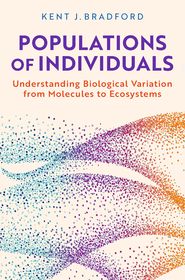
Populations of Individuals
Understanding Biological Variation from Molecules to Ecosystems
- Publisher's listprice GBP 83.00
-
37 474 Ft (35 690 Ft + 5% VAT)
The price is estimated because at the time of ordering we do not know what conversion rates will apply to HUF / product currency when the book arrives. In case HUF is weaker, the price increases slightly, in case HUF is stronger, the price goes lower slightly.
- Discount 10% (cc. 3 747 Ft off)
- Discounted price 33 727 Ft (32 121 Ft + 5% VAT)
Subcribe now and take benefit of a favourable price.
Subscribe
37 474 Ft

Availability
Not yet published.
Why don't you give exact delivery time?
Delivery time is estimated on our previous experiences. We give estimations only, because we order from outside Hungary, and the delivery time mainly depends on how quickly the publisher supplies the book. Faster or slower deliveries both happen, but we do our best to supply as quickly as possible.
Product details:
- Publisher OUP USA
- Date of Publication 26 September 2026
- ISBN 9780197846001
- Binding Hardback
- No. of pages248 pages
- Size 235x156 mm
- Language English
- Illustrations 49 0
Categories
Short description:
Populations of Individuals introduces a new perspective on biological variation beyond genetics. By examining sensitivity thresholds, it groups individuals into responsive populations. This threshold-based approach offers a foundational method for understanding non-genetic variation in biology.
MoreLong description:
Variation is an inherent component of biology, essential to selection among alternatives during evolution. It is most often associated with genetic variation, or differences among the genes encoded in the DNA inherited from ancestors. Individual organisms receive their genomes from a clonal parent or from the union of gametes. All subsequent cells, tissues, and organs developed from a clone or sexual union carry the same genome, but they exhibit the ability to develop into the diversity of cell types present in the organism. Such variation is influenced by both developmental and environmental factors, often referred to as being due to 'instability' or 'noise.'
This book argues that the degree to which individual organisms adapt to this 'noise' is dependent on their sensitivities to these developmental or environmental factors. Focusing on their sensitivity thresholds enables the individuals to be grouped into populations that automatically respond to signal inputs. These sensitivity thresholds tend to vary among individuals in a normal distribution, such that as the factor level increases, more of the individuals are recruited to respond as their thresholds are exceeded. In addition, the amount by which the factor level increases above the threshold determines the speed of the response. The author, Kent Bradford, terms this method of grouping populations the 'population-based threshold' (PBT) model.
Populations of Individuals illustrates with examples from each level of biological complexity that this underlying principle can replace instability and noise with a coherent and mathematically consistent description of stable variation observed across the breadth of biology. This viewpoint and model are particularly relevant today, when methods for investigating individual molecules, nuclei, organelles, and cells are available. The PBT model indicates that viewing such variation as being due to multiple subpopulations based on their threshold sensitivities is both simpler and more consistent with the available data.
Table of Contents:
Populations of Individuals
Population-based Threshold Models: Concepts and Features
Origin and Integration of Biological Processes
Microorganisms
Plants
Animals
Developmental Plasticity, Ecology and Evolution
Implications and Anticipations
Appendix: Methods

