

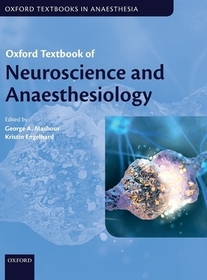
Oxford Textbook of Neuroscience and Anaesthesiology
Series: Oxford Textbooks in Anaesthesia;
- Publisher's listprice GBP 125.00
-
59 718 Ft (56 875 Ft + 5% VAT)
The price is estimated because at the time of ordering we do not know what conversion rates will apply to HUF / product currency when the book arrives. In case HUF is weaker, the price increases slightly, in case HUF is stronger, the price goes lower slightly.
- Discount 10% (cc. 5 972 Ft off)
- Discounted price 53 747 Ft (51 188 Ft + 5% VAT)
Subcribe now and take benefit of a favourable price.
Subscribe
59 718 Ft

Availability
Estimated delivery time: In stock at the publisher, but not at Prospero's office. Delivery time approx. 3-5 weeks.
Not in stock at Prospero.
Why don't you give exact delivery time?
Delivery time is estimated on our previous experiences. We give estimations only, because we order from outside Hungary, and the delivery time mainly depends on how quickly the publisher supplies the book. Faster or slower deliveries both happen, but we do our best to supply as quickly as possible.
Product details:
- Publisher OUP Oxford
- Date of Publication 17 January 2019
- ISBN 9780198746645
- Binding Hardback
- No. of pages352 pages
- Size 283x226x22 mm
- Weight 1296 g
- Language English 0
Categories
Short description:
The Oxford Textbook in Neuroscience and Anaesthesiology addresses all aspects of neuroanaesthesiology. Edited by an international team of experts this textbook reflects world-wide practice.
MoreLong description:
The perioperative care of individuals with neurologic compromise is critically important, yet it is only one dimension of the rich relationship between anaesthesiology and the neurosciences. The mechanism of everyday therapeutic interventions such as anaesthesia and analgesia is exciting neuroscience in its own right. At the new frontier of outcomes studies lies the question of how the perioperative period might impact the brain. For example, questions related to anaesthetic neurotoxicity, delirium, and cognitive dysfunction pose critical challenges for the field.
The Oxford Textbook in Neuroscience and Anaesthesiology addresses the exciting field of neuroanaesthesiology in a new and stimulating way. In twenty eight chapters, the neuroscientific basis of anaesthesiology, the full spectrum of clinical neuroanaesthesia, and the care of neurologic patients undergoing non-neurologic surgery are explored in one comprehensive textbook for the first time.
The first section considers the neural mechanisms of general anaesthetics, cerebral physiology, the neurobiology of pain, and more. The second section explores the care of patients with neurologic disease in the operating room or intensive care unit. These clinical chapters systematically treat the perioperative considerations of both brain and spine surgery, and provide introductions to neurocritical care and pediatric neuroanaesthesia. The final section outlines the care of neurologic patients undergoing non-neurologic surgery. It examines key connections of neurology and anaesthesiology, examining how conditions such as dementia, stroke, or epilepsy interface with the perioperative period.
Each chapter has been carefully crafted to be concise yet highly informative, reflecting the cutting edge of neuroscience and neuroanaesthesiology. This international textbook gathers the best available expertise of authors and leaders worldwide. Includes access to online-only content, including more than 20 cases and more than 90 questions that can be used in presentations and teaching sessions. By activating your unique access code, you can access and use the material.
The book is easy to read and very informative ... The intended audience is practicing anesthesiologists or anesthetists. The book is also an excellent guide for trainees or residents in anesthesiology ... [and] ranks very high among other books on neuroanesthesia.
Table of Contents:
Section 1- Neuroscience in anaesthetic practice
Neural mechanisms of anaesthetics
Intracranial pressure
Cerebral physiology
Monitoring anaesthetic depth
Autonomic nervous system
Neuromuscular junction
Principles of neuroprotection
Neurotoxicity of general anaesthetics
Neurobiology of acute and chronic pain
Neurologic emergencies
Neurophysiologic monitoring for neurosurgery
Brain trauma
Supratentorial craniotomy for mass lesion
Posterior fossa craniotomy
Cerebrovascular surgery
Interventional neuroradiology
Pituitary and neuroendocrine surgery
Hydrocephalus and associated surgery
Awake craniotomy, epilepsy and functional neurosurgery
Complex spine surgery
Spine trauma
Paediatric neurosurgery
Basics of neurocritical care
Section 3 - Neurologic patients undergoing Non-neurologic surgery
Cerebrovascular disease
Dementia
Epilepsy
Parkinson s disease
Major psychiatric disease

