

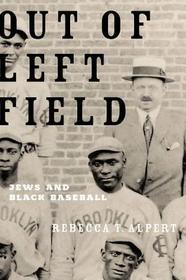
Out of Left Field
Jews and Black Baseball
- Publisher's listprice GBP 47.99
-
21 667 Ft (20 635 Ft + 5% VAT)
The price is estimated because at the time of ordering we do not know what conversion rates will apply to HUF / product currency when the book arrives. In case HUF is weaker, the price increases slightly, in case HUF is stronger, the price goes lower slightly.
- Discount 10% (cc. 2 167 Ft off)
- Discounted price 19 500 Ft (18 572 Ft + 5% VAT)
Subcribe now and take benefit of a favourable price.
Subscribe
21 667 Ft

Availability
printed on demand
Why don't you give exact delivery time?
Delivery time is estimated on our previous experiences. We give estimations only, because we order from outside Hungary, and the delivery time mainly depends on how quickly the publisher supplies the book. Faster or slower deliveries both happen, but we do our best to supply as quickly as possible.
Product details:
- Publisher OUP USA
- Date of Publication 7 July 2011
- ISBN 9780195399004
- Binding Hardback
- No. of pages256 pages
- Size 236x157x25 mm
- Weight 476 g
- Language English
- Illustrations 24 illus. 0
Categories
Short description:
Here is an eye-opening look at one of baseball's most intriguing and little known stories: the many-faceted relationship between Jews and black baseball in Jim Crow America. In Out of Left Field, Rebecca Alpert explores how Jewish sports entrepreneurs, political radicals, and a team of black Jews called the Belleville Grays made their mark on the segregated world of the Negro Leagues.
MoreLong description:
Here is an eye-opening look at one of baseball's most intriguing and little known stories: the many-faceted relationship between Jews and black baseball in Jim Crow America.
In Out of Left Field, Rebecca Alpert explores how Jewish sports entrepreneurs, political radicals, and a team of black Jews called the Belleville Grays--the only Jewish team in the history of black baseball--made their mark on the segregated world of the Negro Leagues. Through in-depth research, Alpert tells the stories of the Jewish businessmen who owned and promoted teams as they both acted out and fell victim to pervasive stereotypes of Jews as greedy middlemen and hucksters. Some Jewish owners produced a kind of comedy baseball, akin to basketball's Harlem Globetrotters--indeed, Globetrotters owner Abe Saperstein was very active in black baseball--that reaped financial benefits for both owners and players but also played upon the worst stereotypes of African Americans and prevented these black "showmen" from being taken seriously by the major leagues. But Alpert also shows how Jewish entrepreneurs, motivated in part by the traditional Jewish commitment to social justice, helped grow the business of black baseball in the face of the oppressive Jim Crow restrictions, and how radical journalists writing for the Communist Daily Worker argued passionately for an end to baseball's segregation. In fact, the campaign to convince manager Branch Rickey to integrate the Brooklyn Dodgers was initiated by Daily Worker sports writer Bill Mardo, in an open letter in the paper.
Deftly written and meticulously researched, Out of Left Field offers a unique perspective on the economic and social negotiations between blacks and Jews in the first half of the 20th century, shedding new light on the intersection of race, religion, and sports in America.
Even more impressive is the extent to which she separates myth from fact, and intention from unintended consequences, in assessing the roles of Jews with regard to black integration into the sport.
Table of Contents:
Baseball Was America
The Business of Black People Before Integration
The Conflict Over Baseball Comedy
Ending Jim Crow Baseball: The Jewish Contribution
Bibliography

