

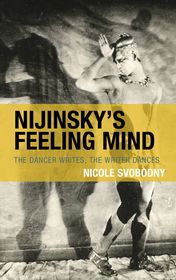
Nijinsky's Feeling Mind
The Dancer Writes, The Writer Dances
Series: Crosscurrents: Russia's Literature in Context;
- Publisher's listprice GBP 28.99
-
13 088 Ft (12 465 Ft + 5% VAT)
The price is estimated because at the time of ordering we do not know what conversion rates will apply to HUF / product currency when the book arrives. In case HUF is weaker, the price increases slightly, in case HUF is stronger, the price goes lower slightly.
- Discount 20% (cc. 2 618 Ft off)
- Discounted price 10 471 Ft (9 972 Ft + 5% VAT)
- Discount is valid until: 30 June 2026
Subcribe now and take benefit of a favourable price.
Subscribe
13 088 Ft

Availability
printed on demand
Why don't you give exact delivery time?
Delivery time is estimated on our previous experiences. We give estimations only, because we order from outside Hungary, and the delivery time mainly depends on how quickly the publisher supplies the book. Faster or slower deliveries both happen, but we do our best to supply as quickly as possible.
Product details:
- Publisher Bloomsbury Publishing (UK)
- Date of Publication 30 April 2026
- ISBN 9781793653550
- Binding Paperback
- No. of pages386 pages
- Size 228x150x22 mm
- Weight 540 g
- Language English
- Illustrations 16 b/w photos; 700
Categories
Short description:
Through close textual analysis combined with intellectual biography and literary theory, Nicole Svobodny puts the spotlight on Vaslav Nijinsky as reader
MoreLong description:
"Nijinsky's Feeling Mind: The Dancer Writes, The Writer Dances is the first in-depth literary study of Vaslav Nijinsky's life-writing. Through close textual analysis combined with intellectual biography and literary theory, Nicole Svobodny puts the spotlight on Nijinsky as reader. She elucidates Nijinsky's riffs on Tolstoy, Dostoevsky, and Nietzsche, equating these intertextual connections to ""marking"" a dance, whereby the dancer uses a reduction strategy situated between thinking and doing. By exploring the intersections of bodily movement with verbal language, this book addresses broader questions of how we sense and make sense of our worlds. Drawing on archival research, along with studies in psychology and philosophy, Svobodny emphasizes the modernist contexts from which the dancer-writer emerged at the end of World War I. Nijinsky began his life-writing-a book he titled Feeling-the day after the Paris Peace Conference opened, and the same day he performed his ""last dance."" Nijinsky's Feeling Mind begins with the dancer on stage and concludes as he invites readers into his private room. Illuminating the structure, plot, medium, and mode of Feeling, this study calls on readers to grapple with a paradox: the more the dancer insists on his writing as a live performance, the more he points to the material object that entombs it."
MoreTable of Contents:
Acknowledgments
Note on Transliteration
Introduction
Part I: From Stage to Page
1. Trance Dance
2. Walking and Talking
3. Predator-Prey
Part II: A Life in Books and Magazines
4. Reading Nijinsky Reading
5. Dancing the Tightrope Between World of Art and Feeling
Conclusion
Bibliography
Index
About the Author

