

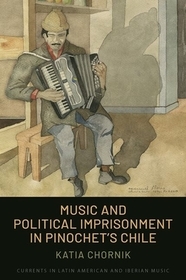
Music and Political Imprisonment in Pinochet's Chile
Series: Currents in Latin American and Iberian Music;
- Publisher's listprice GBP 22.99
-
10 379 Ft (9 885 Ft + 5% VAT)
The price is estimated because at the time of ordering we do not know what conversion rates will apply to HUF / product currency when the book arrives. In case HUF is weaker, the price increases slightly, in case HUF is stronger, the price goes lower slightly.
- Discount 10% (cc. 1 038 Ft off)
- Discounted price 9 341 Ft (8 897 Ft + 5% VAT)
Subcribe now and take benefit of a favourable price.
Subscribe
10 379 Ft

Availability
printed on demand
Why don't you give exact delivery time?
Delivery time is estimated on our previous experiences. We give estimations only, because we order from outside Hungary, and the delivery time mainly depends on how quickly the publisher supplies the book. Faster or slower deliveries both happen, but we do our best to supply as quickly as possible.
Product details:
- Publisher OUP USA
- Date of Publication 19 December 2025
- ISBN 9780190052263
- Binding Paperback
- No. of pages184 pages
- Size 236x158x11 mm
- Weight 281 g
- Language English
- Illustrations 24 647
Categories
Short description:
Over 1,000 political imprisonment and torture centers existed across Chile during General Augusto Pinochet's dictatorship (1973-1990). Music was often present in those centers, both as a response to and part of human rights violations. In this pioneering book, Katia Chornik explores the relationships between music, politics, memory, and human rights, discussing a broad range of music experiences and repertoire and how these are remembered, preserved, and disseminated decades on. Chornik blends archival sources with interviews with ex-political prisoners, state agents, and visitors to prisons, demonstrating how music is an essential component of the cultural history and legacy of Pinochet's dictatorship.
MoreLong description:
Over 1,000 political imprisonment and torture centers existed across Chile during the dictatorship of General Augusto Pinochet (1973-90). Music was often present in those centers, both as a response to and part of human rights violations. In this pioneering book, Katia Chornik explores the relationships between music, politics, memory, and human rights, discussing a broad range of music experiences and repertoire and how these are remembered, preserved, and disseminated decades later.
The book probes how pieces written, performed, and listened to in captivity are threaded into survivors' memories of mistreatment, resilience, and experiences beyond resistance. Chornik blends sources from the Cantos Cautivos digital archive with interviews with ex-political prisoners, agents of secret services, and visitors to prisons, proposing the notion of "memory cacophony" to describe the discordant kaleidoscope of voices, memories, repertoire, and experiences unveiled. Chornik demonstrates how music, as an expression of powerful lived experiences, is an essential component of the cultural history and legacy of the Pinochet period.
This work documents historical facts and invites deep reflection on the transformative power of music and memory. The meticulous research, ethical commitment, and profound empathy embedded in every page ensure that the voices of those silenced are preserved and honored. [...] To the readers, I encourage you to approach this book with an open heart and a reflective mind. Allow the stories to move you, challenge your perspectives, and deepen your understanding of resilience and the human spirit. This is not only a journey into the past but also an opportunity to reflect on our present and build a more just and compassionate world for everyone.
Table of Contents:
Prologue by Michelle Bachelet Jeria
Introduction
Music Threaded into Torture and Other Mistreatment
The Memories and Songs of a Convicted Perpetrator
Beyond Canonic Narratives of Resistance
Grassroots Commemoration and Revival
Archiving Memories: The Cantos Cautivos Digital Project
Coda

