

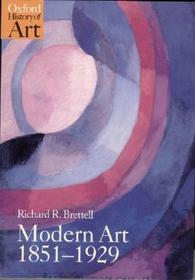
- Publisher's listprice GBP 24.99
-
11 282 Ft (10 745 Ft + 5% VAT)
The price is estimated because at the time of ordering we do not know what conversion rates will apply to HUF / product currency when the book arrives. In case HUF is weaker, the price increases slightly, in case HUF is stronger, the price goes lower slightly.
- Discount 10% (cc. 1 128 Ft off)
- Discounted price 10 154 Ft (9 671 Ft + 5% VAT)
Subcribe now and take benefit of a favourable price.
Subscribe
11 282 Ft

Availability
printed on demand
Why don't you give exact delivery time?
Delivery time is estimated on our previous experiences. We give estimations only, because we order from outside Hungary, and the delivery time mainly depends on how quickly the publisher supplies the book. Faster or slower deliveries both happen, but we do our best to supply as quickly as possible.
Product details:
- Publisher OUP Oxford
- Date of Publication 1 April 1999
- ISBN 9780192842206
- Binding Paperback
- No. of pages274 pages
- Size 238x168x16 mm
- Weight 642 g
- Language English
- Illustrations numerous colour and black and white illustrations 0
Categories
Short description:
The rise of the major European avant-garde groups -- the Realists, Impressionists, Post-Impressionists, Symbolists, Cubists, and Surrealists -- between 1851 to 1929, was also a time of rapid social, economic, and political change, encompassing a revolution in communication systems and technology, and an unprecedented growth in the availability of printed images. Richard Brettell's innovative account explores the aims and achievements of artists such as Monet, Picasso, Gauguin, and Dali in relation to urban capitalism and expansion, colonialism, nationalism and internationalism, and the museum. Tracing common themes of representation, imagination, perception, and sexuality across works in a wide range of different media he presents a fresh approach to the fine art and photography of this remarkable era.
MoreLong description:
The period 1851 to 1929 witnessed the rise of the major European avant-garde groups: the Realists, Impressionists, Post-Impressionists, Symbolists, Cubists, and Surrealists. It was also a time of rapid social, economic, and political change, encompassing a revolution in communication systems and technology, and an unprecedented growth in the availability of printed images.
Richard Brettell's innovative account explores the aims and achievements -- the beautiful and the bizarre -- of artists such as Monet, Gauguin, Picasso, and Dali, in relation to urban capitalism and expansion, colonialism, nationalism and internationalism, and the museum. Tracing common themes of representation, imagination, perception, and sexuality across works in a wide range of different media he presents a fresh approach to the fine art and photography of this remarkable era.
Table of Contents:
Introduction: The Great Exhibition of 1851, London. (Paris: the capital of modern art; New technology; The beginnings of modern art)
Part I: Realism to Surrealism. (Realism; Impressionism; Symbolism; Post-Impressionism; Neo-Impressionism; Synthetism; The Nabis; The Fauves; Expressionism; Cubism; Futurism; Orphism; Vorticism; Suprematism/ Constructivism; Neo-Plasticism; Dada; Purism; Surrealism; The '-ism' problem)
Part II: The Conditions for Modern Art
Chapter 1. Urban Capitalism. (Paris and the birth of the modern city; Capitalist society; The commodification of art; The modern condition)
Chapter 2. Modernity, Representation, and the Accessible Image. (The art museum; Temporary exhibitions; Lithography; Photography; Conclusion)
Part III: The Artist's Response
Chapter 3. Representation, Vision, and 'Reality': The Art of Seeing. (The human eye; Transparency and unmediated modernism; Surface fetishism and unmediated modernism; Photography and unmediated modernism; Beyond the oil sketch; Cubism)
Chapter 4. Image/Modernism and the Graphic Traffic. (The Pre-Raphaelite brotherhood; Puvis de Chavannes and Gustave Moreau: Image/Modernism outside the Avant-Garde; Image/Modernism outside France; Exhibitions of the Avant-Garde; Fragmentation, dislocation, and recombination)
Part IV Iconology
Introduction
Chapter 5. Sexuality and the Body. (Manet's bodies; Modern art and pornography; The nude and the modernist cycle of life; The bathing nude; The allegorical or non-sexual nude; Colonialism and the nude: the troubled case of Gauguin; The bride stripped bare; Body parts and fragments)
Chapter 6. Social Class and Class Consciousness. (Seurat and Sunday on the Grande Jatte, 1884; Class issues in Modernist culture; Portraiture; Images of peasantry; The worker and modern art)
Chapter 7. Anti-Iconography: Art Without 'Subject'. (Landscape painting; Text and image; Abstraction)
Chapter 8. Nationalism and Internationalism in Modern Art. (National identity; Time and place; Abstract art, spiritualism, and internationalism; Nationalist landscape painting)
Afterword: The Private Institutionalization of Modern Art
Notes; List of Illustrations; Bibliographic Essay; Timeline; Index

