

- Publisher's listprice GBP 20.99
-
9 476 Ft (9 025 Ft + 5% VAT)
The price is estimated because at the time of ordering we do not know what conversion rates will apply to HUF / product currency when the book arrives. In case HUF is weaker, the price increases slightly, in case HUF is stronger, the price goes lower slightly.
- Discount 20% (cc. 1 895 Ft off)
- Discounted price 7 581 Ft (7 220 Ft + 5% VAT)
- Discount is valid until: 30 June 2026
Subcribe now and take benefit of a favourable price.
Subscribe
9 476 Ft

Availability
Estimated delivery time: In stock at the publisher, but not at Prospero's office. Delivery time approx. 3-5 weeks.
Not in stock at Prospero.
Why don't you give exact delivery time?
Delivery time is estimated on our previous experiences. We give estimations only, because we order from outside Hungary, and the delivery time mainly depends on how quickly the publisher supplies the book. Faster or slower deliveries both happen, but we do our best to supply as quickly as possible.
Product details:
- Publisher University of Illinois Press
- Date of Publication 1 March 2018
- Number of Volumes Paperback
- ISBN 9780252083266
- Binding Paperback
- No. of pages236 pages
- Size 229x152x18 mm
- Weight 340 g
- Language English 0
Categories
Long description:
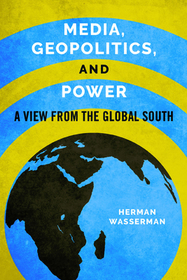
The end of apartheid brought South Africa into the global media environment. Outside companies invested in the nation's newspapers while South African conglomerates pursued lucrative tech ventures and communication markets around the world. Many observers viewed the rapid development of South African media as a roadmap from authoritarianism to global modernity.
Herman Wasserman analyzes the debates surrounding South Africa's new media presence against the backdrop of rapidly changing geopolitics. His exploration reveals how South African disputes regarding access to, and representation in, the media reflect the domination and inequality in the global communication sphere. Optimists see post-apartheid media as providing a vital space that encourages exchanges of opinion in a young democracy. Critics argue the public sphere mirrors South Africa's past divisions and privileges the viewpoints of the elite. Wasserman delves into the ways these simplistic narratives obscure the country's internal tensions, conflicts, and paradoxes even as he charts the diverse nature of South African entry into the global arena.
More
