

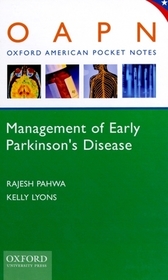
Management of Early Parkinson's Disease
Series: Oxford American Pocket Notes;
- Publisher's listprice GBP 6.99
-
3 155 Ft (3 005 Ft + 5% VAT)
The price is estimated because at the time of ordering we do not know what conversion rates will apply to HUF / product currency when the book arrives. In case HUF is weaker, the price increases slightly, in case HUF is stronger, the price goes lower slightly.
- Discount 10% (cc. 315 Ft off)
- Discounted price 2 840 Ft (2 705 Ft + 5% VAT)
Subcribe now and take benefit of a favourable price.
Subscribe
3 155 Ft

Availability
Uncertain availability. Please turn to our customer service.
Why don't you give exact delivery time?
Delivery time is estimated on our previous experiences. We give estimations only, because we order from outside Hungary, and the delivery time mainly depends on how quickly the publisher supplies the book. Faster or slower deliveries both happen, but we do our best to supply as quickly as possible.
Product details:
- Publisher OUP USA
- Date of Publication 4 February 2010
- ISBN 9780195386493
- Binding Spiral bound
- No. of pages46 pages
- Size 171x101x10 mm
- Weight 55 g
- Language English 0
Categories
Long description:
Parkinson's Disease (PD) is a progressive, neurodegenerative disorder with the cardinal symptons of bradykinesia, rigidity and tremor, as well as a postural inability in the later stages of the disease. It has been estimated that over 1,000,000 people in the United States are affected by PD with approximately 50,000-60,000 new cases diagnosed each year. The average age of PD onset is 60 years, although persons can onset much later and approximately 4-10% onset prior to the age of
40. The primary neurochemical change in PD is a loss of dopamine in the substantia niger, although it is increasingly recognized that additional neurotransmitters and brain areas are involved. The cause of PD is unknown, and there is currently no cure available.
The treatment of PD can be challenging and treatment of early PD can be complex with choice of initial therapy, as well as timing the initiation of therapy. Although there are currently no treatments approved to stop or slow the progression of PD, this is an area of active research, as it is estimated that approximately 60-80% of dopamine neurons are lost by the time of diagnosis. There are several symptomatic treatments available for all stages of PD, including monoamine oxidase type B
(MAO-B) inhibitors, dopamine agonists, levodopa, and less commonly, anticholinergics and amantadine. The treatment regimen in the early stage needs to be individualized based on the disease characteristics and life situation of each patient. The goal of therapy in early PD is to identify a treatment
strategy to control the parkinsonian symptons, such as motor fluctuations and dyskinesia, without causing adverse events.
Table of Contents:
Contents
Contributors
Introduction
Epidemiology
Diagnostic Criteria
Common Differential Diagnoses
Common Early Symptons of PD
Assessments
Neuroprotection
Early Symptomatic Treatment Options
Dosing Information
Considerations for Initiation of Treatment
Early Symptomatic Treatment Options
Comparison of Common Dopaminergic Adverse Events
Dopamine Agonists - Safety Concerns
MAO-B Inhibitors - Safety Concerns
Evidence-Based Guidelines for the Treatment of Early Parkinson's Disease
Early PD Management: Proposed Treatment Strategy for Newly Diagnosed Patients
Non-Pharmacologic Treatment
Internet Resources
Rating Scales and Other Assessment Guidelines
References

