

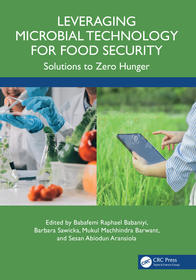
Leveraging Microbial Technology for Food Security
Solutions for Zero Hunger
-
GET 10% OFF
- Publisher's listprice GBP 200.00
-
90 300 Ft (86 000 Ft + 5% VAT)
The price is estimated because at the time of ordering we do not know what conversion rates will apply to HUF / product currency when the book arrives. In case HUF is weaker, the price increases slightly, in case HUF is stronger, the price goes lower slightly.
- Discount 10% (cc. 9 030 Ft off)
- Discounted price 81 270 Ft (77 400 Ft + 5% VAT)
81 270 Ft

Availability
Not yet published.
Why don't you give exact delivery time?
Delivery time is estimated on our previous experiences. We give estimations only, because we order from outside Hungary, and the delivery time mainly depends on how quickly the publisher supplies the book. Faster or slower deliveries both happen, but we do our best to supply as quickly as possible.
Product details:
- Edition number 1
- Publisher CRC Press
- Date of Publication 5 June 2026
- ISBN 9781041095897
- Binding Hardback
- No. of pages406 pages
- Size 254x178 mm
- Language English
- Illustrations 35 Illustrations, black & white; 22 Halftones, black & white; 13 Line drawings, black & white; 20 Tables, black & white 700
Categories
Short description:
Microorganisms play a vital role in addressing global food security challenges. Leveraging Microbial Technology for Food Security: Solutions to Zero Hunger examines their diverse applications in achieving zero hunger with a focus on solutions that transform food production, improve nutrition, and reduce environmental impact.
More
Long description:
Microorganisms play a vital role in addressing global food security challenges. Leveraging Microbial Technology for Food Security: Solutions for Zero Hunger examines their diverse applications in achieving zero hunger with a focus on practical solutions that transform food production, improve nutrition, and reduce environmental impact. Topics include biofertilization, genetic engineering, waste management, and microbial fermentation for alternative protein sources.
Through global case studies, the book demonstrates how microbial innovations have improved food security and provided scalable, sustainable approaches to reducing hunger. It also explores the potential of microorganisms to diversify diets and lessen dependence on traditional agricultural systems.
Written for scholars, policymakers, educators, farmers, and students, this book combines scientific analysis with real-world examples. Featuring case studies, data visualizations, and actionable insights, it is a valuable resource for those interested in biotechnology, food systems, and sustainable development.
More
Table of Contents:
Section One: Global Food Hunger. The Global Hunger Picture: Statistics and Definitions. Major Causes and Stages of Global Hunger. Impacts of Climate Change and Environmental Degradation on Food Security. Global Action to End Hunger: Initiatives and Challenges. Food Hunger and Public Health – Long-term Consequences. Section Two: Application of Microorganisms and Their Products in Zero Hunger to Fulfil SDGs. Microbial Innovations in the Fight Against Hunger. Microbial Technology for Biofertilizers and Biopesticides in Sustainable Agriculture. Increasing the Nutritional Value of Food with Microorganisms. Biotechnology and Genetic Engineering in Food Security. Microbial Biocontrol: Handling Insects and Pathogens Resistant to Drugs. Microbes in Aquaculture and Livestock. Section Three: Food Security Through Microbial Technology and Sustainable Agricultural Synergy. The Role of the Soil Microbiome in Sustainable Agriculture. Microorganisms Supporting Organic Food Production. Biological Control and Biopesticides. Agroecological Farming Systems Supported by Microorganisms. Challenges and the Future of Integrating Microbiology with Sustainable Agriculture. Section Four: Microbial Innovations for Climate-Resilient Agriculture. Microbial Innovations for Climate-Resilient Agriculture. Microbial Solutions for Reducing Greenhouse Gas Emissions in Agriculture. Bioremediation of Soils Damaged by Human Activity and Climate Change. The Role of Microorganisms in Extensive Agriculture and Pasture Management. Microbial Biotechnologies and the Future of Agriculture in a Changing Climate. Section Five: The Future of Microbial Technologies in Achieving Zero Hunger. Summary of Current Achievements and Challenges. The Role of Research and Innovation in the Future of Microbial Technologies. Sustainability and Future Agricultural Policies Supporting Microbial Technologies. Microorganisms in the Context of Global Trends: Precision Agriculture to Functional Foods. Future Vision: Path to Zero Hunger Using Microbial Technologies.
More
