

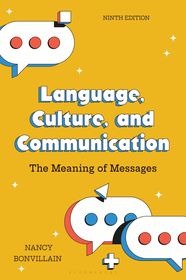
Language, Culture, and Communication
The Meaning of Messages
- Publisher's listprice GBP 140.00
-
63 210 Ft (60 200 Ft + 5% VAT)
The price is estimated because at the time of ordering we do not know what conversion rates will apply to HUF / product currency when the book arrives. In case HUF is weaker, the price increases slightly, in case HUF is stronger, the price goes lower slightly.
- Discount 10% (cc. 6 321 Ft off)
- Discounted price 56 889 Ft (54 180 Ft + 5% VAT)
Subcribe now and take benefit of a favourable price.
Subscribe
63 210 Ft

Availability
printed on demand
Why don't you give exact delivery time?
Delivery time is estimated on our previous experiences. We give estimations only, because we order from outside Hungary, and the delivery time mainly depends on how quickly the publisher supplies the book. Faster or slower deliveries both happen, but we do our best to supply as quickly as possible.
Product details:
- Edition number 9
- Publisher Bloomsbury Publishing (UK)
- Date of Publication 16 April 2026
- ISBN 9798216200604
- Binding Hardback
- No. of pages464 pages
- Size 258x178x30 mm
- Weight 1040 g
- Language English
- Illustrations 30 bw illus, 5 bw photos 696
Categories
Short description:
A comprehensive introduction to the field of linguistic anthropology.
MoreLong description:
"
Language, Culture, and Communication introduces students to the topics and theories of the broad field of linguistic anthropology by examining the multifaceted meanings and uses of language. It emphasizes the ways in which language encapsulates speakers' meanings and intentions. Through language structure and language use, speakers convey messages about their own identities, their understandings of the world and their place in it. The book includes discussion of cultural and symbolic meanings conveyed by language and the social and political dimensions of language use.
New to the Ninth Edition:
- New Chapter 7, ""Digital Communication,"" discusses technological change, social media, artificial intelligence, and the rapid development of various systems and platforms for communication
- New Chapter 6, ""Signed Languages,"" offers an expanded discussion of ASL vocabulary and grammar as well as language practices in Deaf communities with an emphasis on a global and international perspective
- New discussion of African American Vernacular English (AAVE) stresses the intersection of language and lived experience
- New case studies in every chapter highlight central concepts so that students can focus directly on understanding the many faceted goals of language in use
- Expanded discussion of language and nation building in multilingual communities (including code switching and translanguaging) emphasizes how our speaking styles are ""borderless""
Table of Contents:
Preface
About the Author
Chapter 1. Introduction
Variations in Language Usage
Speech Communities of Practice
Plan of the Book
References
Chapter 2. The Form of the Message
Phonology: The Sounds of Language
Morphology: The Structure of Words
Syntax: The Structure of Sentences
Semantics: The Analysis of Meaning
Nonverbal Communication
Summary
Discussion Questions
References
Chapter 3. Language and Cultural Meaning
Foundations of Linguistic Anthropology
Lexical and Cultural Categories
Cultural Presupposition
Extended and Transferred Meaning
Discussion Questions
Summary
References
Chapter 4. Contextual Components: Outline of an Ethnography of Communication
Ethnography of Communication
Settings
Participants
Topics and Goals
Speech Acts
Routines
Narratives
Summary
Discussion Questions
References
Chapter 5. Communicative Interactions
Structural Properties of Conversation
Conversational Postulates
Directives
Directives and Responses in Context
Politeness
Summary
Discussion Questions
References
Chapter 6. Signed Languages and Communities of Practice
Formation of Signs
ASL Vocabulary and Grammar
Language Practices in Deaf Communities
Intersectional Variation in Signed Language Communities
Signed Languages Across the Globe
ASL and Its Dominant Influence Worldwide
Global Education Policies
Digital Technologies and Social Media
Summary
Discussion Questions
References
Chapter 7. Digital Language and Social Media - Dillon Mahoney
Telephone Communication and Technological Change
Computer-Mediated Communication
Social Media
Memes
#Hashtags
Tiktok
AI And Intellectual Property
Summary
Discussion Questions
References
Chapter 8. The Acquisition of Communicate Competence
Acquisition of Language
Instructional Strategies
Strategies in Other Societies
Acquiring Communicative Styles
Learning Status and Role
Learning Discourse
Summary
Discussion Questions
Reference
Chapter 9. Societal Segmentation and Linguistic Variation: Class and Race
Social Stratification
Class
Race
Summary
Discussion Questions
References
Chapter 10. Language and Gender
What Is Gender? How Does It Affect Speaking Styles?
Pronunciation
Grammatical Variants
Choices of Vocabulary
Gender-Related Conversational Styles
Japanese
Kuna (or Guna)
Language and Sexuality
Images of Gender in Linguistic Form
Summary
Discussion Questions
References
Chapter 11. Multilingual Nations
India
Canada
The United States
Creole Languages in the United States
Summary
Discussion Questions
References
Chapter 12. Multilingual Communities
Linguistic Change
Language Use in Multilingual Communities
Endangered Languages
Bilingual Conversational Strategies
Interethnic Miscommunication
Summary
Discussion Questions
References
Chapter 13. Language and Institutional Encounters
Language Ideologies
Language and Status
Institutional Contexts
Political Discourse
The Media
Summary
Discussion Questions
Reference
Glossary
Index

