

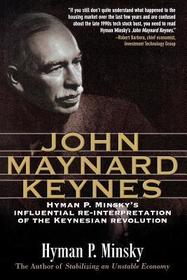
John Maynard Keynes
Series: BUSINESS BOOKS;
- Publisher's listprice GBP 27.99
-
12 637 Ft (12 035 Ft + 5% VAT)
The price is estimated because at the time of ordering we do not know what conversion rates will apply to HUF / product currency when the book arrives. In case HUF is weaker, the price increases slightly, in case HUF is stronger, the price goes lower slightly.
- Discount 10% (cc. 1 264 Ft off)
- Discounted price 11 373 Ft (10 832 Ft + 5% VAT)
Subcribe now and take benefit of a favourable price.
Subscribe
12 637 Ft

Availability
printed on demand
Why don't you give exact delivery time?
Delivery time is estimated on our previous experiences. We give estimations only, because we order from outside Hungary, and the delivery time mainly depends on how quickly the publisher supplies the book. Faster or slower deliveries both happen, but we do our best to supply as quickly as possible.
Product details:
- Publisher McGraw Hill
- Date of Publication 16 May 2008
- ISBN 9780071593014
- Binding Paperback
- No. of pages181 pages
- Size 223x149x12 mm
- Weight 252 g
- Language English 0
Categories
Short description:
MoreLong description:
“Today, Mr. Minsky's view [of economics] is more relevant than ever.”- The New York Times
“Indeed, the Minsky moment has become a fashionable catch phrase on Wall Street.”-The Wall Street Journal
John Maynard Keynes offers a timely reconsideration of the work of the revered economics icon. Hyman Minsky argues that what most economists consider Keynesian economics is at odds with the major points of Keynes's The General Theory of Employment, Interest, and Money. Keynes and Minsky refuse to ignore pervasive uncertainty. Once uncertainty is given center stage, recurring episodes of financial system crises are all but inescapable. As Robert Barbera notes in a new preface, “Benign economic circumstances…invite increasingly aggressive financial market wagers. Innovation in finance is a signature development in a capitalist economy. Once leveraged wagers are in place, small disappointments can have exaggerated consequences.” Thus for Minsky economic calm on Main Street engenders financial system fragility which, in turn, ensures a perpetuation of boom and bust cycles.
Minsky colleagues Dimitri B. Papadimitriou and L. Randall Wray write in a new introduction, “We offer this new edition, in the hope that it will contribute to the reformation of economic theory so that it can address the world in which we actually live-the world that was always the topic of Minsky's analysis.”
“Today, Mr. Minsky's view [of economics] is more relevant than ever.”- The New York Times
“Indeed, the Minsky moment has become a fashionable catch phrase on Wall Street.”-The Wall Street Journal
John Maynard Keynes offers a timely reconsideration of the work of the revered economics icon. Hyman Minsky argues that what most economists consider Keynesian economics is at odds with the major points of Keynes's The General Theory of Employment, Interest, and Money. Keynes and Minsky refuse to ignore pervasive uncertainty. Once uncertainty is given center stage, recurring episodes of financial system crises are all but inescapable. As Robert Barbera notes in a new preface, “Benign economic circumstances…invite increasingly aggressive financial market wagers. Innovation in finance is a signature development in a capitalist economy. Once leveraged wagers are in place, small disappointments can have exaggerated consequences.” Thus for Minsky economic calm on Main Street engenders financial system fragility which, in turn, ensures a perpetuation of boom and bust cycles.
Minsky colleagues Dimitri B. Papadimitriou and L. Randall Wray write in a new introduction, “We offer this new edition, in the hope that it will contribute to the reformation of economic theory so that it can address the world in which we actually live-the world that was always the topic of Minsky's analysis.”
More
