

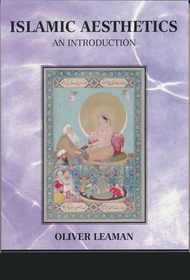
Islamic Aesthetics
An Introduction
- Publisher's listprice GBP 80.00
-
38 220 Ft (36 400 Ft + 5% VAT)
The price is estimated because at the time of ordering we do not know what conversion rates will apply to HUF / product currency when the book arrives. In case HUF is weaker, the price increases slightly, in case HUF is stronger, the price goes lower slightly.
- Discount 10% (cc. 3 822 Ft off)
- Discounted price 34 398 Ft (32 760 Ft + 5% VAT)
Subcribe now and take benefit of a favourable price.
Subscribe
38 220 Ft

Availability
Uncertain availability. Please turn to our customer service.
Why don't you give exact delivery time?
Delivery time is estimated on our previous experiences. We give estimations only, because we order from outside Hungary, and the delivery time mainly depends on how quickly the publisher supplies the book. Faster or slower deliveries both happen, but we do our best to supply as quickly as possible.
Product details:
- Publisher University of Notre Dame Press
- Date of Publication 30 July 2004
- Number of Volumes Print PDF
- ISBN 9780268033699
- Binding Hardback
- No. of pages277 pages
- Size 229x152x14 mm
- Weight 468 g
- Language English 0
Categories
Long description:
It is often argued that a very special sort of consciousness went into creating Islamic art, that Islamic art is very different from other forms of art, that Muslims are not allowed to portray human beings in their art, and that calligraphy is the supreme Islamic art form. Oliver Leaman challenges all of these ideas, and argues that they are misguided. Instead, he suggests that the criteria we should apply to Islamic art are identical to the criteria applicable to art in general, and that the attempt to put Islamic art into a special category is a result of orientalism.
Leaman criticizes the influence of Sufism on Islamic aesthetics and contends that it is generally misleading regarding both the nature of Islam and artistic expression. He discusses issues arising in painting, calligraphy, architecture, gardens, literature, films, and music and pays close attention to the teachings of the Qur'an. In particular he asks what it would mean for the Qur'an to be a miraculous literary creation, and he analyzes two passages in the Qur'an—those of Yusuf and Zulaykha (Joseph and Zuleika) and King Sullayman (Solomon) and the Queen of Sheba. His arguments draw on examples from history, art, philosophy, theology, and the artefacts of the Islamic world, and raise a large number of difficulties in the accepted paradigms for analyzing Islamic art.
More
