

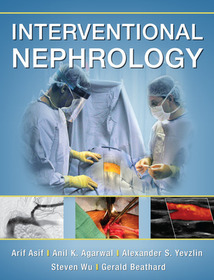
Interventional Nephrology
Series: INTERNAL MEDICINE;
- Publisher's listprice GBP 142.99
-
64 559 Ft (61 485 Ft + 5% VAT)
The price is estimated because at the time of ordering we do not know what conversion rates will apply to HUF / product currency when the book arrives. In case HUF is weaker, the price increases slightly, in case HUF is stronger, the price goes lower slightly.
- Discount 10% (cc. 6 456 Ft off)
- Discounted price 58 103 Ft (55 337 Ft + 5% VAT)
Subcribe now and take benefit of a favourable price.
Subscribe
64 559 Ft

Availability
cancelled
Why don't you give exact delivery time?
Delivery time is estimated on our previous experiences. We give estimations only, because we order from outside Hungary, and the delivery time mainly depends on how quickly the publisher supplies the book. Faster or slower deliveries both happen, but we do our best to supply as quickly as possible.
Product details:
- Publisher McGraw Hill
- Date of Publication 16 September 2012
- ISBN 9780071769327
- Binding Hardback
- No. of pages752 pages
- Size 281x226x35 mm
- Weight 2270 g
- Language English 0
Categories
Short description:
"A complete guide to every aspect of interventional nephrology--an essential text for students, residents, fellows, and clinicians. This timely resource examines all relevant aspects of interventional nephrology, from the history of nephrology to the principles governing the latest vascular access techniques. Heavily illustrated with full-color procedural drawings and featuring an easy-to-follow design, the book includes contributions from many leading authorities in the field whose insights combine to form an unprecedented, clinically rigorous survey of interventional nephrology. Interventional Nephrology opens with an instructive look at the origins of hemodialysis access; an overview of the history of interventional nephrology in the U.S. and abroad; and clinically relevant coverage of vascular access outcomes. The high-yield coverage continues with a probing assessment of ethics, public policy, and practice guidelines, illuminating such pivotal topics as industry partnerships and conflicts of interest. The principles that support interventional nephrology techniques are also extensively reviewed, encompassing everything from vascular mapping to peritoneal dialysis catheter removal, while the following section delves into the key surgical aspects of vascular access. Finally, the book provides useful perspectives on how political and policy affairs impact current practice. "--Provided by publisher.
MoreLong description:
Publisher's Note: Products purchased from Third Party sellers are not guaranteed by the publisher for quality, authenticity, or access to any online entitlements included with the product.
A complete guide to every aspect of interventional nephrology?an essential text for students, residents, fellows, and clinicians
A Doody's Core Title for 2017!
This timely resource examines all relevant aspects of interventional nephrology, from the history of nephrology to the principles governing the latest vascular access techniques. Heavily illustrated with full-color procedural drawings and featuring an easy-to-follow design, the book includes contributions from many leading authorities in the field whose insights combine to form an unprecedented, clinically rigorous survey of interventional nephrology.
Interventional Nephrology opens with an instructive look at the origins of hemodialysis access; an overview of the history of interventional nephrology in the U.S. and abroad; and clinically relevant coverage of vascular access outcomes. The high-yield coverage continues with a probing assessment of ethics, public policy, and practice guidelines, illuminating such pivotal topics as industry partnerships and conflicts of interest. The principles that support interventional nephrology techniques are also extensively reviewed, encompassing everything from vascular mapping to peritoneal dialysis catheter removal, while the following section delves into the key surgical aspects of vascular access. Finally, the book provides useful perspectives on how political and policy affairs impact current practice.
FEATURES
- Illustrated with precise full-color drawings and radiographs that highlight both normal and vascular anatomy and clarify the management of vascular access problems
- Streamlined design and helpful pedagogy, including chapter-opening learning objectives, numerous tables, and concept-clarifying figures
- Complete overview of the core principles underlying interventional nephrology practice and techniques, covering vascular mapping, monitoring and surveillance of arteriovenous access, venous angioplasty, tunneled catheters, renal ultrasonography, and much more
- Discussion of vascular access in special populations and the role of pharmacologic agents in preserving vascular access provides evidence-based insights that are pertinent to the everyday practice of interventional nephrology
- In-depth emphasis on the surgical aspects of vascular access reviews sites, types, and creation of arteriovenous fistulae; secondary arteriovenous fistula; and surgical options for vascular anomalies
- Forward-thinking coverage of basic and translational science considers future directions in vascular access science; flow dynamics, maturity, and access failure; neointimal hyperplasia; pharmacologic prevention of access dysfunction; and device innovation
Publisher's Note: Products purchased from Third Party sellers are not guaranteed by the publisher for quality, authenticity, or access to any online entitlements included with the product.
A complete guide to every aspect of interventional nephrology?an essential text for students, residents, fellows, and clinicians
A Doody's Core Title for 2017!
This timely resource examines all relevant aspects of interventional nephrology, from the history of nephrology to the principles governing the latest vascular access techniques. Heavily illustrated with full-color procedural drawings and featuring an easy-to-follow design, the book includes contributions from many leading authorities in the field whose insights combine to form an unprecedented, clinically rigorous survey of interventional nephrology.
Interventional Nephrology opens with an instructive look at the origins of hemodialysis access; an overview of the history of interventional nephrology in the U.S. and abroad; and clinically relevant coverage of vascular access outcomes. The high-yield coverage continues with a probing assessment of ethics, public policy, and practice guidelines, illuminating such pivotal topics as industry partnerships and conflicts of interest. The principles that support interventional nephrology techniques are also extensively reviewed, encompassing everything from vascular mapping to peritoneal dialysis catheter removal, while the following section delves into the key surgical aspects of vascular access. Finally, the book provides useful perspectives on how political and policy affairs impact current practice.
FEATURES
- Illustrated with precise full-color drawings and radiographs that highlight both normal and vascular anatomy and clarify the management of vascular access problems
- Streamlined design and helpful pedagogy, including chapter-opening learning objectives, numerous tables, and concept-clarifying figures
- Complete overview of the core principles underlying interventional nephrology practice and techniques, covering vascular mapping, monitoring and surveillance of arteriovenous access, venous angioplasty, tunneled catheters, renal ultrasonography, and much more
- Discussion of vascular access in special populations and the role of pharmacologic agents in preserving vascular access provides evidence-based insights that are pertinent to the everyday practice of interventional nephrology
- In-depth emphasis on the surgical aspects of vascular access reviews sites, types, and creation of arteriovenous fistulae; secondary arteriovenous fistula; and surgical options for vascular anomalies
- Forward-thinking coverage of basic and translational science considers future directions in vascular access science; flow dynamics, maturity, and access failure; neointimal hyperplasia; pharmacologic prevention of access dysfunction; and device innovation
Table of Contents:
I.History of Interventional Nephrology: Birth of a New Specialty
1.Origins of Hemodialysis Access: The Scribner Experience
2.History of Interventional Nephrology in the United States
3.History of Interventional Nephrology from a Global Perspective
4.Epidemiology of Vascular Access for Hemodialysis: A Global Perspective
II.Ethics, Public Policy and Practice Guidelines
5.Academic Societies, Industry Partnerships, and Conflict of Responsibility
6.The American Society of Diagnostic and Interventional Nephrology and Collaboration with other Professional Societies and Organizations
7.Training in Diagnostic and Interventional Nephrology
8.Developing an Academic Curriculum for Interventional Nephrology Training
9.Accreditation and Certification in Interventional Nephrology
III.Principles of Practice and Techniques
10.Basic Anatomy for Dialysis Vascular Access
11.Vascular Mapping
12.Vascular Access for Hemodialysis: Types, Characteristics, and Epidemiology
13.Vascular Access Monitoring and Surveillance
14.Physical Examination of the Hemodialysis Access
15.Early and Late Fistula Failure
16.Arteriovenous Graft Stenosis and Thrombosis
17.Venous Angioplasty
18.Arterial Intervention in Hemodialysis Access and Chronic Kidney Disease
19.Stent Placement in Hemodialysis Access
20.Accessory Veins: Recognition and Management
21.Pseudoaneurysm and Aneurysm Formation
22.Heart Failure and Left Ventricular Hypertrophy
23.Hand Ischemia
24.Peripheral Arterial Disease
25.Temporary Hemodialysis Catheters
26.Tunneled Catheter Designs and the Placement Conundrum
27.Catheter Dysfunction- Recirculation, Thrombosis, and Fibroepithelial Sheath
28.Exit-Site, Tunnel Infection, and Catheter-Related Bacteremia
29.Catheter Lock Solutions
30.Surface Coatings for Tunneled Catheters
31.Cardiac Rhythm Devices in Renal Patients
32.Central Vein Stenosis
33.Vascular Access in Special Populations
34.The Role of Pharmacologic Agents in Preserving Vascular Access
35.Sedation and Analgesia for Endovascular Procedures
36.Adverse Reactions to Radiocontrast Agents in Vascular Access Centers
37.Radiocontrast and Carbon Dioxide Angiography: Advantages and Disadvantages
38.Fluroscopy Basics: Theory, Equipment, and Use in Vascular Access Intervention
39.Fluoroscopy Clinical: Radiation Exposure and Safety
40.Complications of Endovascular Dialysis Access Procedures
41.Kidney Biopsy
42.Renal Ultrasonography
43.Emerging Role of Vascular Ultrasound in Arteriovenous Dialysis Access
44.Peritoneal Dialysis Catheter Insertion
45.Complications of Peritoneal Dialysis Catheter Procedures
46.Peritoneal Dialysis Catheter Removal
47.Antibiotic Prophylaxis for Dialysis Access Interventions
IV.Surgical Aspects of Vascular Access
48.Sites and Types of Arteriovenous Fistulae
49.Creation of Arteriovenous Fistulae by Nephrologists
50.Secondary Arteriovenous Fistula
51.Surgical Options for Arteriovenous Access in Patients with Exhausted Veins
52.Hemodialysis Access-Induced Distal Ischemia (HAIDI): Surgical Management
53.Etiology and Management of Cephalic Arch Stenosis
V.Basic and Translational Science
54.Vascular Access Science-What Does the Future Hold?
55.Flow Dynamics, Maturity, and Access Failure
56.Neointimal Hyperplasia
57.Pharmacological Approaches to vascular Access Dysfunction
58.Device Innovation
VI.Political and Policy Affairs
59.Establishing a Vascular Access Center
60.Coding and Reimbursement for Vascular Access Procedures: past, Present, and Future
61.Quality Assurance and Outcomes Monitoring
62.Research Opportunities in Interventional Nephrology: Why, What, and How!

