

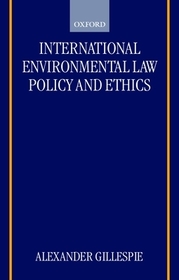
International Environmental Law, Policy, and Ethics
- Publisher's listprice GBP 29.99
-
13 540 Ft (12 895 Ft + 5% VAT)
The price is estimated because at the time of ordering we do not know what conversion rates will apply to HUF / product currency when the book arrives. In case HUF is weaker, the price increases slightly, in case HUF is stronger, the price goes lower slightly.
- Discount 10% (cc. 1 354 Ft off)
- Discounted price 12 186 Ft (11 606 Ft + 5% VAT)
Subcribe now and take benefit of a favourable price.
Subscribe
13 540 Ft

Availability
Uncertain availability. Please turn to our customer service.
Why don't you give exact delivery time?
Delivery time is estimated on our previous experiences. We give estimations only, because we order from outside Hungary, and the delivery time mainly depends on how quickly the publisher supplies the book. Faster or slower deliveries both happen, but we do our best to supply as quickly as possible.
Product details:
- Publisher OUP Oxford
- Date of Publication 23 March 2000
- ISBN 9780198298724
- Binding Paperback
- No. of pages232 pages
- Size 234x156x14 mm
- Weight 343 g
- Language English 0
Categories
Short description:
The question of why we protect the environment is rarely asked because it is assumed we all want to achieve the same ends. However, in his innovative study of international environmental ethics, Alexander Gillespie explodes this myth. He shows how nations, like individuals, are creating environmental laws and policies which are continually inviting failure since such laws are riddled with inconsistencies and are ultimately contradictory in purpose.
MoreLong description:
This book is concerned with the question of why the environment is protected in the international arena. This question is rarely asked because it is assumed we all want to achieve the same ends. However, in his innovative study of international environmental ethics, Alexander Gillespie explodes this myth. He shows how nations, like individuals, are creating environmental laws and policies which are continually inviting failure since such laws are riddled with inconsistencies and are
ultimately contradictory in purpose. Specifically, he seeks a nexus between the reasons why nations protect the environment, how these reasons are reflected in law and policy, and what complications arise from these choices.
Table of Contents:
Anthropocentricism
The Self Interest Justification for Environmental Protection
The Use of Economic Rationale As A Justification for Environmental Protection
The Problems With Economic Justifications for Environmental Protection
Religious Justifications for Environmental Protection
The Problem of Religiously Inspired Conservation as a Suitable Source of Environmental Protection
Aesthetic, Cultural and Recreational Justifications
The Rights of Future Generations as a Justification for Environmental Protection
The Problems with the Future Generations Argument
The Growth of Non-Anthropocentric Ideals Within International Environmental Law
The Moral Considerability of Animals
Respect for Life
The Land Ethic

