

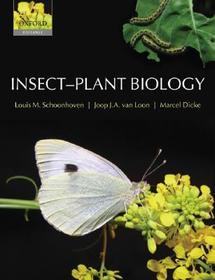
Insect-Plant Biology
- Publisher's listprice GBP 81.00
-
36 571 Ft (34 830 Ft + 5% VAT)
The price is estimated because at the time of ordering we do not know what conversion rates will apply to HUF / product currency when the book arrives. In case HUF is weaker, the price increases slightly, in case HUF is stronger, the price goes lower slightly.
- Discount 10% (cc. 3 657 Ft off)
- Discounted price 32 914 Ft (31 347 Ft + 5% VAT)
Subcribe now and take benefit of a favourable price.
Subscribe
36 571 Ft

Availability
printed on demand
Why don't you give exact delivery time?
Delivery time is estimated on our previous experiences. We give estimations only, because we order from outside Hungary, and the delivery time mainly depends on how quickly the publisher supplies the book. Faster or slower deliveries both happen, but we do our best to supply as quickly as possible.
Product details:
- Edition number 2
- Publisher OUP Oxford
- Date of Publication 1 December 2005
- ISBN 9780198525950
- Binding Paperback
- No. of pages448 pages
- Size 246x188x22 mm
- Weight 966 g
- Language English
- Illustrations 213 line drawings, 11 halftones, 2pp colour plates 0
Categories
Short description:
Insect-Plant Biology uncovers the highly intricate antagonistic as well as mutualistic interactions that have evolved between plants and insects. The authors discuss the operation of these mechanisms at the molecular and organismal levels and explicitly put these in the context of both ecological interactions and evolutionary processes. This multidisciplinary approach will appeal to students in biology, agricultural entomology, ecology, and indeed anyone interested in the principles underlying the relationships between the two largest groups of organisms on earth: plants and insects.
MoreLong description:
Half of all insect species are dependent on living plant tissues, consuming about 10% of plant annual production in natural habitats and an even greater percentage in agricultural systems, despite sophisticated control measures. Plants possess defences that are effective against almost all herbivorous insect species. Host-plant specialization, observed in over 80% of these animals, appears to be an effective adaptation to breach these defence systems. The mechanisms underlying plant defence to invading herbivores on the one side, and insect adaptations to utilize plants for nutrition, defence and shelter on the other, are the main subjects of this book. In the case of plants exposed to insect herbivores, they include the activation of defence systems in order to minimize damage, as well as the emission of chemical signals that may attract natural enemies of the invading herbivores and may be exploited by neighbouring plants that mount defences as well. For insects, they include complex bevioural adaptations and their underlying sensory systems (with their implications for learning and nutritional plasticity), as well as the endocrinological aspects of life cycle synchronization with host-plant phenology.
Insect-Plant Biology discusses the operation of these mechanisms at the molecular and organismal levels and explicitly puts these in the context of both ecological interactions and evolutionary processes. In doing so, it uncovers the highly intricate antagonistic as well as mutualistic interactions that have evolved between plants and insects. The book concludes with a chapter on the application of our knowledge of insect-plant interactions to agricultural production.
This multidisciplinary approach will appeal to students in biology, agricultural entomology, ecology, and indeed anyone interested in the principles underlying the relationships between the two largest groups of organisms on earth: plants and insects.
This is an outstanding reference to past and recent work on plant-insect interactions.
Table of Contents:
Introduction
Herbivorous insects: something for everyone
Plant structure: the solidity of anti-herbivore protection
Plant chemistry: endless variety
Plants as insect food: not the ideal
Host-plant selection: how to find a host plant
Host-plant selection: when to accept a plant
Host-plant selection: variation is the rule
The endocrine system of herbivores listens to host-plant signals
Ecology: living apart together
Evolution: insects and plants forever in combat
Insects and flowers: mutualism par excellence
Insects and plants: how to apply our knowledge
Appendix A: Further reading
Appendix B: Structural formulae
Appendix C: Methodology
Taxonomic index
Author index
Subject index

