

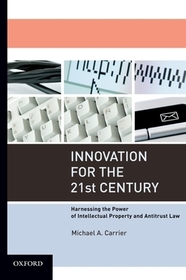
Innovation for the 21st Century
- Publisher's listprice GBP 35.99
-
16 249 Ft (15 475 Ft + 5% VAT)
The price is estimated because at the time of ordering we do not know what conversion rates will apply to HUF / product currency when the book arrives. In case HUF is weaker, the price increases slightly, in case HUF is stronger, the price goes lower slightly.
- Discount 10% (cc. 1 625 Ft off)
- Discounted price 14 624 Ft (13 928 Ft + 5% VAT)
Subcribe now and take benefit of a favourable price.
Subscribe
16 249 Ft

Availability
printed on demand
Why don't you give exact delivery time?
Delivery time is estimated on our previous experiences. We give estimations only, because we order from outside Hungary, and the delivery time mainly depends on how quickly the publisher supplies the book. Faster or slower deliveries both happen, but we do our best to supply as quickly as possible.
Product details:
- Publisher OUP USA
- Date of Publication 24 February 2011
- ISBN 9780199794287
- Binding Paperback
- No. of pages416 pages
- Size 234x156x21 mm
- Weight 590 g
- Language English 0
Categories
Short description:
Innovation is crucial to the U.S. economy, but it has been severely hampered in recent years by the legal system. This book demonstrates how current intellectual property and antitrust laws stifle innovation and offers ten specific proposals to counter this trend. Michael Carrier provides an accessible primer on intellectual property and antitrust law to provide the reader with the tools needed to follow the breaking innovation stories of the day.
MoreLong description:
On their broadest level, the IP and antitrust laws aim to increase societal welfare. But they do so in different ways. The foundation of the IP system is the right to exclude. This right allows inventors to recover their investment costs and to obtain profits. Relatedly, it discourages "free riders" who imitate the invention and - because they have no investment costs to recover - undercut the price. The right to exclude, in short, is designed to increase innovation. The very exclusion at the heart of IP nonetheless might seem suspicious to antitrust, which focuses on harms to competition. The antitrust laws presume that competition leads to lower prices, higher output, and more innovation. They anticipate that certain agreements between competitors or conduct by monopolists prevents consumers from enjoying these benefits. In Innovation in the 21st Century: Harnessing the Power of Intellectual Property and Antitrust Law, Michael Carrier contends that intellectual property and antitrust, the two most important laws fostering innovation, are not being used most effectively to achieve this goal and offers various proposals that individually and collectively remedy this deficiency.
...provides an accessible yet in depth text on intellectual property, detailing patents, copyright and antitrust law and what impact they can have on innovation.
Table of Contents:
Introduction
Part I: Primer
Chapter 1. Innovation
Chapter 2. Intellectual Property
Chapter 3. Antitrust
Chapter 4. IP-Antitrust Intersection: 20th Century
Chapter 5. IP-Antitrust Intersection: 21st Century
Part II: Copyright
Chapter 6. Pioneering Peer-to-Peer and Other Disruptive Dual-Use Technologies
Chapter 7. Damaging Copyright Damages
Chapter 8. The Digital Millennium Copyright Act: From Pirates to User Innovators
Part III: Patent
Chapter 9. Better Patents: A Post-Grant Opposition Procedure
Chapter 10. Less Dangerous Patents: A Framework for Relief
Chapter 11. Biotechnology Dilemma 1: Patented Research Tools
Chapter 12. Biotechnology Dilemma 2: Material Transfer Agreements
Part IV: Antitrust
Chapter 13. Innovation Markets: Saving Lives and Money in the Pharmaceutical Industry
Chapter 14. Supporting Standard-Setting Organizations
Chapter 15. Unsettling Drug Patent Settlements: A Framework for Presumptive Illegality
Conclusion

