

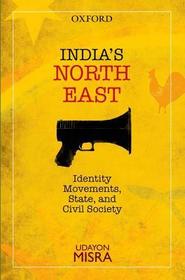
India's North-East
Identity Movements, State, and Civil Society
- Publisher's listprice GBP 54.00
-
24 381 Ft (23 220 Ft + 5% VAT)
The price is estimated because at the time of ordering we do not know what conversion rates will apply to HUF / product currency when the book arrives. In case HUF is weaker, the price increases slightly, in case HUF is stronger, the price goes lower slightly.
- Discount 10% (cc. 2 438 Ft off)
- Discounted price 21 943 Ft (20 898 Ft + 5% VAT)
Subcribe now and take benefit of a favourable price.
Subscribe
24 381 Ft

Availability
Only to order.
Why don't you give exact delivery time?
Delivery time is estimated on our previous experiences. We give estimations only, because we order from outside Hungary, and the delivery time mainly depends on how quickly the publisher supplies the book. Faster or slower deliveries both happen, but we do our best to supply as quickly as possible.
Product details:
- Publisher OUP India
- Date of Publication 11 December 2014
- ISBN 9780198099116
- Binding Hardback
- No. of pages360 pages
- Size 216x149x30 mm
- Weight 574 g
- Language English 0
Categories
Short description:
This collection of select articles and commentaries on northeastern India focuses primarily on issues relating to the emergence of ethnic nationalism, identity movements, the rise of militant separatism and the role of civil society in conflict situations. The complex processes of nationality formation, the conflicts and contradictions besetting the different ethnic struggles, the engagement of the nation-state with the autonomy/independentist demands raised by the small nationalities and the inherent fault lines in the quest for separate homelands in a highly diverse and heterogeneous situation-these and many other issues figure prominently in this volume.
MoreLong description:
In many senses, India's Northeast has been an enigma to the rest of the country. Beginning with the earliest challenge of the nation-building process in India, this highly diverse and multicultural region has, through its multiple identity movements and militant separatism, thrown up several major issues which have resulted in re-drawing the parameters of the Indian nation-state and helped to re-define the idea of nationalism itself.
This selection of essays/commentaries, written over some three decades, analyze the complex processes of the nation-state's engagement with the demands for autonomy/independence raised by the small nationalities of the northeastern region but also focuses on the contradictions and new equations that have been emerging both within these movements and in the State's response to them. The factors behind the rise of ethnic nationalist assertions, the role of civil society, the rise of exclusivist politics and the question of citizens' rights are other issues that figure prominently in the discussions.
Table of Contents:
Preface
Acknowledgements
Section A: Northeast India: Roots of Alienation
India's Northeast: Tracing Some of the Early Roots of Alienation
Assam and the Partition: Caught in the Time Warp
Who 'Owns' India: The Meaning of 'My' in 'My Country'
Section B: Course and Character of the Naga Struggle
The Naga National Question
Naga Nationalism and the Role of the Middle Class
Portrait of a Naga 'Hostile'
CPI and the Naga Struggle
Alternate Voices in the Naga Movement
Section C: Assam : Identity Movements and Insurgent Politics
Immigration and Identity Transformation in Assam
Targeting the Innocent
No Tears for the Liberators
ULFA: Beginning of the End
Peace Talks or the Fall of the Curtain for ULFA?
Bodo Stir: Complex Issues, Unattainable Demands
Bodoland: The Burden of History
Assam Tea: The Bitter Brew
Fresh Tension in Upper Assam Tea Belt
The Adivasi Struggle
Section D: State and Civil Society in Northeast India
Comparing the Naga and Assam Peace Processes
Naga Peace Talks: High Hopes and Hard Realities
Assam: Towards a Viable Peace or a Cul-De-Sac?
Roll Call of the Dead
Army Killings in Assam
Asom Sahitya Sabha
KMSS: Giving a New Edge to People's Protests
Hereditary Power Structures, Traditional Institutions and Representative Democracy
About the Author
Index

