

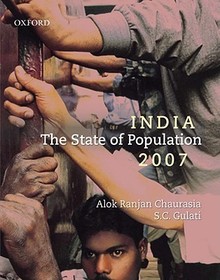
India: The State of Population 2007
- Publisher's listprice GBP 17.99
-
8 122 Ft (7 735 Ft + 5% VAT)
The price is estimated because at the time of ordering we do not know what conversion rates will apply to HUF / product currency when the book arrives. In case HUF is weaker, the price increases slightly, in case HUF is stronger, the price goes lower slightly.
- Discount 10% (cc. 812 Ft off)
- Discounted price 7 310 Ft (6 962 Ft + 5% VAT)
Subcribe now and take benefit of a favourable price.
Subscribe
8 122 Ft

Availability
Uncertain availability. Please turn to our customer service.
Why don't you give exact delivery time?
Delivery time is estimated on our previous experiences. We give estimations only, because we order from outside Hungary, and the delivery time mainly depends on how quickly the publisher supplies the book. Faster or slower deliveries both happen, but we do our best to supply as quickly as possible.
Product details:
- Publisher OUP India
- Date of Publication 8 January 2009
- ISBN 9780195698558
- Binding Paperback
- No. of pages268 pages
- Size 275x214x9 mm
- Weight 547 g
- Language English 0
Categories
Short description:
This Report makes an objective study of population in India for the last 60 years and suggests strategic options for achieving population stabilization in India.
MoreLong description:
This Report studies the population stock in India using the parameters of its levels, patterns, and the changes in size, structure, and distribution during the last 60 years. It makes an objective assessment of what has been achieved and what remains to be achieved. It shows the cause and effect relationship between population, on one hand, and economics, health care, migration, and social practices, on the other. It measures the progress of the country and its
constituent states towards the goal and objectives of the National Population Policy 2000. Finally, it suggests strategic options for achieving population stabilization in India. The Report covers various topics-population growth and distribution; evolution of population policy; family planning;
reproductive and child health; status of women; urbanization and migration; population and development integration, and strategic options for population stabilization.

