

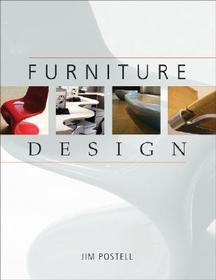
Furniture Design
- Publisher's listprice GBP 50.00
-
22 575 Ft (21 500 Ft + 5% VAT)
The price is estimated because at the time of ordering we do not know what conversion rates will apply to HUF / product currency when the book arrives. In case HUF is weaker, the price increases slightly, in case HUF is stronger, the price goes lower slightly.
- Discount 10% (cc. 2 258 Ft off)
- Discounted price 20 318 Ft (19 350 Ft + 5% VAT)
Subcribe now and take benefit of a favourable price.
Subscribe
22 575 Ft

Availability
Out of print
Why don't you give exact delivery time?
Delivery time is estimated on our previous experiences. We give estimations only, because we order from outside Hungary, and the delivery time mainly depends on how quickly the publisher supplies the book. Faster or slower deliveries both happen, but we do our best to supply as quickly as possible.
Product details:
- Publisher John Wiley & Sons
- Date of Publication 24 August 2007
- ISBN 9780471727965
- Binding Hardback
- No. of pages384 pages
- Size 284x217x28 mm
- Weight 1286 g
- Language English 0
Categories
Short description:
Furniture Design is a most comprehensive introduction to the craft and business of furniture design. It encompasses the history, theory, human factors and ergonomics, materials, tools and methods of fabrication, and professional practice issues. This invaluable survey should be on the bookshelf of every furniture designer.
MoreLong description:
From history to theory to technology: a comprehensive survey of furniture design.
Designing furniture is both an art and a science that draws upon a broad range of knowledge and disciplines. It is helpful for today's furniture designers to have a working knowledge of furniture history, technology, aesthetics, the human body, architectural production, interior design, industrial design, and art. Furniture Design is a comprehensive survey that guides the reader through the essential facets of design and more.
The book explores:
- Fundamental ideas of function and social use.
- Form, spatial organization, and typological orders.
- Structural integrity and composition.
- The design process.
- Materials and fabrication processes.
- Marketing and professional practice.
- A historical overview of furniture design up to the twenty?first century.
A highlight of the book includes case studies of twenty?one furniture designs presenting a broad selection of works, designers, design processes, and fabrication techniques in one chapter. The book also features a glossary of terms and a comprehensive bibliography. In short, here is a one?stop resource about furniture design that designers will turn to regularly for the advice, guidance, and information needed to perform their craft.
From history to theory to technology: a comprehensive survey of furniture design
Designing furniture is both an art and a science that draws upon a broad range of knowledge and disciplines. It is helpful for today's furniture designers to have a working knowledge of furniture history, technology, aesthetics, the human body, architectural production, interior design, industrial design, and art. Furniture Design is a comprehensive survey that guides the reader through the essential facets of design and more.
The book explores:
-
Fundamental ideas of function and social use
-
Form, spatial organization, and typological orders
-
Structural integrity and composition
-
The design process
-
Materials and fabrication processes
-
Marketing and professional practice
-
A historical overview of furniture design up to the twenty?first century
A highlight of the book includes case studies of twenty?one furnituredesigns presenting a broad selection of works, designers, design processes, and fabrication techniques in one chapter. The book also features a glossary of terms and a comprehensive bibliography. In short, here is a one?stop resource about furniture design that designers will turn to regularly for the advice, guidance, and information needed to perform their craft.
"Chapters explore furniture function and social use, physical and spatial characteristics of furniture design, case studies of significant designs, furniture design theory and principles, materials, fabrication, and professional practice and marketing. Also included is a historical overview of furniture design and manufacture around the world." (
Book News, February 2008)
"If you want technical, [skills] you have to go for this book..." (The Herald {Glasgow}, Saturday 15th December 2007)
"If you want technical, [skills] you have to go for this book..." (
The Herald {Glasgow}, Saturday 15th December 2007) More
Table of Contents:
Acknowledgements.
Foreword by John Pile.
Preface.
1. Introduction to Furniture Design.
Furniture.
Design.
2. Function and Social Use.
Classifications based on Function.
Sitting, Resting, and Sleeping.
Eating, Reading, Typing, and Writing.
Containing, Displaying, and Organizing.
Enclosing, Shaping, and Partitioning Space.
Classifications based on Social Use.
Healthcare.
Hospitality.
Institutional.
Multi?Use.
Office.
Recreational.
Religious.
Residential.
Retail.
Storage.
3. Form, Spatial Organization, and other Typological Orders.
Form.
Angular.
Composite.
Curvilinear.
Orthogonal.
Sectional / Modular.
Spatial Organization.
Centralized.
Clustered.
Grids.
Linear.
Radial.
Typological Orders.
Assemble / Disassemble.
Built?in / Stationary.
Freestanding.
Inflatable.
Transformable.
Moveable.
Summary.
4. Furniture Case Studies.
700?400 B.C. Greek Klismos chair.
1750 French Rococo marquetry commode.
1754 Chippendale chair.
1859 Model No. 14.
1917?18 Red and Blue chair.
1922 Blocs screen.
1925 Wassily chair.
1928 Model Basculant B 301.
1932?33 Stools 60 / 65.
1950 Siege de Repos (Antony).
1950 Eames Storage Unit (ESU).
1951 Wire Side chair.
1968 Action Office.
1987 Ghost chair.
1991 Cross Check chair.
1993 Trinidad chair.
1994 Living Pods.
1995 Aeron chair.
2000 Pathways.
2001 The Block.
2004 Jimmy's Buffet.
Lessons from the Furniture Case Studies.
5. Furniture Design Theory.
Inquiry.
Firmitas, Utilitas, and Venustas.
Modernism.
Systems Theory.
Built?Form and Culture.
New Formalism.
6. Design.
Design Principles.
Balance.
Continuity, Unity, and Variety.
Dynamism and Stasis.
Hierarchy and Emphasis.
Juxtaposition.
Rhythm and Pattern.
Scale and Proportion.
Design Thinking.
Design Ethos.
Accessible Design.
Codes, Guidelines, and Standards.
Green Design.
Universal Design.
Furniture Design Processes.
Conjecture / Analysis / Synthesis.
Sketching and Drawing.
Model Making.
Design Phases.
Pre?Design and Programming.
Schematic Design.
Design Development.
Working Drawings.
Shop Drawings.
Making Templates and Formwork.
Fabrication.
Pricing and Contract Negotiation.
Disciplinary Boundaries.
7. Materials.
Material Matters.
Material Properties.
Materials from A to Z.
Adhesives and Glues.
Composite Boards.
Fabrics and Leather.
Finishes.
Glass.
Metal.
Paper and Cardboard.
Polymers.
Rubber and Elastomers.
Stone.
Wood and Grasses.
8. Fabrication.
Processes and Methods of Fabrication.
Preparing Shop Drawings and a Materials List.
Securing Equipment, Hardware, Labor, and Materials.
Carving, Cutting, Drilling, Folding, Milling, Nailing, Planing, Sewing, and Weaving.
Assembling and Gluing.
Joinery, Seaming, and Welding.
Upholstery.
Etching, Grinding, Sanding, and Texturing.
Dyeing, Finishing, Painting, Plating, Sealing, Staining, and Surfacing.
Delivery and Installation.
Repairing, Refinishing, and Restoring.
Chronological Overview of Tools.
Hand Tools.
Machine Tools.
Digital Tools.
Technology: The Art and Science of Fabrication.
Craft.
Machine Production.
9. Professional Practice and Marketing.
Industry and Markets.
Retailing.
Furniture Epi?Centers.
Trends.
Marketing Strategies.
Business.
10. Historical Overview.
How Societies have Designed, Made, Used and Thought About Furniture Design.
6000 B.C. ? 3500 B.C. The Earliest Cultures.
Ancient Societies.
Old World Settlements.
3500 B.C. ? 330 A.D. Antiquity.
Ancient Egypt.
Mycenaean Age.
Etruria.
Roman Republic, Early and Late Empire.
330 ? 1452Feudal and Medieval Societies.
Byzantium.
Islamic.
Medieval.
1452 ?1851 The Rise of Europe.
Renaissance.
Baroque.
French Rococo.
17th and 18th century England.
The Colonies and an Emerging America.
Early Neoclassical Style.
1851?1945Workmanship of Risk / Certainty.
Industrial Revolution .
Eclecticism.
Revival Styles.
Craft and Design.
Arts and Crafts .
Art Nouveau.
Modernism and the Machine Age.
1945?1980Modernism.
Evolving Modernism ? Rising Heroes.
Furniture Epi?Centers.
1980?2000Consumerism.
New Craftsmanship.
21st CenturyThe Digital Age.
Smart Materials.
Computer Numerical Control Devices.
Digital and Biological Technologies.
New Opportunities.
Glossary.
Index.
Bibliography.
Footnotes, Endnotes, and References.
More
